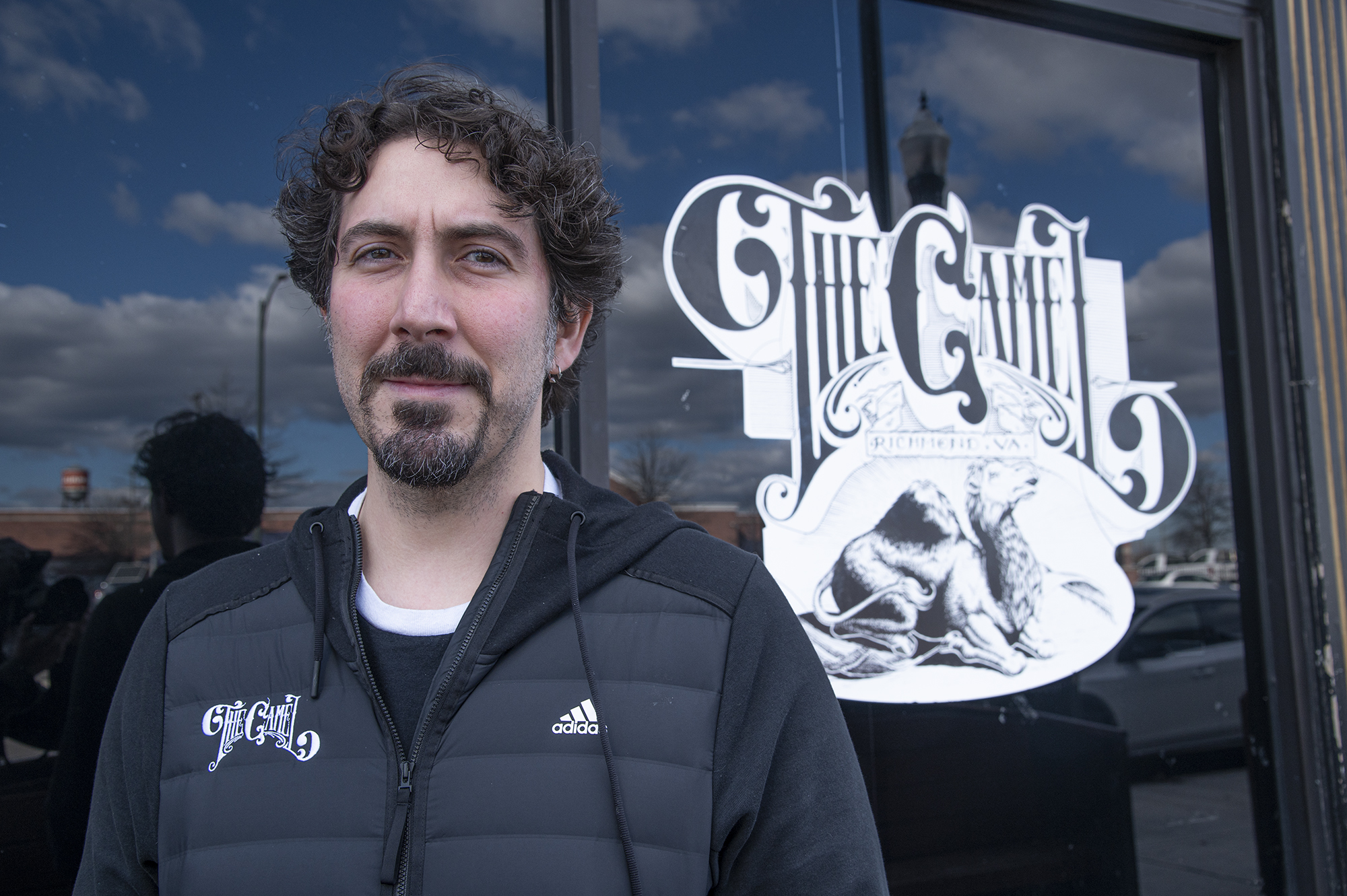
The Camel, one of Richmond’s most well-trafficked and community-focused music venues, is set to start a new chapter with an ownership change announced in January.
The self-described “social oasis,” located at 1621 W. Broad St., began hosting shows in 2007 as part of founder Alan Schintzius’ vision for a gathering place where arts, culture and conversation could thrive. Schintzius was also instrumental in establishing WRIR-LP 97.3 FM, the independent radio station that operates one floor above.
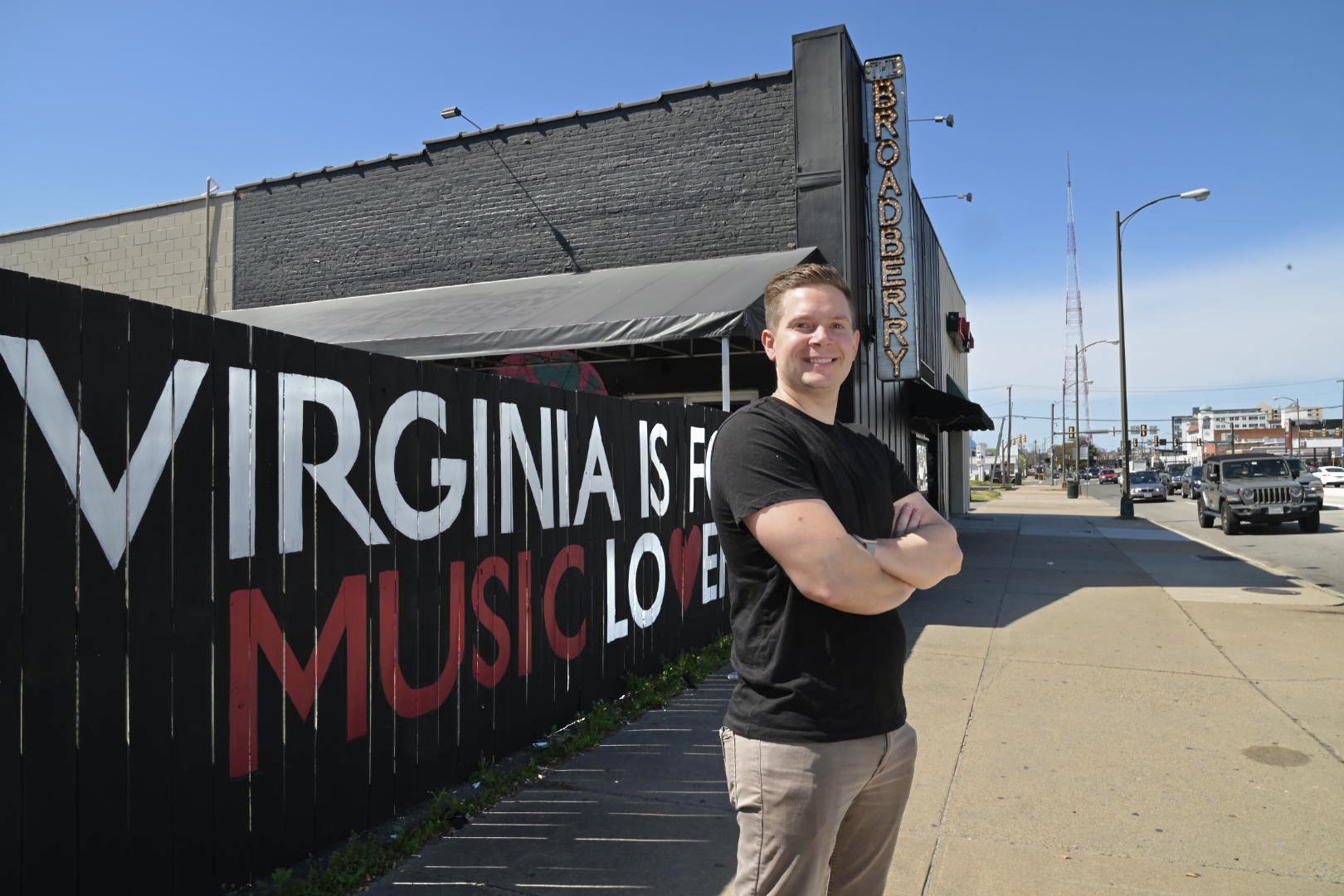
In 2014, after a lengthy fight with Richmond’s city council, then-owner Rand Burgess secured a special use permit amendment allowing the Camel to host music until 2 a.m. seven days a week. Doing so paved the way for the sub-300-capacity venue and restaurant to become a go-to option for burgeoning bands looking to hone their stagecraft and pack a relatively cozy room. Shortly thereafter, in 2015, the Camel sold to a four-person ownership group that included Lucas Fritz, who has since achieved meteoric success with his Broadberry Entertainment Group talent buying and promotion company, and another longtime employee, Matt Hansen, who is now stepping up to take full ownership.
Style Weekly spoke with Fritz and Hansen about what prompted the shift and what the future holds for the Broad Street stage they both hold dear.
Style Weekly: How did the possibility of changing ownership cross your respective radars?
Matt Hansen: I’ve actually been an owner of the Camel for almost nine years now. Lucas and I were partners with two other folks [Georgia Thornburg and Xaxier Beverly]. There was four of us, and over COVID, one of the partners remained an owner but pursued a job outside of the Camel. COVID was not easy on everyone. We survived COVID, of course, and then since COVID, there had been various times where my other partners, Georgia and Lucas, indicated that they were interested in leaving, potentially, but everybody was sticking it out. Then, I think it was August of last year, Lucas was the first one to pull the trigger and be like, “Alright guys, I think it’s time …” From the end of August to the end of September, there was a lot of conversation and negotiations, and we were able to all come to an agreement that made everybody happy.
Lucas Fritz: It had kind of been weighing on me for a while — my involvement — and the growth of Broadberry Entertainment Group has been pretty incredible in the last couple years, and everyone knows there’s only so many hours in a day. I felt like, at a certain point, I was doing a disservice to my partners, and I felt like there was a time that made sense, and that was Q4 of 2023.
What are some of the moments that have been especially meaningful in your time at the Camel?
Fritz: One that sticks out as the most recent is just surviving COVID. We were resilient and creative, and I was really proud of the way that my partners stepped up with me, and together we were able to hunker down and get creative to make sure we survived. Outside of that negative COVID time, I think just being able to see bands grow. It’s always sad when a band outgrows the Camel, but that means that the Camel did something right, and gave them their platform to grow their artistic voice into something bigger than the Camel is, and that’s a really special thing for us.
Hansen: That’s a tough one. I’m a musician as well. I went to VCU for business, [and] through college I was working in restaurants and stuff, bounced around and eventually became an employee here as a bartender after I had finished up school. During that time I was also interning at a recording studio, and some of the bands I worked with as an intern were playing here, and they were doing album releases. I helped work on one of the Southern Belles albums and they were one of our First Friday residencies, so there was this mishmash of me being a part of the Camel in one way or another for a long time, [and] watching some of these bands grow…
The original members of [the Southern Belles] are on a plaque on our wall and we still offer them an employee discount for life, essentially. There’s stuff like that where it’s been very rewarding to see some of the folks I’ve worked with over the years trying to be successful in their own ways in the industry… Illiterate Light — they gave me a shout-out when they played Friday Cheers a couple years ago. They saw me in the crowd and they said, “It’s people like this that helped get us where we are today,” and I think it brought tears to my eyes. I was like, “Oh man, that’s so rewarding.” I hope that we can continue to do that and help some of these local and regional guys learn the ropes and give them the connections and network they need.
What stands out to you about the current state of the Richmond scene and the Camel’s place in it?
Fritz: Richmond is a really special place for music, and over the last 10, 15 years, [it] has really blossomed into a music town. You think about what venues existed 10 or 15 years ago, or what spaces had opportunities for musicians to perform, and then you look at today, and it’s night and day. I think the Camel still holds a really important role, and will continue to hold that into the future — a place for new and developing bands to cut their teeth and really find their voice and grow into their own in Richmond. I think that’s great both for local bands that can play more regularly or for up-and-coming DIY touring bands that are coming through. It gives them a home at the Camel.
Hansen: From back when I was playing shows … There were so many little spots that didn’t even have stages — that were basically places [to play] because people wanted to play music in front of people. The Triple — before it was Don’t Look Back, the Triple used to be just the Triple, and I remember playing a show there, and it was an all-tile, bright-ass room that was probably about the last place you’d think to have a show, and then it was an amazing show. It was so fun.
I do think that if you were to try to find a person that was responsible for helping the scene grow to what it is today, I would say that Lucas had a direct hand in that by seeing the need for something and then fulfilling that… We have something like 40-something venues now — actual venues with stages. Something crazy like that. And that was definitely not the case 15 years ago. Even like 10 years ago. Some places have come and gone. I was partial to the Cary St. Cafés and Strange Matters of the world, but I’m a garage rock-y, underground, DIY show kind of person, and the Camel is probably the most dive-y of all the places in town now [laughs], so maybe that fits.
The industry in Richmond has come a significant way. As the city has grown, so has the music industry for sure. Any day of the week, you can probably see at least five, 10 shows just within the city limits, which is good, but it’s also diluted the market a little bit. But I think there is a plethora of musicians. COVID did this cyclical evolution — a lot of the bands that existed beforehand and that were popular either broke up, got jobs, got married and had kids or moved away, so there’s this new, younger, fresher scene… I’m happy to see the industry grow and still be a part of those beginning stones of the stepping stones.
What are your hopes for the future of the Camel?
Hansen: I think we got bumped into this local corner — that piece of the music pie. But 10 to 15 years ago, we had a lot more touring acts. I think we want to continue to help the local scene grow and get some more touring acts in here and bring back — not large, huge acts that should be playing at the National, or anything like that, but we want to bring back some talent here that we haven’t seen in a while. We want to remain that staple in my point of view that we are for the local and regional scene predominantly, but we’re hoping to bring in some surprises and bigger shows, too, moving forward.
Fritz: I hope to see the Camel survive and flourish and be successful. It offered me a lot of opportunities and experience and an education outside of music school that is invaluable. I’m excited to see the next generation and the next era of musicians and employees and artists come through and learn what they need to learn, and see what they can do with that knowledge.
For latest information about upcoming shows at the Camel, visit thecamel.org.