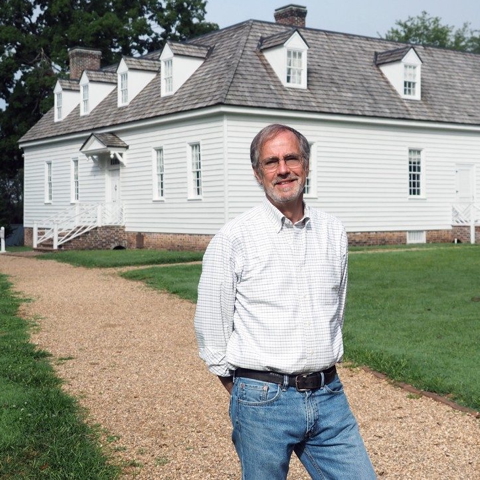
It was simple curiosity that originally inspired Daniel B. Thorp to write “Seeking Justice: The Extraordinary Freedom Suits of an Enslaved Virginia Family,” which he’ll discuss at the Virginia Museum of History and Culture on Thursday, March 26.
While working on an earlier book, Thorp, an associate professor of history at Virginia Tech, had come across a file in the county courthouse that captured his interest. He’d already been looking into the history of African Americans in Montgomery County, along with their transition from slavery to freedom.
“I’d started that process by going to the courthouse every Friday for about four years,” he says. “I was trying to look at every document there produced between 1845 and 1900, looking for anything related to African Americans’ experiences in the county.”
The file that caught his attention included several hundred pages of documents in no particular order, but he did notice that it involved courts in multiple counties, included witness statements from several states, and extended from the 1850s back to the 1770s. “It wasn’t central to the book I was working on at the time, though, so I put it aside. But I never forgot that file,” he says. “Several years later, I decided to try making sense of it.”
The more he read, the more fascinating the case became, and the more he wanted to share the story with others.
The case he couldn’t forget was Unis v. Charlton’s Administrator (1855), one of the most extensive freedom suits in American history. It began when a woman, known only as Flora, was taken from Massachusetts and sold into slavery in Virginia. Forty years later, Flora’s daughter Unis sued on the grounds that her mother had been kidnapped, and over the next thirty years four cases involving almost 50 plaintiffs moved through the Virginia court system before finally reaching a conclusion in 1855.
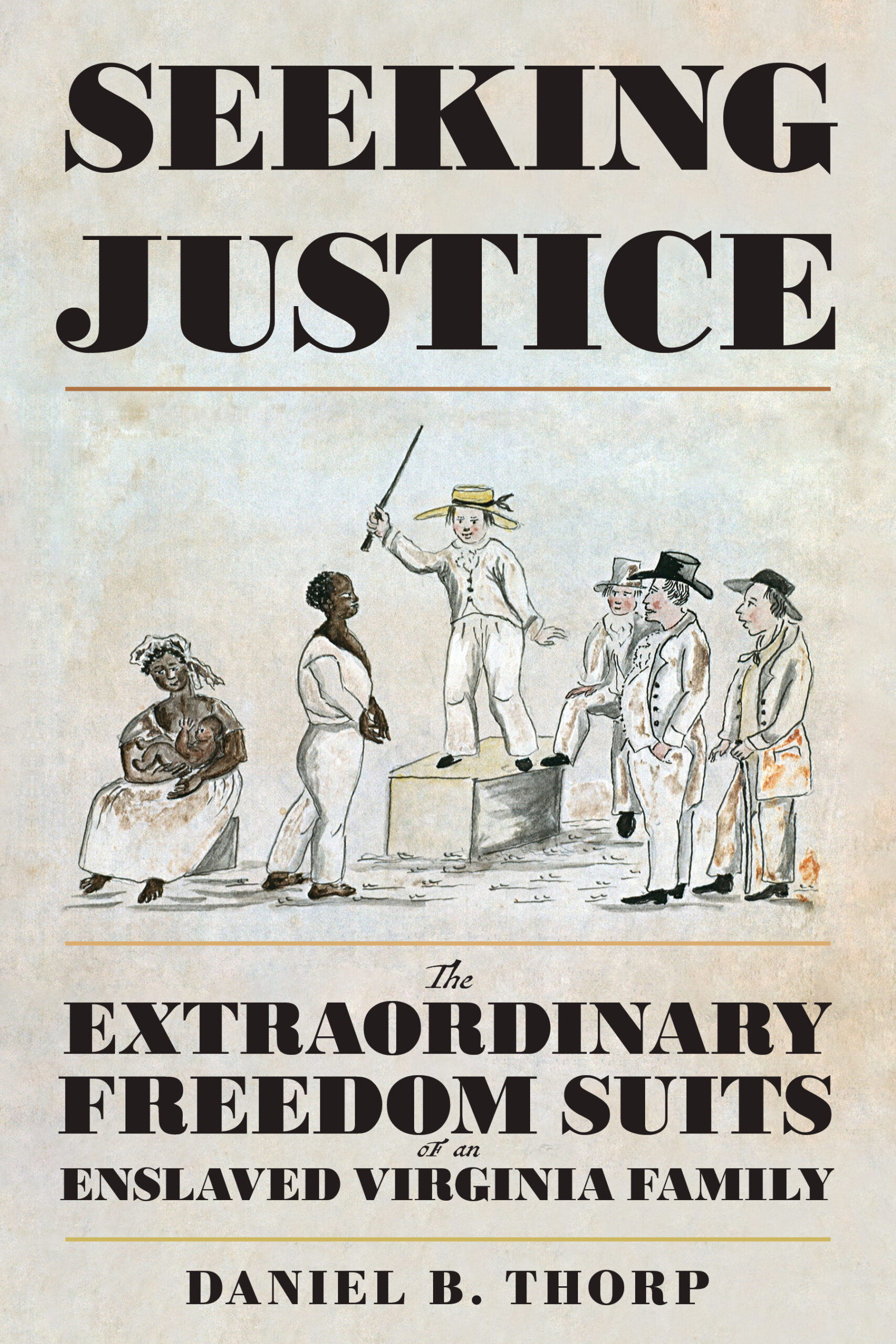
Once Thorp went back to explore the case more fully, he began by organizing the file’s 500 pages in chronological order so he could figure out what exactly had happened. “Then I started travelling to the other counties and states where there might be material from the case,” he says. “I was also reading what other historians had written about freedom suits in Virginia and elsewhere, so I could fit what I was finding into a larger context.”
Despite millions of enslaved Black people in the United States, it was anything but common for them to use the legal system. On the other hand, it was a well-known approach to gaining freedom. “In Virginia alone, courts heard almost 200 freedom suits between 1776 and 1865, and nationwide there were probably several thousand,” Thorp says. “And many of those who brought these suits won their freedom.”
Flora’s three daughters, including Unis, and most of her grandchildren belonged to a man named James Charlton. When Charlton died, in 1825, it was almost inevitable that the enslaved families he held would be broken up and distributed among his heirs or creditors. Thorp thinks that was what prompted Unis to initiate her suit, and her siblings quickly joined in.
Because they remained enslaved — and probably could not even read– while their suit proceeded and still had to work for the people claiming to own them, the family members were limited in how much time they could devote to their case. “They were provided lawyers to argue their cases, but the lawyers weren’t paid and may not have given the case their fullest attention,” Thorp says. “The biggest problem, though, was that Virginia barred Black testimony against White people so Unis and the other plaintiffs seeking their freedom had to find White people who’d known Flora and could testify in support of their claim that she’d been a free woman”
That process meant the case took three decades being decided. Both sides in the case had multiple witnesses to support their claims, and many of those witnesses lived outside Montgomery County and even outside Virginia. Those witnesses had to be deposed, and that took time. Thorp says that for a variety of reasons, the case moved among five different county courts, and every move led to another delay.
“Finally, juries repeatedly failed to reach a verdict, and when they did reach a verdict, it went to the state’s Supreme Court on appeal,” he says. “The cases went to trial nine times and twice to the Supreme Court before they were finally resolved, and all of that took 30 years.”
If “Seeking Justice: The Extraordinary Freedom Suits of an Enslaved Virginia Family” proves anything, it’s how desperately people wanted to escape slavery and remain together as a family. But Thorp sees a second conclusion, one perhaps even more compelling.
“It shows how resourceful enslaved people could be and how effectively they managed to use to their advantage a legal system that had been designed to serve the interests of white slave owners.”
Book talk with Daniel B. Thorp on “Seeking Justice: The Extraordinary Freedom Suits of an Enslaved Virginia Family,” will be held on Thursday, March 26 at noon at the Virginia Museum of History and Culture, 428 N. Arthur Ashe Boulevard. Tickets