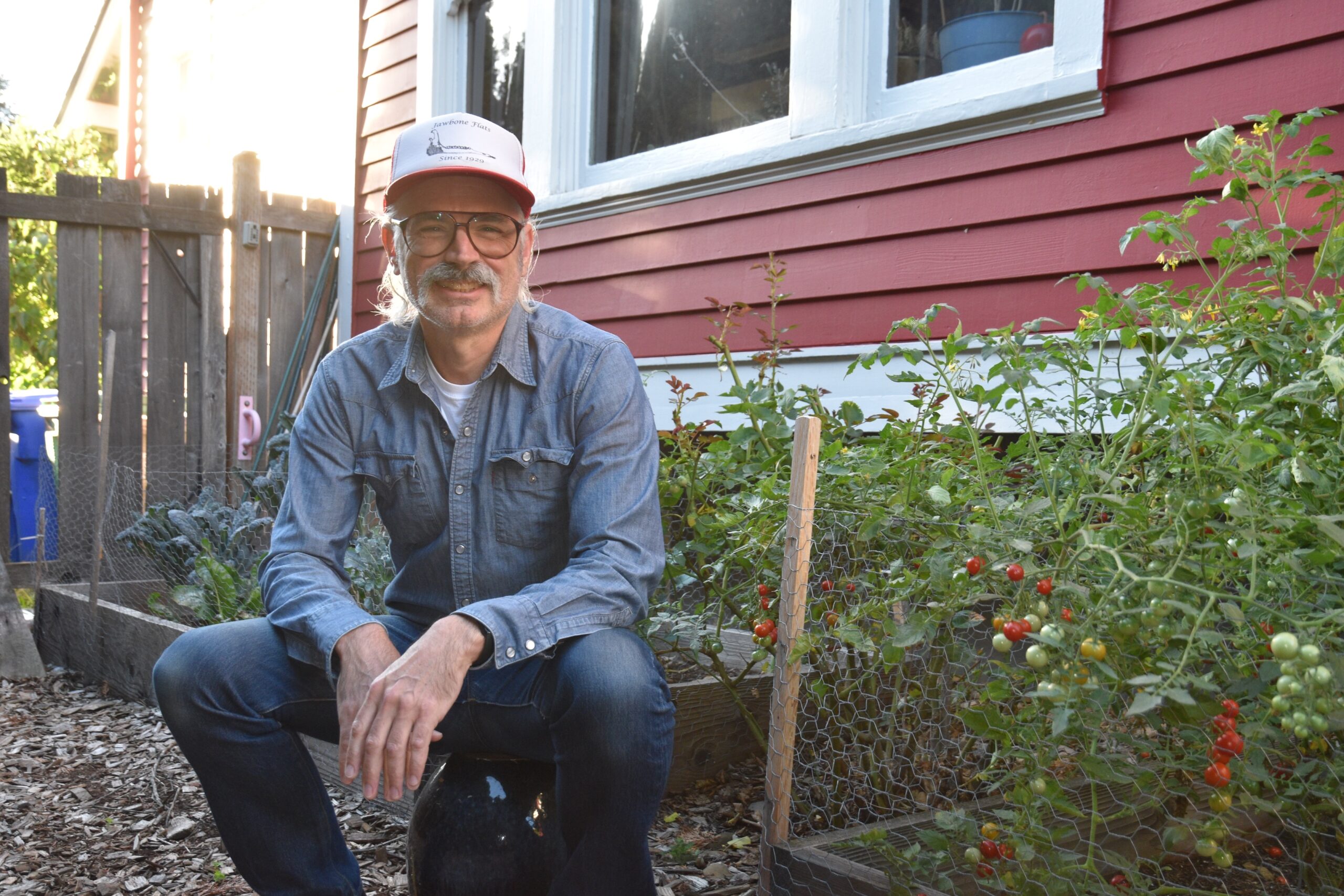
“Music is a language,” says Erik ‘Ripley’ Johnson. “You’re having a conversation with the culture, with the world by playing music and putting out what you have to offer. That’s what’s so satisfying about it.”
You may not know Ripley Johnson’s name, but if you’ve had even a passing interest in indie rock music released over the past 20 years — especially the subgenre of neo-psychedelia — you’ve heard his music. He’s been the prime mover in popular groups such as Wooden Shjips, Moon Duo and, appearing at the Richmond Music Hall on July 21, Rose City Band.
“I just prefer to have a band name,” says the prolific guitarist/vocalist, speaking to Style Weekly from his home in Portland, Oregon, where he creates most of the music. “I’ve never wanted to put my name on the records. Maybe I’m just too shy or something. Plus if I decide to do something drastically different, I can just have a different name for it.” Rose City Band is composed of Johnson on exploratory lead guitar, drummer John Jeffrey, bassist Aaron Wilford, and keyboardist Paul Hasenberg. Fellow Portlander Barry Walker Jr., who has created his own unique improv style on steel guitar, is joining Rose City on this tour.
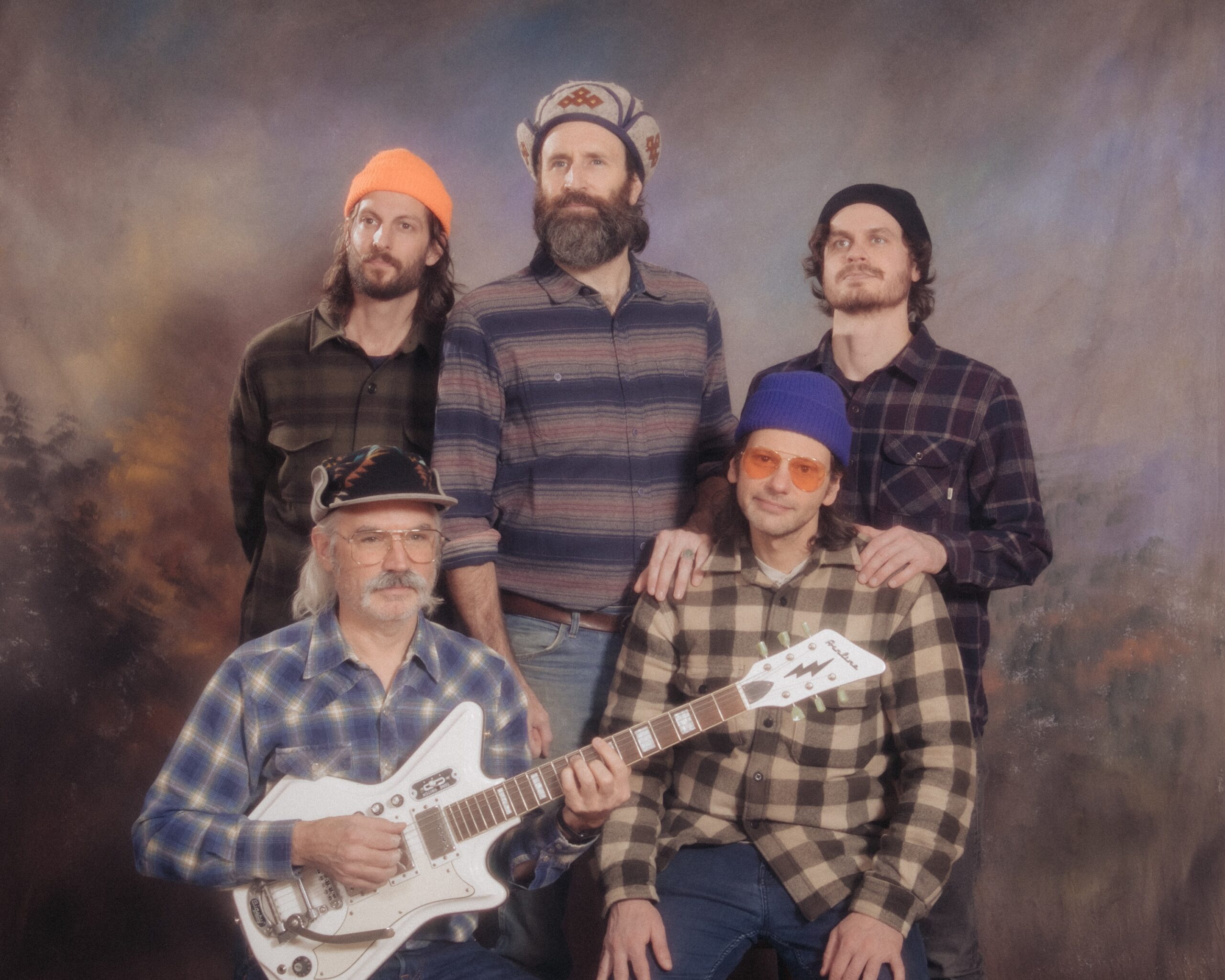
While Wooden Shjips and Moon Duo have each blazed hazy, lysergic trails with their distinctive blends of metronomic psych — Johnson’s careening, outer space guitar leading the fore — Rose City Band adds a country element and more intricate songwriting. “It’s because of the players in the band,” Johnson says. “They inspire me. And as the bandleader, I don’t really give instructions. I try to let them just bring what they bring to the songs.”
Style Weekly: It seems like you’re always making music.
Ripley Johnson: It comes in spurts. When I’m not doing it, I feel kind of guilty for not doing it. I think there’s part of the process that requires downtime, but it’s a weird vocation.
I have to ask: Is Wooden Shjips still a going concern?
Not really, but I do get asked that a lot. I just spent some time with our bass player, Dusty [Jermier], last weekend in San Francisco, and we talked about getting together to play, but we don’t live in the same cities, so it’s really hard to say. I just try to follow where the flow goes, where the energy goes. I never say never, because it’s possible, but it doesn’t seem like there’s a lot of energy to do Wooden Shjips stuff right now amongst the members. So my energy has been focused on the Rose City Band and then a little bit on Moon Duo.
Do you fill the same role in every band or is, say, Wooden Shjips more collaborative and Rose City Band more like a solo thing?
With Rose City, when it comes to the records themselves, it is definitely more me. They are kind of like solo records that I don’t want to release under my own name. But, yeah. Wooden Shjips, when we make a record, we all get in the studio and it’s more of a traditional ‘let’s play the songs live and hit record.’ The Rose City Band stuff started off with me just indulging my own desire to do it exactly the way I want to do it. And it was much more personal as far as drawing on inspiration from my childhood and my younger years and trying to reconnect with the first music that I loved, which I sort of came back to as an older person. I guess Rose City Band is much more personal in that way.
And that music you loved was country music?
Not strictly country, but ‘country-ish’ music. I mean, classic rock to me has lots of country elements. We live in such a weird age. If you put a mandolin on something, people want to call it country and they want to put it in this narrow box. Whereas, in the ’70s, someone like The Faces or Rod Stewart, they’d have a mandolin and it would still be rock music, you know?
Right. Like when Crosby, Stills, Nash and Young would have a pedal steel.
Right. There’s a country element that I think was common in a lot of ’70s music in general. It’s that, but it’s also [straight] country as well. I mean, I love Merle Haggard and I love Johnny Cash and those were early loves. I think a lot of the stuff that I connected with when I was a kid, Neil Young, for example, or The Band or Bob Dylan, those artists went through their ‘back-to-the-country’ phases where they went rural and connected with a deeper vein of American music. I connected to that deeper vein through them.
Is this the same Rose City band that you’ve had all along or have the members changed up?
The members have changed up a bit. We’ve been playing in this configuration for about a year.
And you record the music yourself in your own studio, right?
We record the drums somewhere else, but, yeah, we’ve been recording everything at home. I have a couple good mics, some good gear and some good amps. And we record digital so these days you don’t need that much. The drums are like the one thing where we need a good room, you know? A lot of my favorite records are home recorded. You know, Bob Dylan and The Band with ‘The Basement Tapes,’ one of the greatest records of all time.
You are based in Portland, Oregon now. Where are you originally from?
I was born and raised in Connecticut. And then I went to college in Santa Cruz at UC Santa Cruz and then I never left the West Coast after that. When I got there, I felt at home right away.
Was it a nurturing music scene?
Well, college was really cool because at the time there was a really good scene in Santa Cruz. There were lots of house parties and lots of backyard shows and just super creative bands. And when you’re young, it’s not about whether people like you or not, you just want to be purely creative and the scene was really supportive. That was very nurturing.
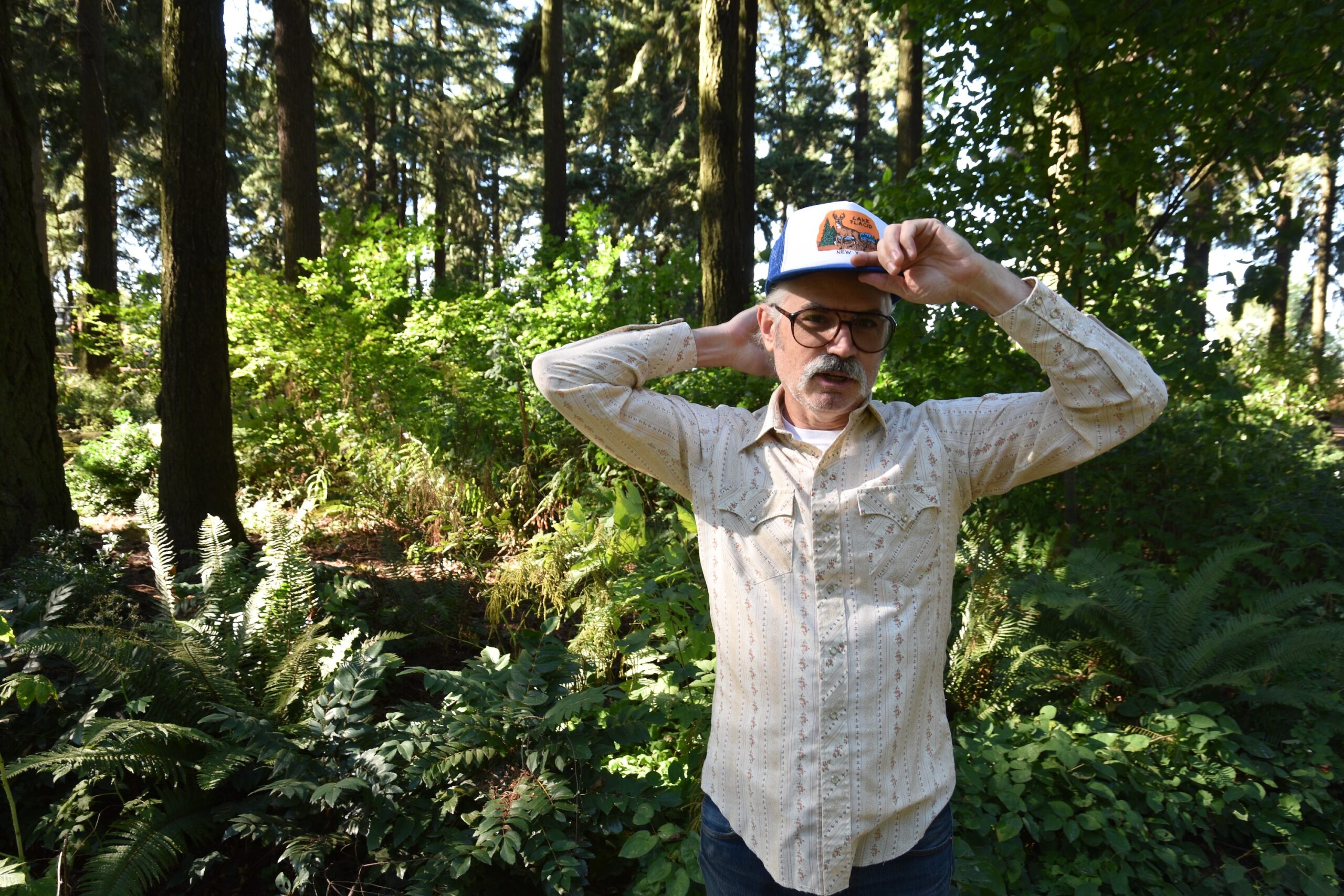
Your music, in whatever band, has its own identifiable vibe, its own hypnotic sound. Where does that come from? Did a light bulb just go off at one point?
A light bulb went off, for sure. When I started doing the Wooden Shjips, I had this sort of epiphany where I stopped playing music because it was really demoralizing for me. At the time, I was listening to a lot of minimalist music. Terry Riley, primarily, but Angus McLeese, who was the first drummer for Velvet Underground. And there was this John Cale box set that came out. It was experimental, you know, drone music. And then the Träd, Gräs och Stenar stuff was reissued, the Swedish band. I heard that and I got really into free jazz and I started making these connections between, like, free jazz and minimalist music and these Velvet Underground bootlegs that I loved, and some Japanese psychedelic stuff. So it was just sort of like a combination of minimalism and repetitive rock ‘n’ roll and fuzz and distortion and stuff. I realized that that’s what I wanted to do. And the mix of all that filtered into the Wooden Shjips stuff. Before that, I didn’t know what I was doing or what my thing was.
I hear a lot of German Krautrock in your music too. Were you exposed to that early on, or was that something that came to you later?
That came to me much later. I didn’t know what Krautrock was until I was older. I never came across it when I was in high school. But I did realize at a certain point that there are things that I loved about certain music that corresponds to Krautrock, primarily repetition and simplicity. And for me the obvious band is the Velvet Underground, who I loved. Things like “Sister Ray” I remember that when I got into Velvet Underground bootlegs my favorite things were always, like, when they would play “Sister Ray” for half an hour. [Laughs] It’s just that repetitive one chord or two-chord vamp.
It’s been around since the beginnings of rock ‘n’ roll.
Yeah, Bo Diddley, you know. There are blues things that I was into that were pretty simple rhythmically. It’s repetitive and the feel is obviously different from something like [German band] Can but it’s not that hard to draw a connection between that repetition and these long sort of groovy jams.
It’s a constant, metronomic, steady beat. And you build on that.
I connect it to the heartbeat. To me, there’s a certain beat. I hear it in a lot of things and it’s something that I’m definitely attracted to. I just love rock and roll, you know? The reason I think I love it is basically that heartbeat,
The most exploratory of your bands is Moon Duo. You say that it is still going strong?
Yeah yeah. John [Jeffrey] the drummer in Rose City Band is Moon Duo’s current drummer. I’m always working with him. And [co-founder] Sanae [Yamada], is my partner and we live together, so we’re all connected and we see each other a lot and talk about stuff. We just haven’t done anything in a while, but I can sense that we’re gearing up for it. Something is definitely on the horizon.
[Editor’s note: Moon Duo was great at Hopscotch in 2015, and who can forget the music video for “Animal” featuring skater Richie Jackson and Kyle Mooney from “SNL.”]
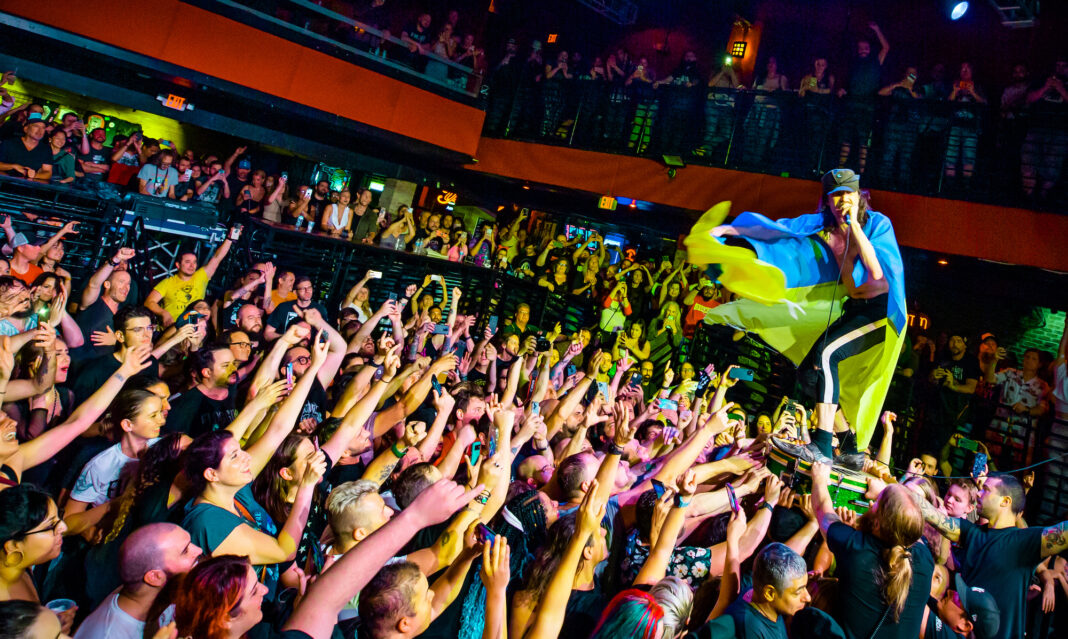
What will you be bringing to the Richmond Music Hall? What is the Rose City Band live experience like?
Oh, it’s much more free and a lot of times people are surprised by it. One of our favorite comments that we got from someone was: ‘I wasn’t expecting so much jazz.’ [Laughs] Which we think is really funny, because we’re not playing jazz. We do improvise and we do have open sections …
Rose City Band’s new record, “Sol Y Sombra,” seems to break away from the minimalism a bit with more complicated songs.
I don’t know if that’s conscious. I think the band probably inspired me to write more, not like in a pop way, but with more parts. To me, that’s a good sign. I love playing with this band so much, and they’re such good players that it inspires me. But, you know, I’m always happy with a two-chord song.
Rose City Band performs at Richmond Music Hall with Powers/Rolin Duo on Monday, July 21. $20. For info and tickets go to https://thebroadberry.com/