The phone rang.
“Hello?” asked Ruth E. Carter.
“Ruth,” said the voice on the line.
“Yes?”
“Ruth, this is the man of your dreams.”
“Denzel?” she asked.
“No! This is Spike! I want you to be the costume designer for my next film ‘School Daze’!”
Spike, if you didn’t catch it, was Spike Lee, and that conversation would prove life-changing, kicking off a storied film career working with the likes of Denzel Washington, Angela Bassett, Eddie Murphy, Steven Spielberg, Ana DuVernay, John Singleton, Chadwick Boseman, Samuel L. Jackson, Halle Berry, Michael B. Jordan, Lupita Nyong’o, Ryan Coogler, and, of course, Lee.
Undoubtedly, you’ve seen her work. Carter’s long filmography includes costuming “Do the Right Thing,” “Malcolm X,” “Amistad,” “The Butler,” “Selma,” “Coming 2 America,” both “Black Panther” movies and the first season of “Yellowstone.” She is the first Black person to be nominated for an Oscar for costume design, the first to win in that category, and the only Black woman to have won two Oscars.
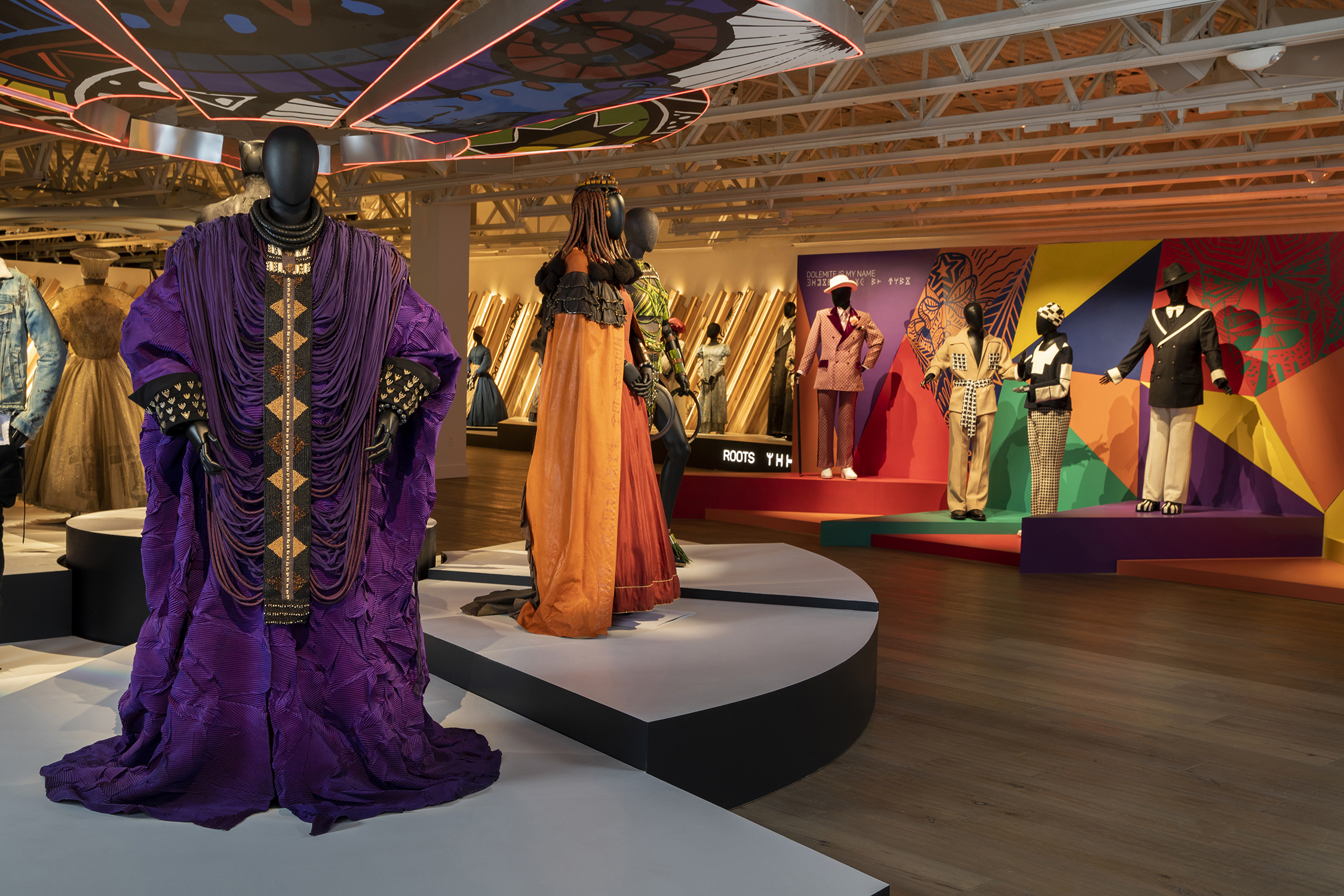
Through Jan. 5, you can see Carter’s Oscar-winning work first-hand at Jamestown Settlement in Williamsburg. The traveling exhibition “Ruth E. Carter: Afrofuturism in Costume Design” showcases more than 60 of Carter’s original garments and provides a glimpse into her creative process.

Deep roots in Virginia
Reached by phone while working on an untitled Coogler project in New Orleans, Carter says that the exhibition’s stop in Virginia has special resonance for her: not only does she have deep familial roots in Virginia — including Roanoke, Bedford, Newport News and Hampton — but Carter began her costuming career while attending what’s now Hampton University.
As Carter’s family has a long history with the institution, Hampton was the only college she applied to. Initially, Carter pursued a career as an actress, but after she didn’t make the cut for a college play and was asked to do the costuming instead, she was hooked.
“I went into this little costume shop and never left,” says Carter. “Even if I was playing a role in a play, I did the costumes too. I started to be intrigued by this possibility of creating storytelling and art through costumes.”
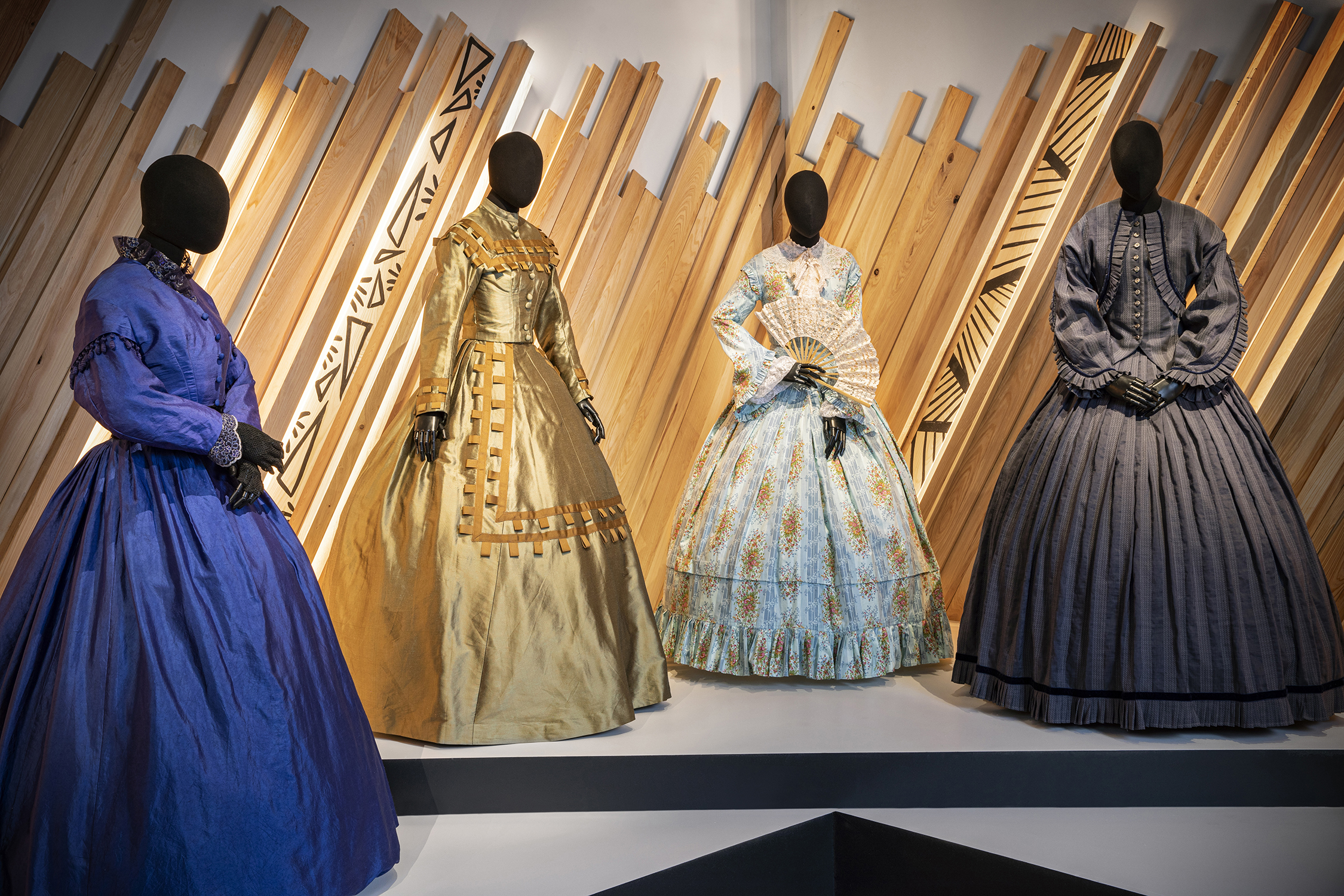
During this time, Carter also worked as a historical interpreter at Colonial Williamsburg, playing two different real-life people who lived in Williamsburg during the colonial era: an enslaved woman who worked at a tavern and a free Black woman who was making dresses to purchase her family’s freedom.
“Colonial Williamsburg was one of those experiences that lives inside of me,” Carter says. “That experience changed my life. Working with a historian that closely really showed me how to delve into research and how reading informs so much of the character and the costume. It gives you a base, a subtext, a story within a story, so that it lives inside of you.”
Working with Spike Lee
After graduating, Carter worked for various theater and dance companies around the country. She met Lee, then an up-and-coming filmmaker, after one of these shows. That chance encounter resulted in Carter becoming the costume designer for “School Daze,” Lee’s second feature film, about undergraduates at a historically Black college in Atlanta.
Carter says she drew inspiration from her own attendance at one of the oldest historically Black colleges and universities (HBCUs) in the country.
“It just seemed to be a project that was a continuation of my time at Hampton,” she says, noting that Lee and members of the cast brought their own experience at HBCUs to the project. “There was a shorthand. Just to see the [fraternity] pledging process on an HBCU is pageantry. We didn’t mimic anything that we’d seen. We created all new ideas.”
Back then, Lee’s independent films — which utilized an all-Black or nearly all-Black film crew, a rarity — took on the Hollywood establishment; crewmembers wore clothes that advocated for divestment from South Africa to protest apartheid and sported quotes from Booker T. Washington.
“We were radicals, and we were making film by any means necessary,” she recalls, referencing a phrase promoted by Malcolm X. “We had purpose, and we were defiant, and we were anti-Hollywood. We were doing things our way and we wanted to be different. We wanted to show something that wasn’t being seen in cinema. We wanted to tell our stories our way, and that’s how this relationship with Spike grew.”
Their next collaboration together was “Do the Right Thing,” the 1989 film about the residents of a Brooklyn neighborhood on the hottest day of the year. The movie reflects the racial context of New York City in the late ’80s, including the city electing its first Black mayor, Brooklyn native Mike Tyson dominating the boxing world, and multiple racial incidents in the city against Black people.
“Do the Right Thing” was directly inspired by the 1986 Howard Beach incident where a group of white teens attacked three Black men after they left a pizzeria. One of the Black men was hit by a car and killed while fleeing.
“All of this was happening around Brooklyn and Spike wanted to have a voice in that,” Carter says.
Shooting on-location in Brooklyn for 10 weeks was a challenge, especially as the weather got colder and actors had to still pretend it was the hottest day of the year.
“It was difficult to shoot the riot scene with the water hoses and keep the continuity of this one hot, sweaty day,” she says. “It was incredible. We were so busy and fortified by what we were doing. We were all on autopilot every day, trying to make it the best film we could for the community and the culture.”
Since “Do the Right Thing,” Carter has collaborated with Lee numerous times and become known both for her period work and for costuming “Black Panther.”
So, which type of film is harder to costume?
“They’re both challenging,” she responds. “Period can be more difficult because a lot of things are 100 years old. If you’re going with the 1920s, you have to recreate every single solitary thing that goes on camera.”
Working on a Marvel film, on the other hand, requires lengthy rounds of approvals for every costume, taking “months to get all of the elements to come together for the final costumes,” she explains. “There’s a different trajectory on a Marvel film because of those long lead times.”
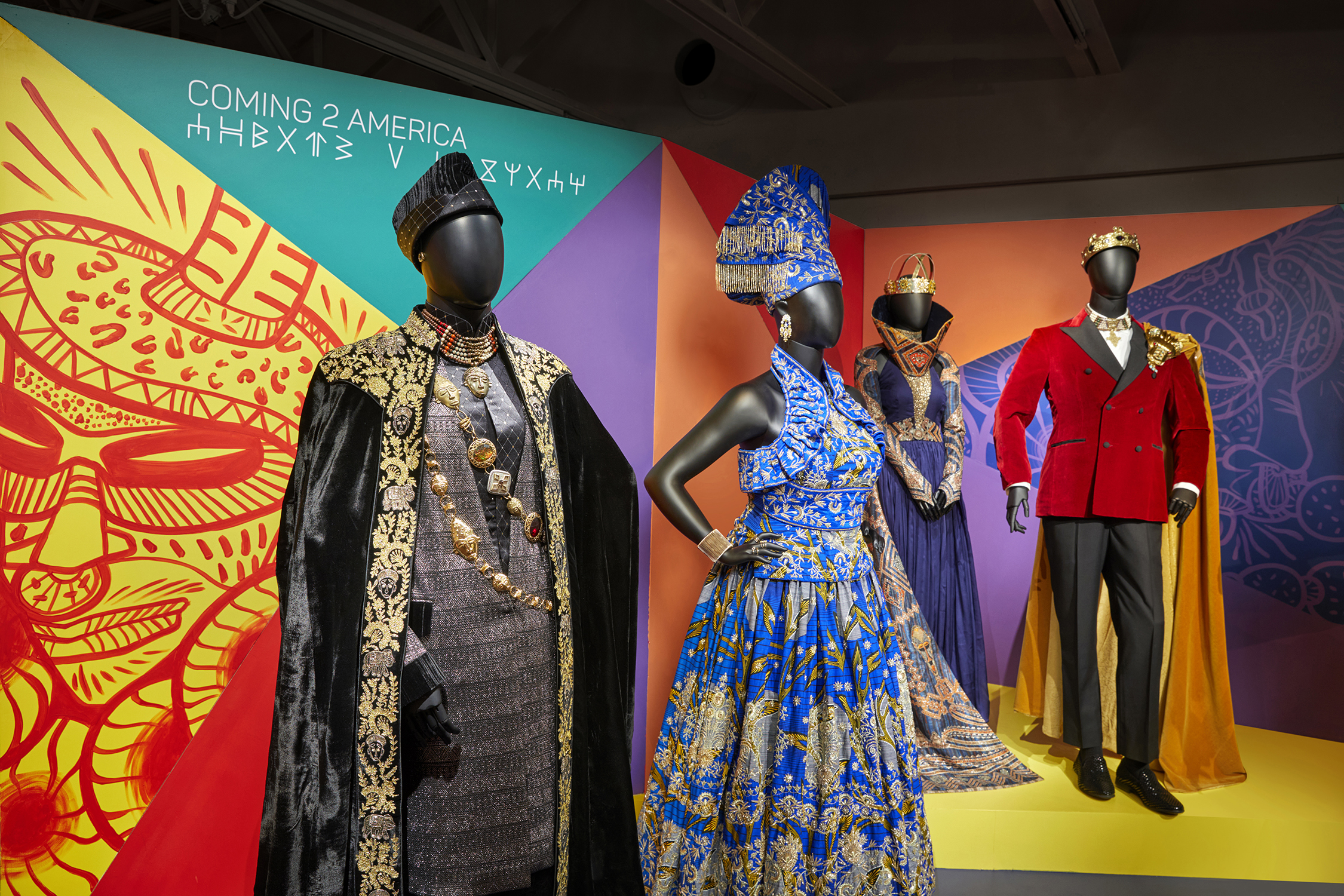
While working on the first “Black Panther,” Carter says there was a running joke: to remember that this was Wakanda, not Zamunda, the fictional wealthy African nation that Eddie Murphy’s Prince Akeem calls home in “Coming to America.” Carter was amused, after working on the first “Black Panther,” when she was asked to work on the sequel film “Coming 2 America” and clothe the residents of Zamunda.
How did Carter differentiate the looks of these two fictional African kingdoms?
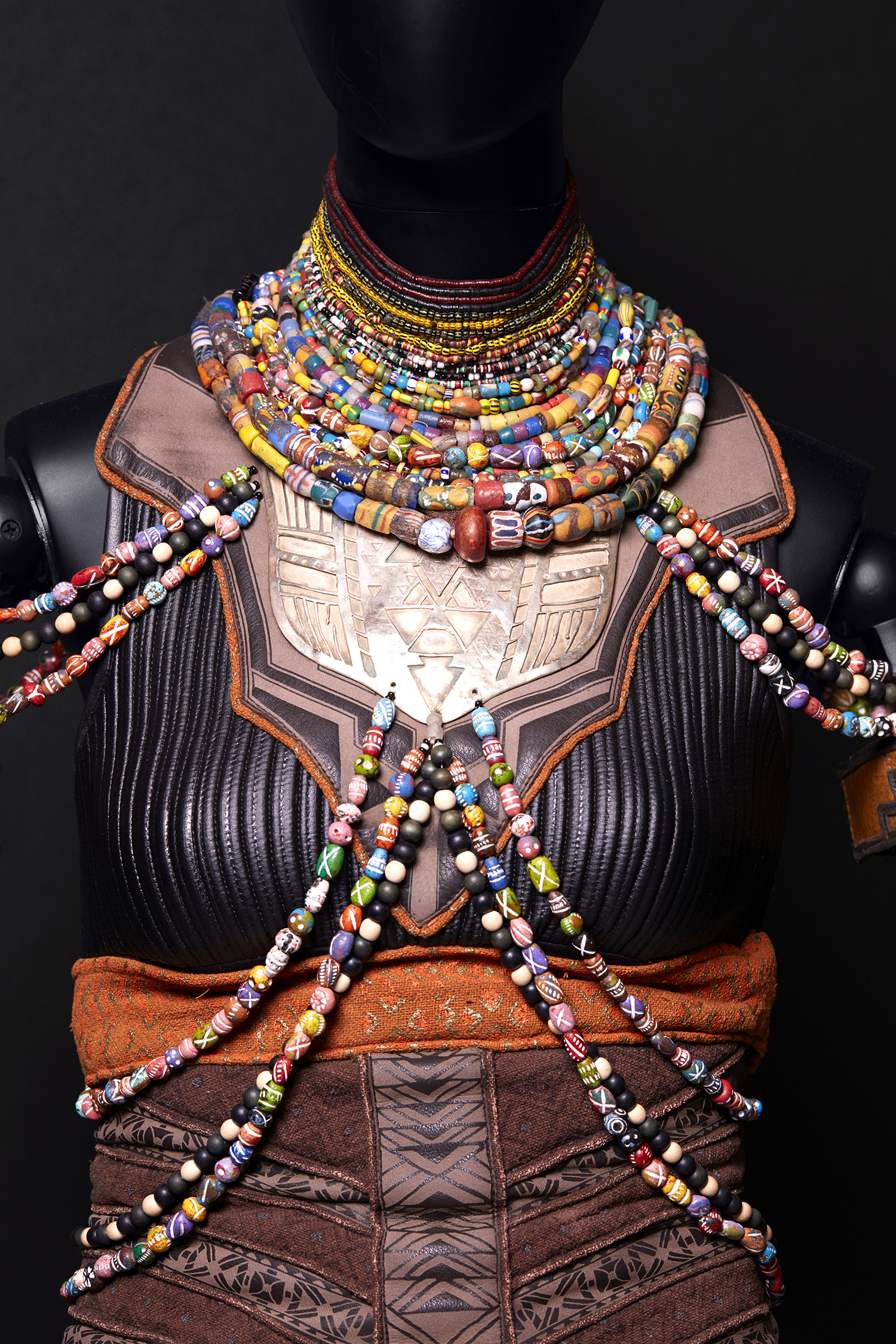
“With a pic like ‘Wakanda Forever’/‘Black Panther,’ you’re creating a world that you want people to believe actually could exist of colonization was not a part of their history,” she says. “You take a little bit more of an in-depth, serious approach to it.”
With “Coming 2 America,” Carter says that uncolonized looks were less important.
“My approach was to bring in as many African designers as I could,” she says, adding that she wasn’t trying to deviate too far from Deborah Nadoolman Landis’ costume design from the original film.
Carter’s Afrofuturist designs for the “Black Panther” films twice won the best costuming Oscar. To date, Carter is the only Black woman to have won two Oscars; her first nomination was for “Malcolm X” in 1992.
While it may not have won an Oscar, Carter is also responsible for one of the funniest costuming moments on film: the aquarium platform shoes worn by the pimp Fly Guy in the blaxploitation parody “I’m Gonna Git You Sucka.” In the movie, one of the shoe’s aquariums breaks to comedic effect, leaving flopping goldfish on the sidewalk.
The kicks were inspired by platform shoes once owned by Pittsburgh Steelers running back Frenchy Fuqua. Carter worked with craftspeople in East Los Angeles to create the aquarium heels.
“They managed to mold it, and there was this little trap door inside the heel” for water and the fish, Carter explains. “It was very hard to walk with all of that water in the bottom of the heel.”
Williamsburg and Zamunda aren’t the only throughlines of Carter’s career. Since the phone call that sparked her film career, Carter has collaborated with Denzel Washington multiple times; her costume design office for the first “Black Panther” movie was located at the Spike Lee Stage at Tyler Perry Studios in Atlanta.
Asked about her Oscar wins and nominations, Carter says “it became clear and apparent that I was bringing something to the cinematic zeitgeist: a point of view, a beauty aesthetic, reimagining beauty standards that elevate a culture.
“It feels really good to be recognized for my work in a film like ‘Black Panther,’” she says, adding that the Academy is “not an organization that’s known for having a history of diversity and inclusion, so to be nominated for ‘Malcolm X’ and to be the first African American nominated, I hold that near and dear to my heart.”
“Ruth E. Carter: Afrofuturism in Costume Design” will be on display through Jan. 5, 2025 at Jamestown Settlement, 2110 Jamestown Road, Williamsburg. For more information, visit jyfmuseums.org.