“Highest 2 Lowest” took me to a breaking point with Spike Lee’s peacocking. Forty years into his career and still with the preening tics: actors screaming into the camera; hyper-kinetic cinematography that often seems more interested in selling than dramatizing; beautiful music used to overwrought effect; frequent digressions; and a constant need to score points. Lee’s best films work either without or in spite of these indulgences, but “Highest 2 Lowest” can’t bear their weight.
Most peculiar is Lee’s choice in source material, the 1963 thriller “High and Low,” which is among Akira Kurosawa’s greatest achievements. If Lee wanted to erect a monument to his and Denzel Washington’s virility, why drag one of the most class-conscious of all procedurals into it? Kurosawa’s movie is at odds with Lee’s self-absorption.
Denzel Washington plays the myth of himself here, though instead of a movie star he’s a stand-in for Quincy Jones, a producer who’s played a pivotal role in some of the most formative music of the last half century. Lest we miss the point, his name is King, but there are potential usurpers to the throne, as he is in the midst of staving off a takeover of his company by stockholders who value profit over the soulful music that King cherishes. These stockholders prioritize social media, reveling in the frenetic stimulation and overnight sensations that drive the dystopia that we now call pop culture.
For Kurosawa, the business involving the corporate maneuvering was a means to an end. For Lee, it’s the heart of the enterprise, and in the film’s first 30 minutes he’s in command while establishing his favorite city’s various matrices of power, from the corporations to the artists to NYC real estate to the charity events.
Lee, who has never had much interest in telling a traditional story, floats around for a while, savoring the sets and artists and historical figures that are referenced throughout the movie. As usual, the director’s fetishizing of power is at odds with his politics. Shots of, say, a poster of Kamala Harris, announcing Lee’s team no less conspicuously than the references to the Yankees, compete with priceless suits, condescending portraits of civil servants and Washington’s mega-watt smugness.
The plot hook is the same as Kurosawa’s, which was taken from a novel by Ed McBain: a titan of industry, in the midst of consolidating power, discovers that his son has been kidnapped with a demand for a ransom that, if paid, will destroy him. The titan is ready to hand over the money until he learns that it was his driver’s son who was taken, and suddenly that ransom seems easier to ignore. Lee and Washington lean into the unsavory elements of their protagonist here, and the film has a pulse. King considers not paying, and the perversity of this temptation is underscored by the fact that the driver in this version, played by Jeffrey Wright, is a childhood friend.
The movie goes wrong somewhere in the middle and only gets worse. At first, the central issue is that Lee’s stylistic noodling and endless cultural footnotes prevent him from tightening the screws on the audience. Most of the time, thrillers cannot be relaxed hang-out movies. The central set piece of “High and Low,” involving the paying of ransom on a moving train, is relentless. It’s a marriage of ingenious, believable details and our growing kinship with a protagonist who initially appeared to be a cold fish.
This set piece is reprised by Lee and dulled with flourishes, from a more absurd means for the kidnapper to procure the money to footage of the Puerto Rican Day Parade. That footage is sensual and alive, perhaps the high point of the movie, but Lee cuts to it so often that the sequence fizzles. You have time to realize there’s no rhyme between the parade, the kidnapping and King’s desperation (which Washington doesn’t play anyway). Lee throws stuff against the wall, bolstering his New Yorker bona fides.
The beauty of Toshiro Mifune’s performance in “High and Low” resides in how the actor allows the mogul to blossom. Losing his money frees him, and if that sounds cheesy, Kurosawa earns it. We are initially stuck in Mifune’s sprawling home, high above the city’s sweltering commoners. After the paying of the ransom, after Mifune takes a boy he thought about sacrificing into his arms and exclaims the child’s name with profound relief, Kurosawa leaves the character behind. The film then travels to the “low” that is the teeming life that props up barons like the Mifune or Washington characters. We see cops, drug addicts, bartenders, everyone in between, as the movie becomes a song of society. It’s a mid-movie switch as audacious as that of “Psycho.”
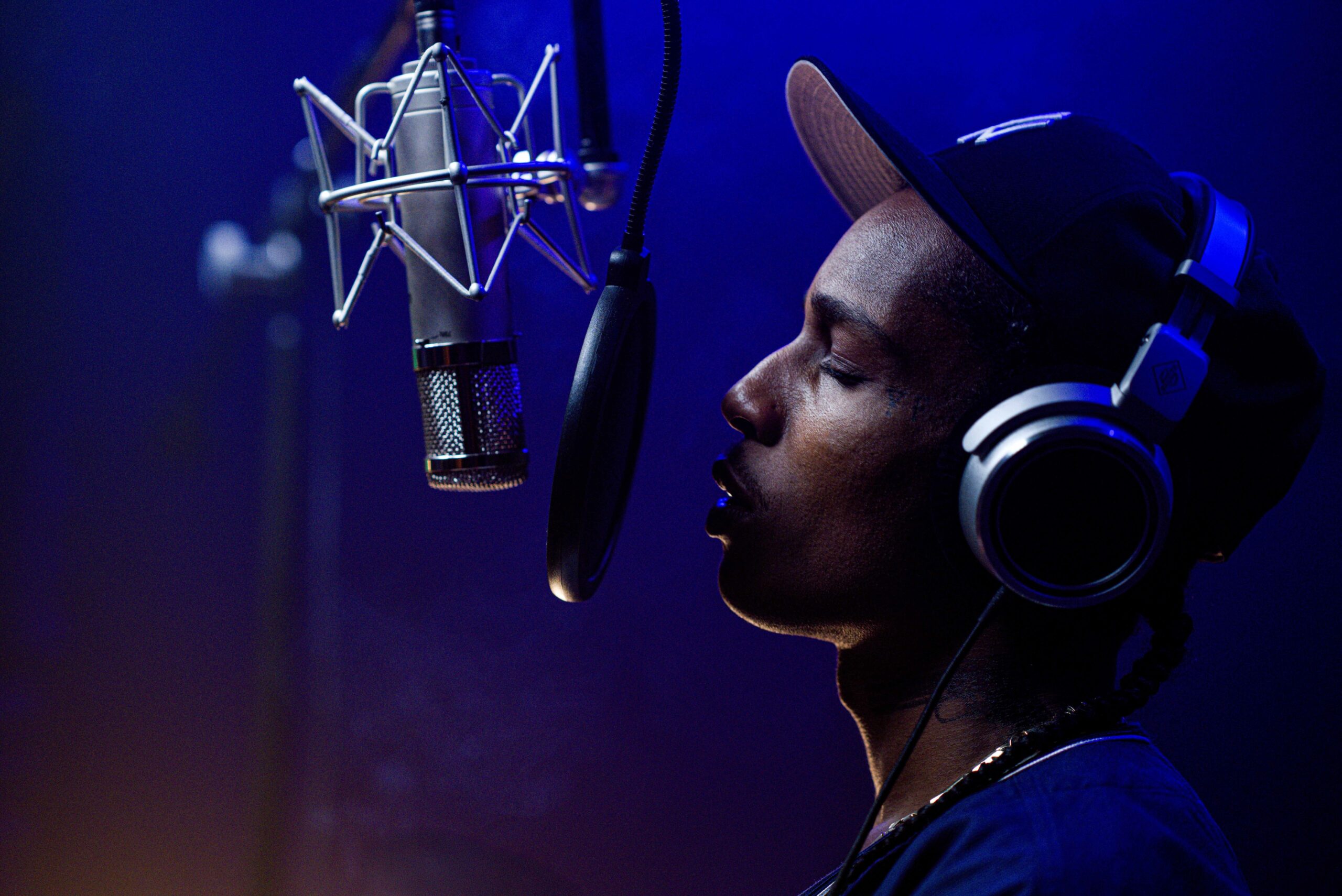
Lee does not have the humility or patience for all that. Washington remains in the picture, his presence a testament to Lee’s insistence that they both still got game. Washington and Wright team up to find the kidnapper in sequences that could easily fit into Washington’s “Equalizer” pictures. Along the way, they unearth Yung Felon (A$AP Rocky), a criminal and struggling musician who has been ignored by King. A$AP Rocky is phenomenal; his ferocity a reprieve from the oppressive swagger of Washington’s performance. He’s the only one here who seems to get what the material was once about: empathy for people whom most movies — including this one — view with either indifference or hostility.
For Lee, King’s music is a symbol of his own legacy as a filmmaker, and for the soulful music that is being crowded out by hustlers on social media. “Highest 2 Lowest” is a celebration of tradition, of the minted artist’s right to practice his trade unchallenged. In one of the film’s most embarrassing scenes, King and Felon have a rap battle. They meet again, in differing circumstances, and King explains to Felon that he won’t profit from Felon’s cynical way of doing things. Ok, boomer.
Many of us assume that a man in King’s position has done shit. We also assume that men in King’s position would see things Felon’s way if there’s a nickel in it. Given the current turmoil of this country, Lee’s insulated sanctimony is especially unseemly. The speechifying— essentially “get off my lawn” screamed by people who’ve made their buck and presume to tell others to accept the rules as dictated to them — mires “Highest 2 Lowest” in hypocrisy. It’s remarkable to encounter these sentiments in a movie made by a man who once quoted Public Enemy’s “Fight the Power.”
“Lurker” is a more empathetic exploration of the Faustian tension between art and social media than “Highest 2 Lowest.” Maybe because filmmaker Alex Russell is an up-and-comer, someone who hasn’t already, say, made bank directing Nike commercials.
The film has a set-up that’s traditional of stalker thrillers that were in vogue in the early 1990s. Matthew (Théodore Pellerin) is a geeky retail clerk in his 20s, living with grandma, who has a chance encounter with an ascendant musical artist, Oliver (Archie Madekwe). The clerk plies the artist with a shrewd mixture of flattery and negging and eases his way into the latter’s backstage ecosphere, where he angles for a promotion to documentarian slash Tom Parker-like consigliore.
Like a lot of small, earnest, arty thrillers, “Lurker” is slow and uncomfortable with its formulaic genetics. It spends an hour on what used to be called character development even though its characters are instantly recognizable. And, despite the long first act, the film is patchy on details. How famous is Oliver meant to be? By celebrity standards, he has an approachable, lo-fi lifestyle. What is Oliver’s relationship with the vaster infrastructures of show business… producers and the like? Alex Ross Perry’s “Her Smell” got these details across. So did Finn Parker’s “Smile 2.”
It seems that Oliver is on the rise but hasn’t landed yet, which he articulates directly to Matthew. But still, for a guy who’s recognized on the street, he has like three groupies, dudes who recognize Matthew for the parasitic interloper that he is, reminding them uncomfortably of their own uselessness. This stuff is convincing but thin considering how much time Russell spends setting the plot’s table.
Miguel Arteta’s “Chuck & Buck” is an influence, especially on the psychosexual tension that develops between Matthew and Oliver. Finally something happens: an incident that reverses the power dynamic between the men. A scene between Matthew and Oliver in a recording studio really cooks, clearing the air in respect to the weaponized envy and resentment that drives social media, giving the famous instant power over the anonymous. The film’s cynicism is creepy, then moving and wickedly amusing.
“Lurker” is as skeptical of social media as “Highest 2 Lowest,” but it frames that skepticism from the point of view of the alienated. Lee might as well ask us to eat cake.
“Highest 2 Lowest” is in theaters, and now available to stream on Apple +. “Lurker” is in theaters, and will be streaming on MUBI later in the year. “High and Low” can be streamed on Max and The Criterion Channel, among others.