Though she’s an accomplished director of opera, theater, dance and film, Mo Zhou never thought she would direct “Madama Butterfly.”
Generations have been entranced by Giacomo Puccini’s opera about a 15-year-old Japanese girl who marries an American naval officer in 1904, but for Zhou, “Madama Butterfly” is an example of cultural appropriation, playing into stereotypes of Asian women and “representing a white man’s imaginings from that time period.”
“I’ve been avoiding doing ‘Butterfly’ for the past ten years,” says Zhou, who is originally from China. “‘Madama Butterfly’ fever, in a way, has enhanced all the oversexualization of Asian women in western popular culture for the past century.”
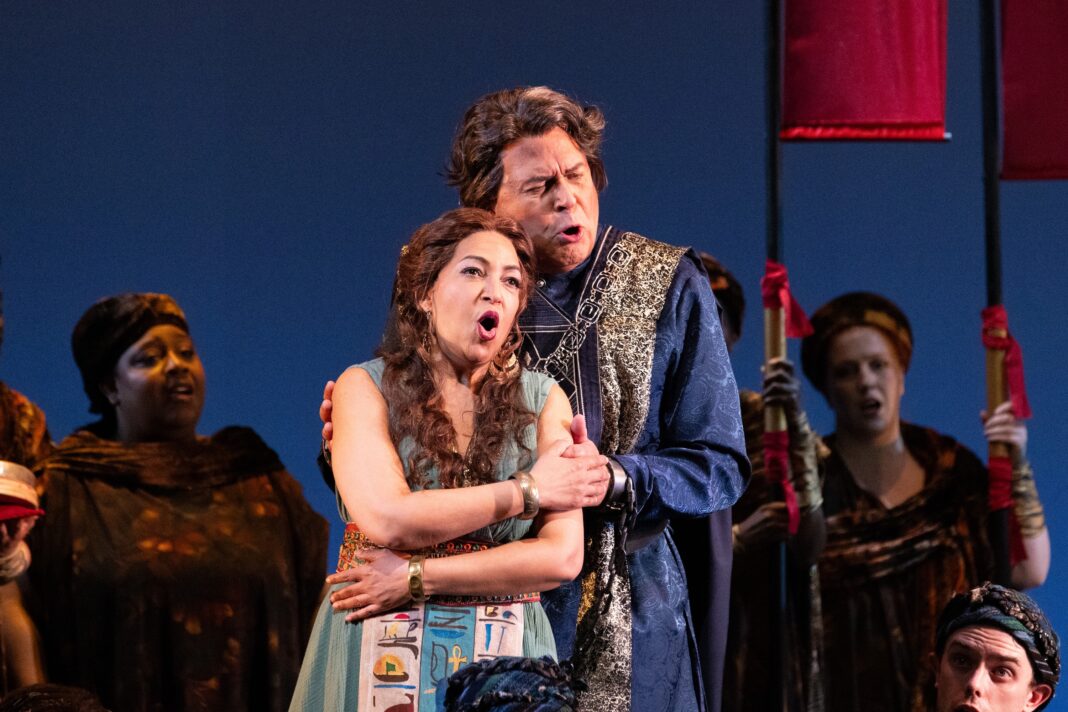
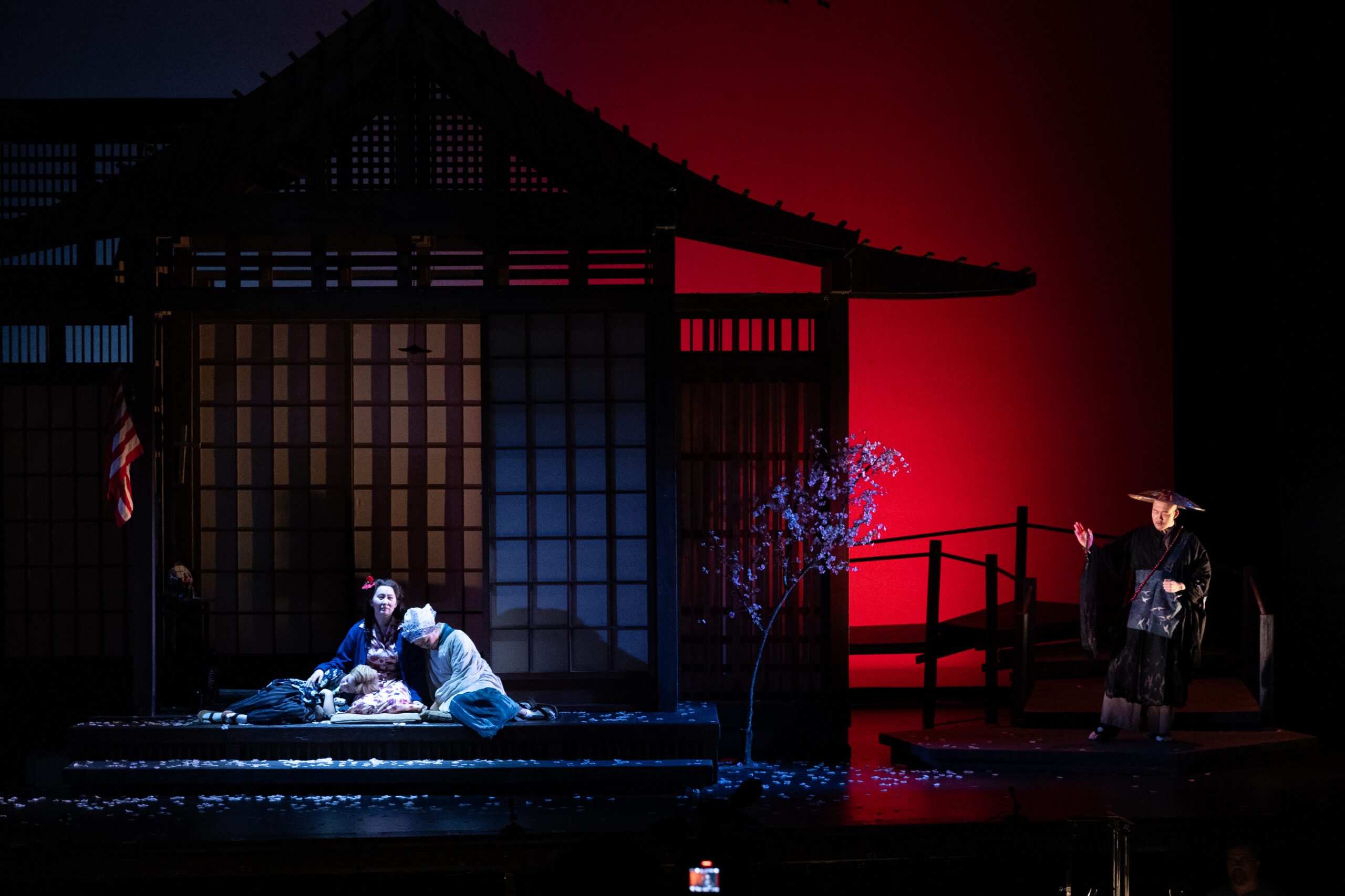
Long critical of the opera, Zhou previously stated that the only way she could envision directing the work was to set it during the Allied occupation of Japan after World War II. It’s this vision that takes the stage in Richmond this weekend.
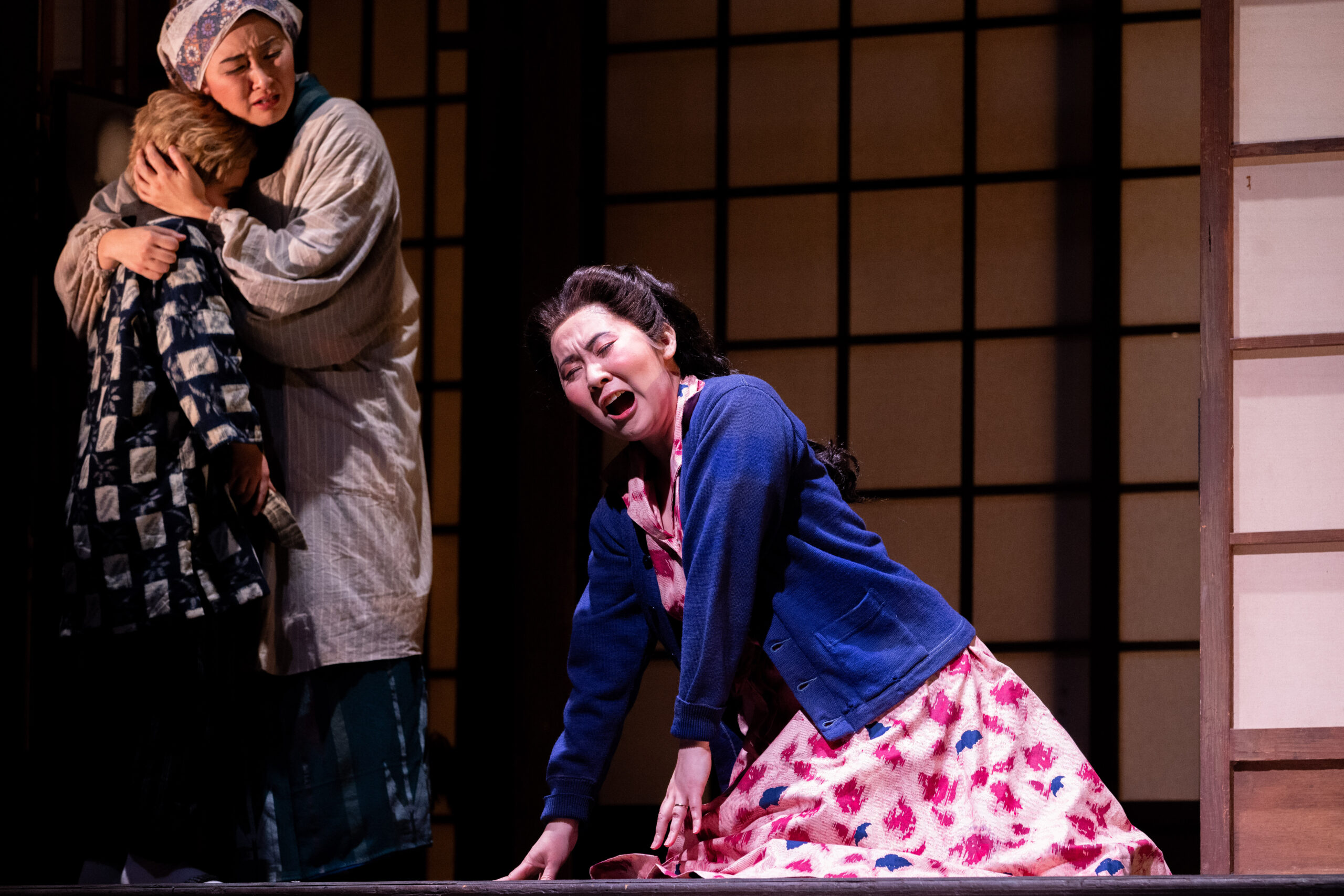
As this production takes place shortly after the atomic bombings of Nagasaki and Hiroshima, some characters appear onstage with crutches, bandages, eyepatches and chemical burns. Zhou says the change in setting makes the story more realistic and gives the female characters a better motivation for their actions.
“I strive to make sure every female character in the show has a backbone,” says Zhou, adding that this recentering of the opera gives Cio-Cio-San, its female protagonist, more agency. “She’s not a weepy emotional type. She made a choice.”
Zhou isn’t alone in her criticisms of “Madama Butterfly.” Many have denounced the opera for portraying Asian women as submissive and exotic, and some productions have used stereotypic costumes and makeup for Asian characters.
Recently, Asian and Asian American artists around the country have reworked the piece to make it less problematic. Last year, Cincinnati Opera staged it as a video game fantasy with elements of anime. Boston Lyric Opera produced a version that takes place partially in a World War II incarceration camp. New Orleans Opera changed the ending to make it less tragic and give Cio-Cio-San more agency.
With this production, Zhou asks how many war brides were left behind in Japan with children fathered by American GIs.
“This production is a tribute to the resilient souls of Asian women who lived through World War II and post-World War II in the Far East,” Zhou says. “It’s a dedication to their experiences, which we do not talk about a lot in America.”
Zhou says that between 1945 and 1952 there were 45,000 documented Japanese war brides.
“As soon as they landed in America, they were forced to change their names and they were told they couldn’t wear a kimono,” Zhou says. “In their homeland they were branded as the women who married their enemy.”
Zhou has brought in other Asian women to help her realize a less problematic “Butterfly”: costume designer Ruoxuan Li is also originally from China; lighting designer Marie Yokoyama and cultural and movement consultant Asuka Morinaga Derfler are from Japan.
Kristen Choi, who plays Cio-Cio-San’s maid Suzuki in the show, says she wants this staging to present a snapshot of history.
“We want people to identify and put themselves in the shoes of this woman who had this ideal of becoming American,” she says. “Everybody is a victim of their circumstances, and the circumstances of the time are not fair.”
Choi is a bigger fan of Puccini and his music than Zhou.
“The way that he wrote it, it’s very emotional,” says Choi of the score. “There’s sweeping melodies and themes that you can hum over and over again. His music flips a switch inside you.”
Jonathan Burton, who plays the naval officer Pinkerton, says the show explores the “idea of Americans feeling superior” as occupiers of their former enemy. In the opera, Pinkerton marries Cio-Cio-San, then leaves her soon after.
So, how have audiences reacted to this rendition of Pinkerton?
“They booed me voraciously, so that’s some indication, I suppose, that they felt something,” says Burton with a laugh.
Zhou hopes that this production will help counter stereotypes about Asian women.
“It will be a very refreshing and genuine take of a very beloved, yet problematic, classic,” Zhou says. “People like to say this is a tragic love story. It’s never about love.”
Virginia Opera’s “Madama Butterfly” plays March 22 and 24 at the Dominion Energy Center, 600 E. Grace St. For information, visit vaopera.org or call 866-673-7282.