Before Alan Pell Crawford moved to Richmond, he lived in Alexandria, got married at George Washington’s church, had his first son baptized there and lived down the road from Mount Vernon. So it was hardly surprising when he began to read extensively on George Washington and the Revolution.
One jarring fact jumped out at him as he researched the era. Close to three years passed between the last major battle in the Revolution and the surrender at Yorktown, but the events in that period were scarcely covered in most histories. “And Washington was in the North until Yorktown,” Crawford acknowledges. “I was missing something, so I wanted to figure out what really drove the British to give up the fight.”
And not just figure out but write about it. Crawford will discuss his book “This Fierce People: The Untold Story of America’s Revolutionary War in the South” on July 9 at the Library of Virginia, where a portion of his research was conducted.
Other sources included Mount Vernon, Revolutionary battlefields and, because this is the 21st century, online. A fellowship at the Boston Athenaeum gave him access to Washington’s library because it’s stored there. Crawford went through some of Washington’s own books, including works on battlefield tactics written by contemporary British officers. “Discovering that Washington owned those battlefield tactics books by British officers who had served in the French and Indian War, was a satisfying moment,” he recalls. “To my surprise, they knew guerrilla warfare, but didn’t practice it as well as even untrained colonists.”
His overriding question was why so little historical emphasis been placed on the southern campaign of the Revolutionary War. The earliest histories of the war were primarily biographies of Washington, written by people from New York or Massachusetts. “There was a certain bias operating there, and I don’t mean that as critical,” Crawford says. “People understood the war as ‘George Washington’s War,’ which was the title of one such history, and the authors were mainly interested in the engagements in which Washington was directly involved.”
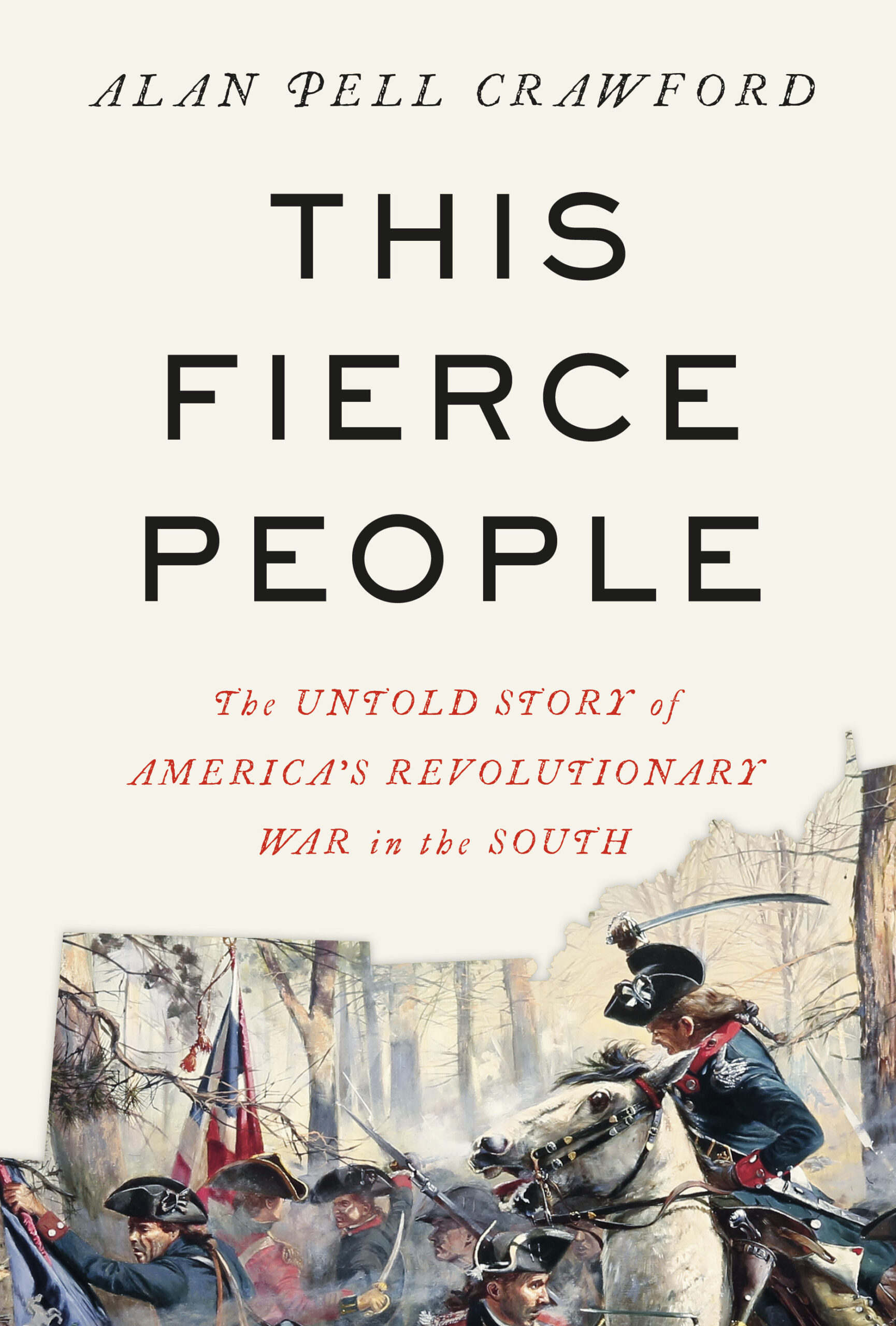
To this day, Crawford says that in general histories of the war, if the Southern campaign is mentioned at all, it’s usually confined to one chapter toward the end.
“In our time, I believe that because many of the major officers in the South were slaveholders, there is a general — and understandable — reluctance to look closely at those Southerners and their contributions to the war,” says Crawford.
His research indicated that the Revolution was much more of a civil war in the Southern backcountry. There were neighbors killing each other, some fighting on the British side, but generally a kind of guerrilla warfare. “This didn’t just surprise me, it surprised Nathanael Green of Rhode Island, who was sent by Washington to be the overall commander of the Southern Department of the Continental army,” Crawford says. “He was shocked by how savage it was. Greene kept leading the British farther and farther north and west, distancing them from their own supply lines.”
Few non-historians have even heard of the Cowpens in South Carolina, but it was there that Daniel Morgan planned a battle, which Crawford says is still studied at military academies today. Aware that some of his men had never faced British guns or bayonets, Morgan positioned the least experienced men in a line closest to the Redcoats. He placed more experienced men a few yards back, somewhat concealed, and then had a third group in a woodsy area even farther back.
Morgan told the least experienced men that he expected them to hold their position at all costs. He said they should fire their weapons once, twice, maybe three times, then leave the field. The Redcoats, led by Tarleton, charged the next morning, and the inexperienced men fired their weapons as asked and took off. “As Morgan figured, Tarleton thought the Americans were fleeing the field of battle and that he had already won the day,” Crawford says. “So, he charged forward, right into the line of more experienced men, and his troops got slaughtered.”
Crawford found it edifying to see how Washington’s own understanding of leadership evolved during the war. He began as someone who saw himself in many ways as a general in the British tradition and wanted prosperous gentlemen like himself as his officers. This proved disappointing, and he began to see merit, ability and good military judgment from nobodies such as Daniel Morgan.
He grew to respect and rely on guerrilla warfare, eventually granting Morgan independent command of 500 troops. Washington said that it would be great if they could dress “in the true Indian style,” and whoop and scream when they went into battle, like the Indians did. Says Crawford, “My admiration for Washington’s judgment of men grew more than it would have if he’d just won another victory on the battlefield.”
What began as curiosity about the three years before Yorktown became something much greater. “The more I learned in my research, the larger the story became,” Crawford says. “The book is more detailed than I anticipated, but those are juicy details.”
Writer Alan Pell Crawford will give a talk on his book, “This Fierce People: The Untold Story of America’s Revolutionary War in the South,” on July 9 at noon at the Library of Virginia main branch, 800 E. Broad St. Registration