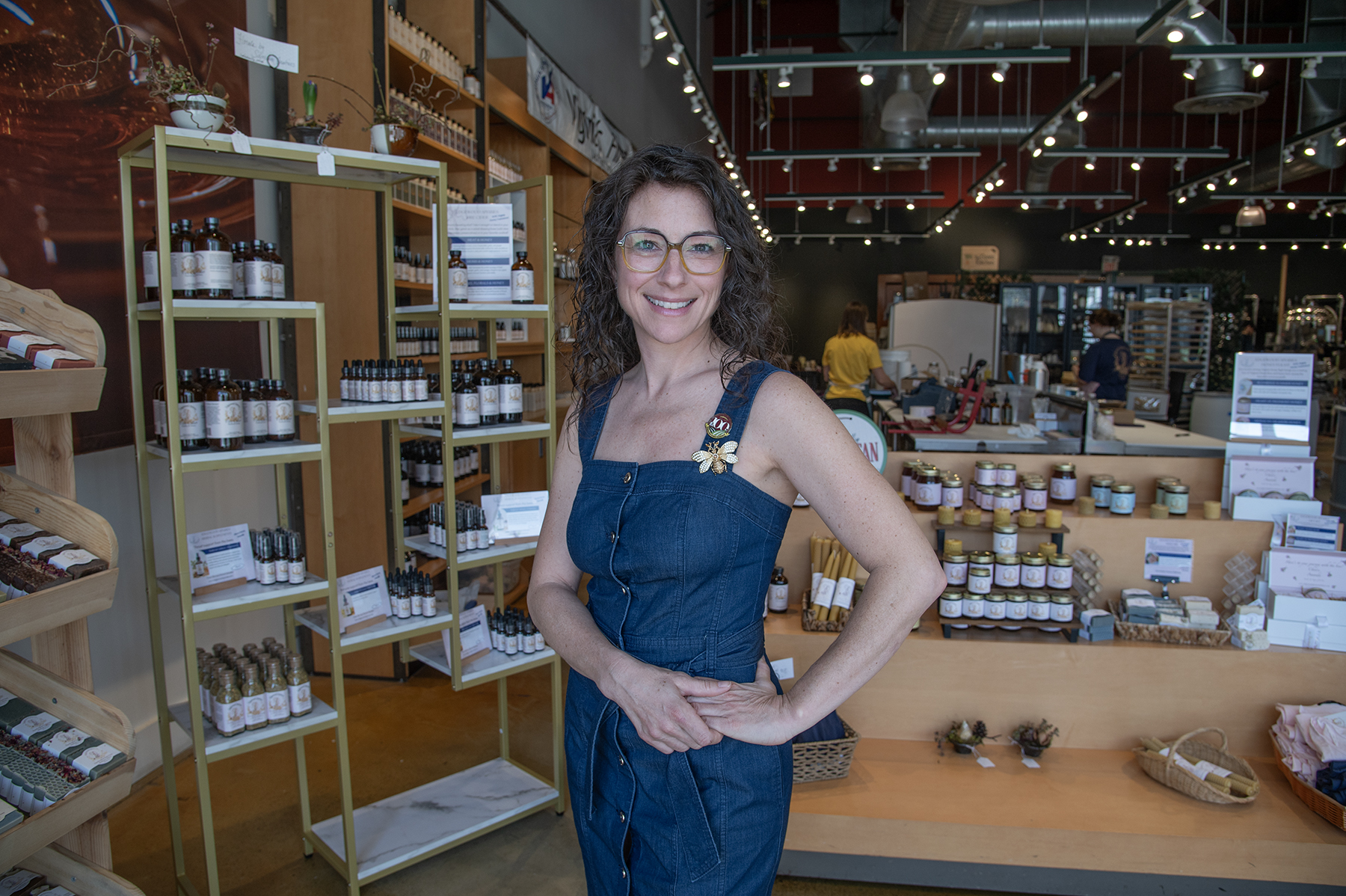
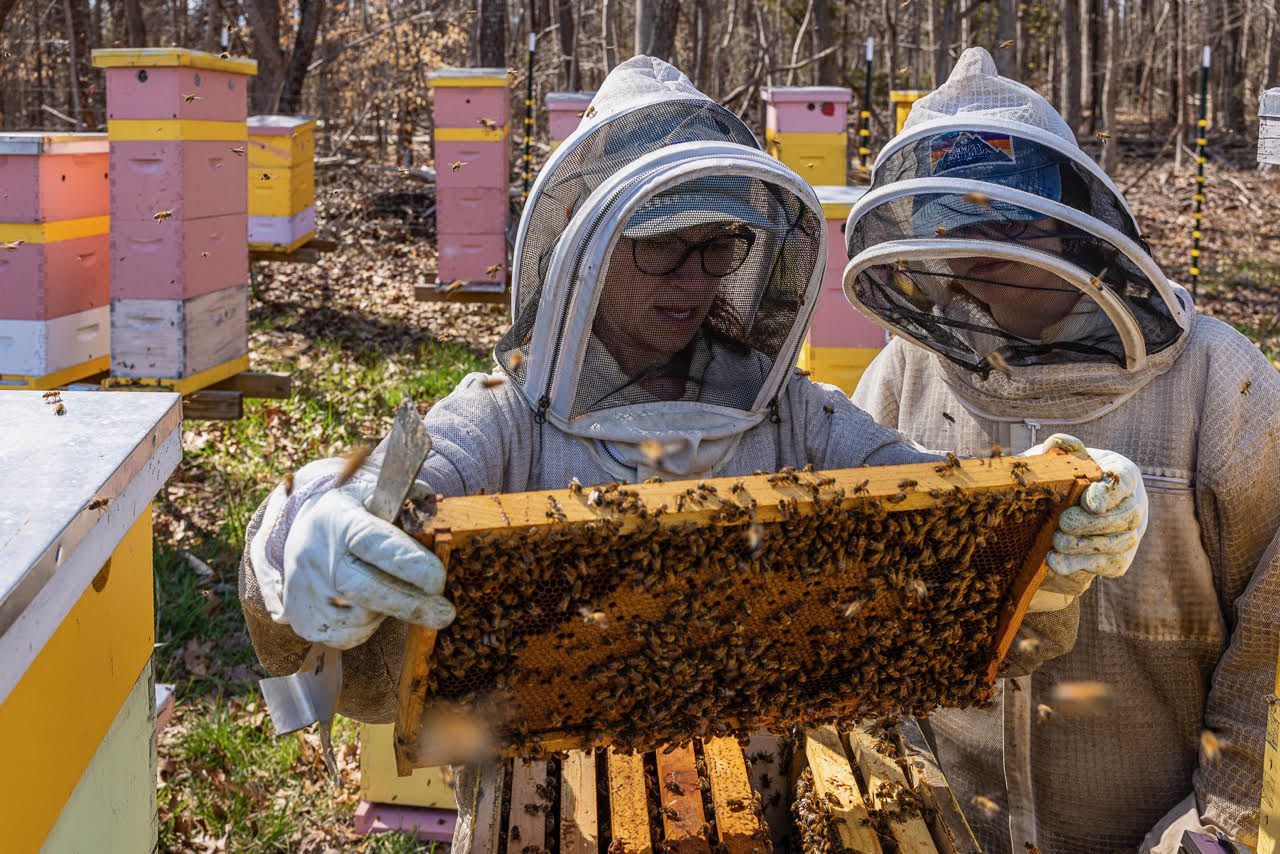
Beekeeper Amanda Sweeney of Edgewood Apiaries, whose parents keep cattle in Halifax, Va., explains a key difference between her livestock and her parents’: “It’s not like a cow would say to its caretaker, ‘Well, I’m going to hang out in the forest for the winter, I’ll check back with you next spring.’ But bees do.”
Despite the fickleness of the endeavor, Edgewood Apiaries started big, with more than 60 hives in its first year. Five years later, the company opened its first retail location at RVA Food Co-Lab in Stony Point Fashion Park on Saturday, March 21.
The store foregrounds Virginia honey, from Edgewood’s own hives (now 100 strong) and other local apiaries.
“I want people to know their beekeeper,” Sweeney says. Each jar from Virginia beekeepers whose honey Edgewood sells is labeled with a QR code, which links to a video of the beekeeper whose apiary the honey came from.
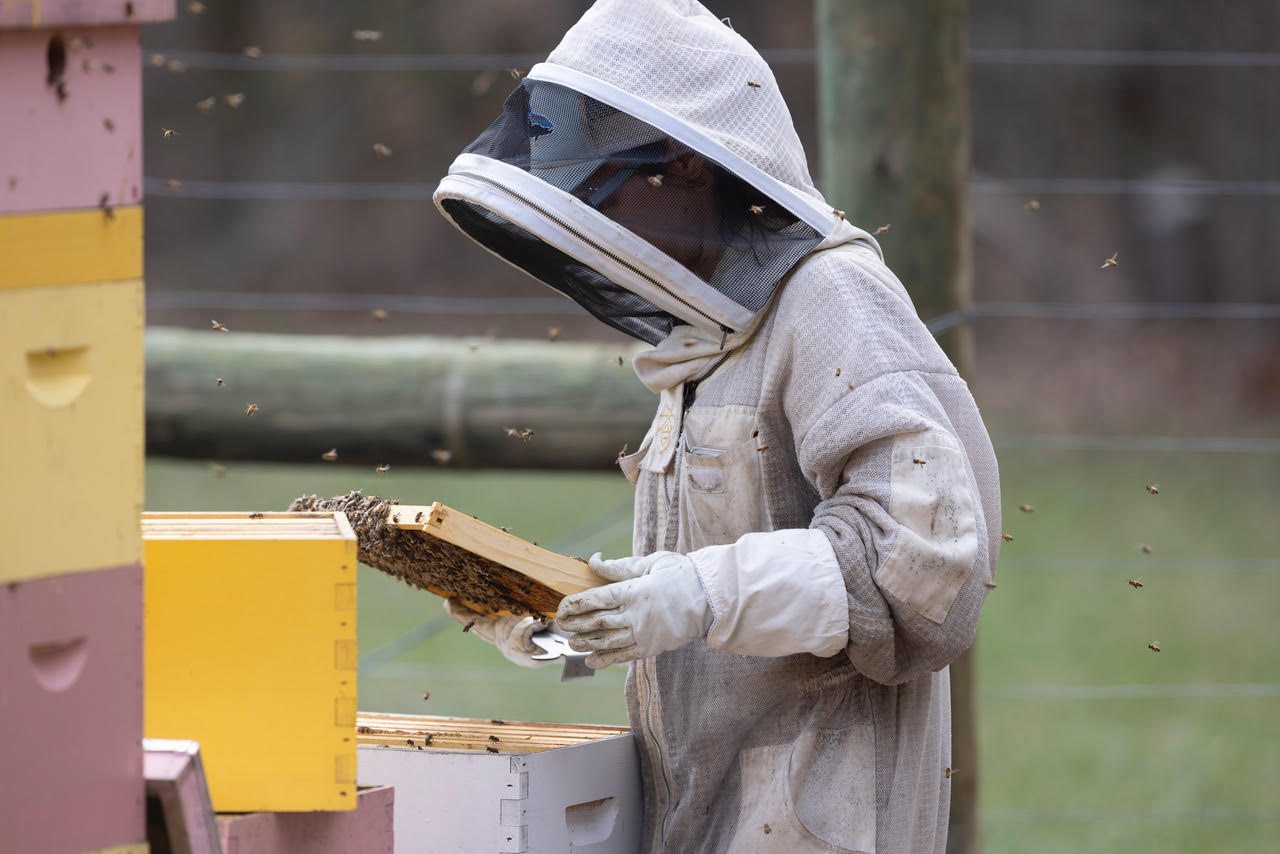
Sweeney says that transparency is an important value at Edgewood Apiaries. This extends to the new retail location, where visitors can see, behind the shelves, the workspace where the company’s herbal supplements and other products are prepared and bottled.
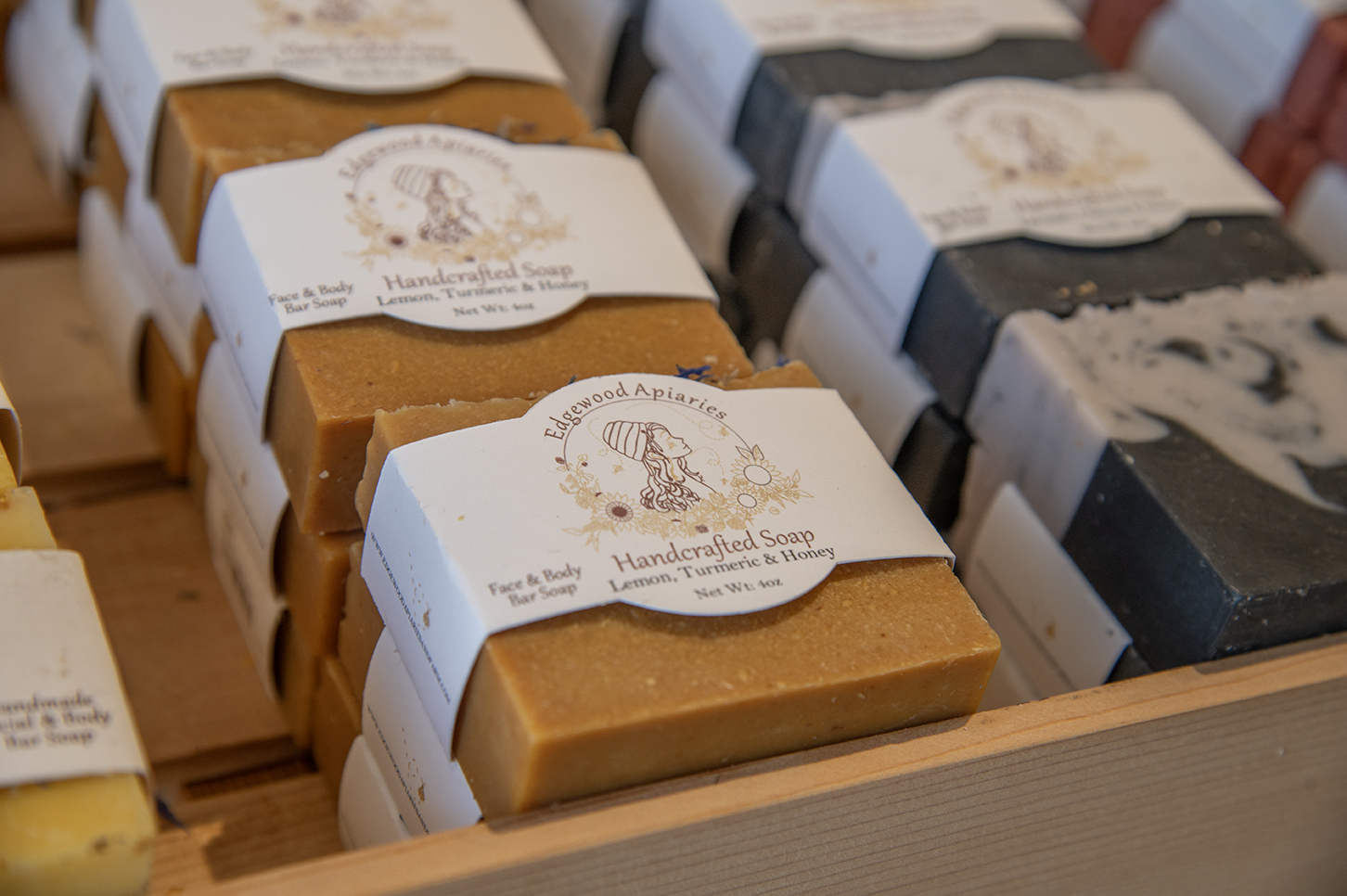
The company’s offerings include culinary, health and skincare products made with honey, beeswax, herbs and propolis, a resin that bees make out of wax and tree sap and use to repair and weatherproof their hives.
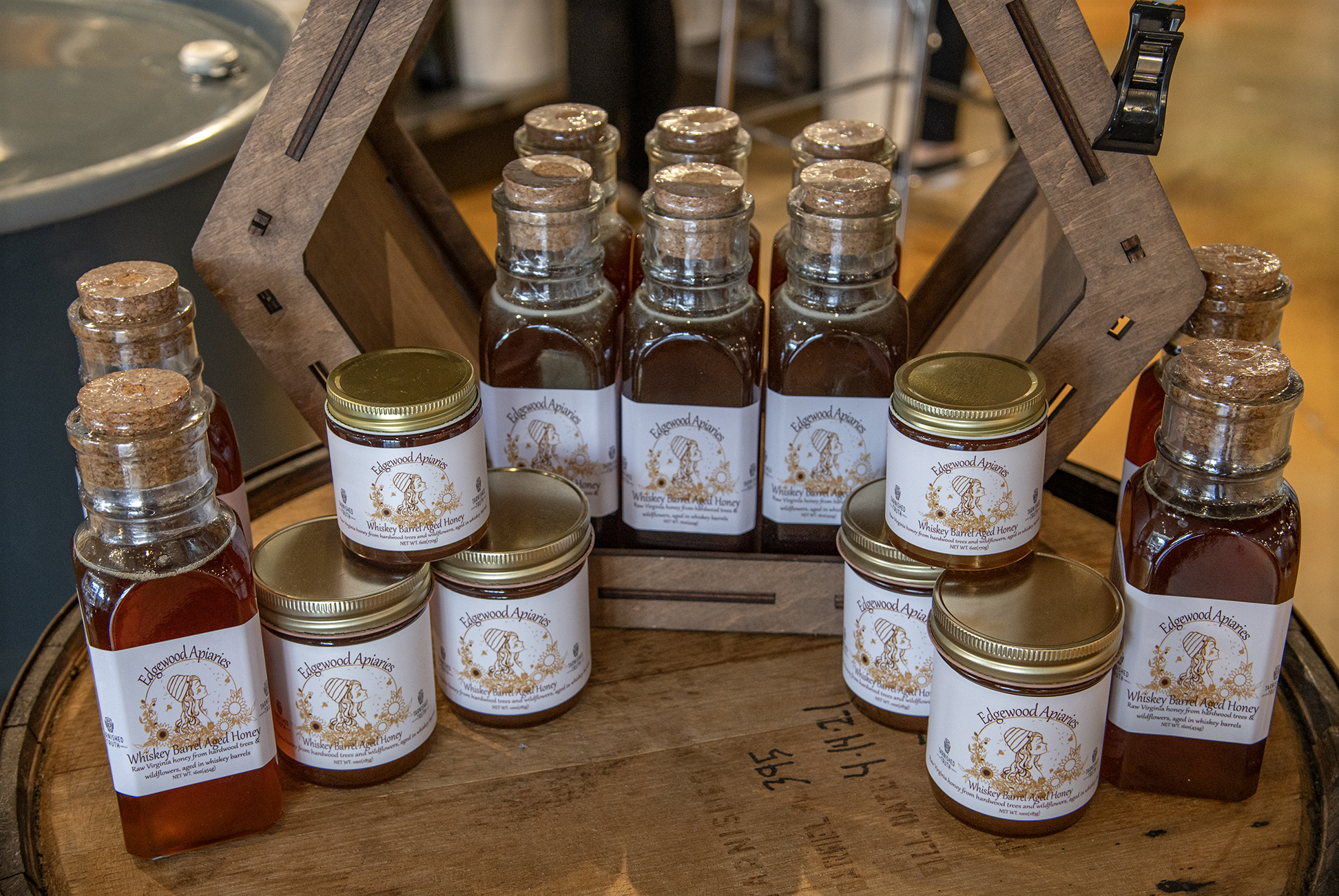
“Here in Virginia, [honey]bees primarily forage on tree nectars, from tulip poplar, black locusts, Chinese chestnut and sourwood, among others,” Sweeney shares.
Edgewood Apiaries’ bees find these trees on and around a 112-acre property in Fluvanna County, as well as Sweeney’s grandmother’s 200 acre farm in Powhatan and Max Meadows Lavender Farm in Halifax. Honeys from other producers include clover, thistle and blackberry nectars from around Virginia.
Sweeney says that demand in Virginia for local honey exceeds production of honey locally. She would like to see production increase.
One way Edgewood Apiaries works toward that goal is through its relationships with the beekeepers whose honey it carries, Sweeney says: “We are paying honey bee farmers here in the state of Virginia two to three times what they would typically get on the open market for wholesale honey. When we’re buying honey, we’re buying it with an understanding that that farmer has got to reinvest on a regular basis in equipment and methods to grow the number of colonies that they are caring for.”
Honeybees are not the only pollinators around. “Native bees are really important ecologically, and they’re really, really critical for certain fruit trees,” Sweeney says. Virginia has over 400 documented native species of bee (North America at large has around 4,000) many of which have specialized partnerships with native plants, which rely on them for pollination.
North America’s native bee species do not build hives or produce honey. Perhaps as a result, they are not commercially cultivated in the same way that honeybees are. The way to support native bees, says Sweeney, is to “create environments that help encourage their existence.”
Strategies include planting the native plants they rely on, avoiding the use of pesticides and leaving meadows un-mowed to provide habitat.
Sweeney says the location in RVA Food Co-Lab, in addition to giving Edgewood Apiaries a home base in Richmond, has afforded opportunities for collaboration with other small businesses. Four companies share the space: MOTHER shrub, Owl Spoon Water Kefir, CoCoGin Juice and Edgewood Apiaries.
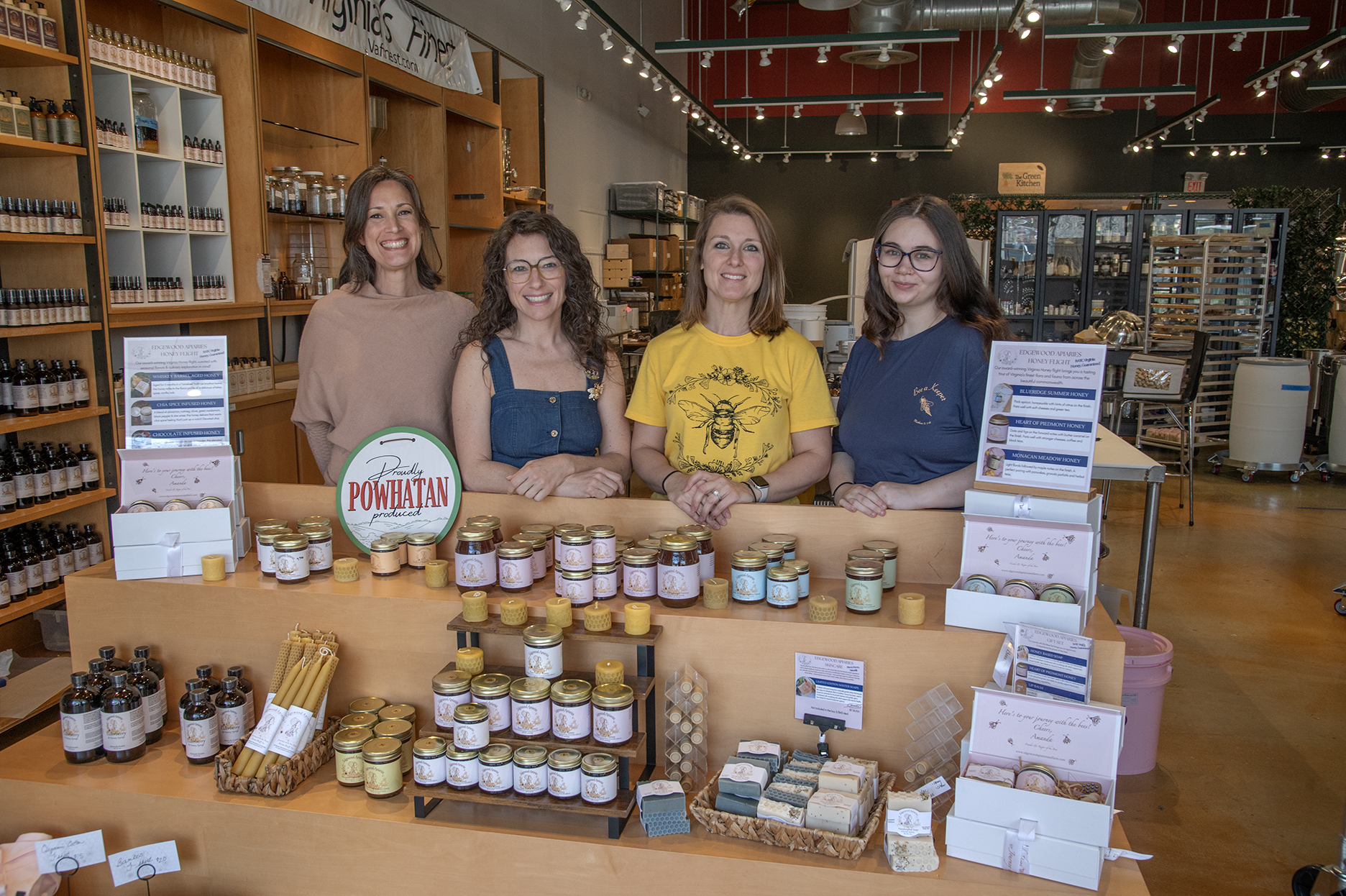
Sweeney says sharing the space has provided the opportunity to discover new equipment through seeing what the other tenants are using. She says equipment Frances Odoi uses to press juice for CoCoGin also works to press Edgewood Apiaries’ fire ciders, and Edgewood Apiaries had invested in a bottling machine that allowed Odoi to bottle juices more quickly.
Sweeney calls RVA Food Co-Lab “the coolest environment, because everyone’s attitude is very much that we want each person in there to be super successful.”
RVA Food Co-Lab is located at 9200 Stony Point Pkwy, Suite 158-A. Edgewood Apiaries plans to be open for business from 11 a.m.-3 pm, Tuesday–Thursday.