Noah-O is as stunned as anyone that the Valentine, the city’s longest-running museum, just designated him a Richmond History Maker. “I’m honored,” he says. “It totally came out of left field.”
The Richmond rapper and hip-hop entrepreneur – under his given name, Noah Oddo – will be honored amongst a distinguished class of community figures on April 11 at a special 19th annual Richmond History Makers ceremony. [You can see the full list of this year’s honorees after this story]. The San Francisco native, who came to Richmond in 1993, joins some heady awardees, both living and dead, like philanthropists Jim and Bobby Ukrop, educators Albert V. Norrell and Carmen Foster, and activists Elizabeth Johnson Rice and the Richmond 34. The Richmond History Makers program seeks to honor “everyday individuals and organizations that are having a significant impact on the Greater Richmond Region.”
The honor comes at a pivotal time for the prolific creator, whose “Monument Avenue” album from 2014 was a catalyst in asking hard questions about the city’s past and future. His four-day, multi-event Charged Up Festival is slated for May 30 through June 2, and will bring a dizzying array of hometown hip-hop artists, from FNF Chop to Trae the Truth to Joey Gallo, to the Broadberry for its grand finale concert on June 2. He’s also working on a new album, “Heretic,” that asks probing questions about Christianity. “It’s a raw hip-hop album. I don’t want to say it has religious undertones, but it explores and dissects that word, ‘heretic.’ What is a heretic?”
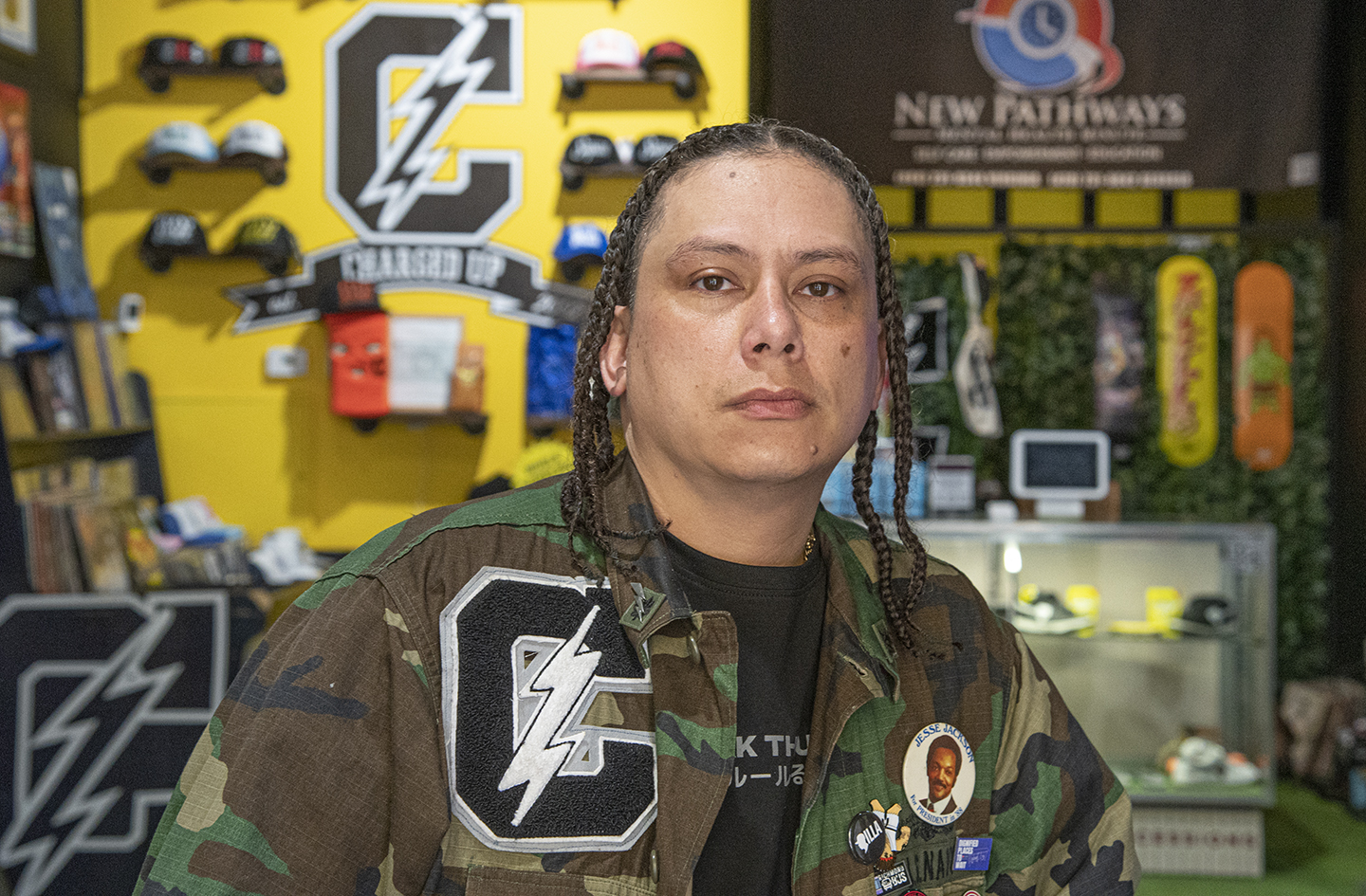
Noah-O, a former Style Weekly Top 40 Under 40 recipient, recently spoke to us from his shop on West Broad Street, the Charged Up Flagship Store, which is no more or less than a Noah-O retail outlet, selling his Charged Up Ent. label’s albums, T-shirts, hoodies, hats and other collectibles, designed by himself and his team of creatives.
Style Weekly: I could guess but why do you think you’ve been named a Richmond History Maker?
Noah-O: I’ve been making art and music for a long time and my album, “Monument Avenue,” was put into the [Robert E. Lee statue] time capsule. It’s a great thing because this year is the 10th anniversary of that album and we’re going to put out a 10th anniversary [reissue on] vinyl and I’m looking to do something special later in the year, in the winter, like [performing it] with an orchestra. It’s going to be special.
Do you remember what made you want to record ‘Monument Avenue”?
Music is a funny thing, right? Artists do it for different reasons. When I was a kid, I wanted to make music that resonated with people and connected with people. The first thing that put me on a wider audience’s radar was a song that got on MTV (“I Got It”). In hip-hop, there’s different lanes you can be in … there’s stuff that’s more socially conscious and personal, then sometimes there’s just fun music, ignorant music. But you can get stuck. I made that song just to do something fun and all of a sudden I was getting on TV and getting into magazine articles and meeting with people from record labels, I had seen from watching my peers get record deals that, if I got a record deal for this song, this would be the place I’d be stuck at. So I went back to the drawing board and wanted to make something that connected with people on a deeper level. I wanted that to be the springboard for my career, or what people knew about me, and not the other thing.
“Monument Avenue” [with producer Taylor Whitelow] was really my first full-length project. With it, and with the Charged Up Festival too, I’ve been able to reach a wider audience and now other people I’ve looked up to in the industry are reaching out to me. So I’m glad things worked out this way. It took ten years but now my foundation is something I can be proud of.
Was the record a political statement from the start, or did it evolve into that?
I got to give a lot of credit to Taylor. We had the Charged Up studio located next to the Broadberry, so we were right around the corner from Monument Avenue. That album came about because I was working with Kleph Dollaz. He passed away in 2012 but he was the first producer who sat me down and I watched him create an album from start to finish. So I got a better understanding of how to produce a hip-hop album, like where it is sonically cohesive. And not only sonically, but where the themes and topics of the lyrics can fit into an overall narrative.
So when Kleph died, I’d already worked with Taylor on some of my prior mixtapes where he would give me one or two beats. He knew I’d started this project with Kleph and he said, ‘I want to do what you and Kleph started. I want to sit down with you and do a whole album.’ The first song we actually created, he sent the beat to me at 3 in the morning just after Kleph died. That was the song, “Kleph Note.” We didn’t have an album title yet, but he said that he and his brother had a production company once and always wanted to do an album called “Monument Avenue” that dissected Richmond.
At that time, there was an awareness of Richmond growing; VCU had gone to the Final Four and the city was starting to change and becoming a more inclusive place. But how can it really become that place if these [Confederate monuments] still sit here? You get me? It’s like the elephant in the room. That was really what the album was about.
I recall that the album was well-received when it came out, but it really became acknowledged as a classic as years went by.
Sometimes I think hip-hop gets put in a box, like it’s just a bunch of words, nonsense. But no, we’re speaking on important social things and things that are going on in our world and we’re trying to use our voice and our art to do that. Here, we created something very socially relevant and at the time I thought it should have been talked about more. People were like, “Why do you want to make this album and put this statue on the cover?” Sometimes you are creating something that’s not of your moment. Like when 2020 happened, and people were ready to have those conversations, it got brought up again. So we really created something for the future, I guess, until the time was right for people to hear what we wanted to say.
Some people don’t want that in music. They don’t want to be reminded of the real world.
Yeah, I guess. It’s like, “just shut up and shoot the ball.’ Like when Jimi Hendrix did “The Star Spangled Banner” [at Woodstock] it was a social protest, but with no words. It’s the power of what art can be, you know what I mean? The possibilities … that’s why I loved growing up with Tupac and artists like Nas.
Have you been courted much by record labels?
The music industry is in a funny place. What I’m doing, and what I’ve been able to show, kinda works against the model of what major labels are doing. That approach is getting me on people’s radar and piquing people’s curiosity. People will say, ‘How are you doing hip-hop in this way? You aren’t making it accessible to the clubs or the radio but connecting to people directly.’ I’m just showing that there’s alternate ways that you can be an artist, or promote your art. That is what is getting me on bigger platforms, because I did it in a different way. I had a label that was telling me, ‘The way you are doing your business, you are going to get blackballed.’ And that’s because I can show other artists that there’s another way.
We’ve just done our own thing from the ground up. I’ve done, like, one-off deals with smaller punk labels. What we do is really like punk, D.I.Y. Because that’s the roots of hip-hop … it is countercultural.
Do you think the Richmond hip-hop scene suffers from an inferiority complex because of the success of performers from Hampton Roads, like Pharrell Williams, Timbaland, Missy Elliot?
I think it’s changing now. They’ve had the biggest spotlight but Richmond, because of VCU and our art scene, is more of an incubator for talent and creativity than that area is. There are a lot of artists from the 757 who now live in Richmond because of the scene we are building here. Richmond really is the creative capital.
How would you categorize the sound of Richmond hip-hop?
What I do, and Nickelus F and Radio B or certain cats, we are more like classic rock. It’s not our age but the sound that a lot of us have gravitated towards. In rock, you can have a 20 year old now with a band that sounds like a classic rock band. That’s what’s happening in hip-hop where you can have someone whose music sounds like hip-hop in the ’90s. Hip-hop is sort of splintering into these subgenres where some people are gravitating to this classic sound that’s more lyric driven, and some people are gravitating toward hip-hop that’s more like club [music].
You told me that you are doing the Charged Up Festival to spotlight Richmond hip-hop.
It’s really to bring all of these different people and platforms and artists to Richmond. Some of the artists we are bringing have connections to Richmond, but people don’t know. A lot of artists in Richmond are getting played on Hot 97 in New York, it’s just that inferiority complex. I don’t think people realize how many artists we have that are known outside of here. So now we’re going to bring a lot of that energy back here.
You’ve been amazingly prolific, with 35 releases in ten years. Are you writing and recording all the time?
Pretty much. But I put out ten projects in 2020 and eight of those were mixtapes. I didn’t go into them making an album like I did ‘Monument Avenue.’ I put them out like unreleased material. You know how, when an artist dies, their family or whoever will release all of these half-done things. I didn’t want that to happen to me so I just did it myself. And it was during the pandemic, when people thought the world was going to end. So I cleaned out my vault. Like they say in sports, leave it all on the field.
You have a side thing with DJ Mentos, Analog Suspects. How is that different from your solo material?
The first project we did together was “The Rain” in 2016 and then, in 2019, “Transmission 001” and then we lost a few years and this year we released “The Ripple Effect.” We still haven’t put it on streaming. I would say Analog Suspects is more like a social critique, analyzing the world and the times we’re in. And it’s analog so it’s got that classic hip-hop feel. I really use those albums to talk about the effects of technology on society, war, drugs, and the state of the world.
You seem to be good at collaboration – you’ve released albums with Taylor Whitelow, DJ Mentos, JL Hodges, Big No and others. Is there an art to working with others?
I just believe that there’s power in numbers and all of us have different gifts. I think a lot of great art, or music, doesn’t get done because some people are hard to work with, or it’s hard for them to collaborate with people. It really starts with people. That’s how those projects started. I get to know somebody as a person and we click, and once you click, the music just comes natural. Hip-hop is really like conversation, so a lot of those projects, the music is really like a reflection of our friendship and the conversations we’ve had.
Your album with Big No, “Richmond Brave,” was quite popular. You guys even put up a billboard for that.
That album means a lot to me, too. He’s a great artist so I wanted to do what I could so that more people could hear him. We’re both from Richmond but we come from different worlds. We represent Richmond in different ways, two sides of the same coin. We did a lot of shows together next year and Big No will be performing at Charged Up. We are definitely going to do a “Richmond Brave II” at some point. We have about half of it done.
“TRILLipino” was a more personal project. What was the impetus for that?
Growing up in California as a Filipino American, I never really thought about it because I was surrounded by other Filipinos, my community and family. But when I moved to Richmond, a lot of people would ask questions about my race or who I was. I guess I didn’t know how to articulate it. When you are younger, you don’t have your voice and you can’t put your words together and it just comes out as frustration or anger. As a man, as I’ve matured, I can articulate and dissect my experiences. “Trillipino” was about me understanding who I am but not only that, I talk about how my family came to America, what were the circumstances and what they experienced being Filipino in America. And then how, also, I fit into Richmond.
How did you approach “TRILLipino”? Did you write out the themes you wanted to tackle?
For that album, I sat and recorded conversations with my uncle. My mom and dad have passed away, a lot of my family has passed. But with a lot of Filipinos, and a lot of Asian Americans, nobody really talks. So there was a lot about myself and my family I didn’t know and I had to convince my uncles to tell me, like, what happened in this year, where did our grandparents come from, who is that and what is that? It was a social thing. When they came to America, they didn’t want to think about where they came from. It was the ’50s, they were chasing the American Dream.
The Richmond History Makers will be celebrated on April 11 at the Valentine, 1015 E. Clay Street. 5:30 p.m. $50. thevalentine.org.
For more information on the Charged-Up Festival, May 31-June 2, including the grand finale concert at the Broadberry, go to noah-o.com
THE VALENTINE’S FULL LIST OF THIS YEAR’S RICHMOND HISTORY MAKERS:
The Valentine’s Richmond History Makers recognizes individuals, organizations and objects that have had a lasting impact on the Richmond Region, both past and present. Honorees this year include:
Elisabeth Scott Bocock & the Historic Richmond Foundation
Bev Appleton
Hammond Organ Studios of Richmond
Noah Oddo
Edwin Claiborne Robins, Sr.
Richard S. Reynolds, Sr.
Jim and Bobby Ukrop
Sydney and Frances Lewis
Barbara Grey
Dr. Carmen Foster
Camp Alkulana
Albert V. Norrell
Adolph Brown IV
Breanna Diaz & Narissa Rahaman
Clarence, Earl, & Chester Hunter
Cornelius Mimms
Elizabeth Johnson Rice & The Richmond 34
Adele Clark
Monument Avenue Monuments & “Rumors of War” by Kehinde Wiley
Richmond Tobacco Row Factories
Legend Brewing Company
Wilfred Cutshaw
The James River Association