It is getting hard to remember when saxophonist Charles Owens was not a ubiquitous figure on the RVA scene. He’s had a trio with Butcher Brown’s Devonne Harris/DJ Harrison and Andrew Jay Randazzo since they were Virginia Commonwealth University students and he often guests with that band and appears in virtually all of the R4nd4zzo Big Band gigs. Owens also plays keys and saxophone with Deau Eyes, collaborates with Ant the Symbol and has smaller scale gigs at downtown hotels and restaurants.
Starting years before he moved back to Virginia, Owens led the after-midnight jam sessions at the original Smalls Jazz Club in New York City. Last July, he began releasing a set of those late-night performances, starting with joy and ending with despair the night before the first iteration of the club shut down in the early 2000s. (Spoiler alert: The third iteration of the legendary music space is going strong, and Owens still regularly travels up to play there.)
It all started for him after midnight jam sessions at a tiny club on West 10th Street in Greenwich Village which offered 50 seats, BYOB, $10 admission any time of day; a club where you could stay as long as you like. The music kept going some nights until sunrise.
“It was a very energetic gig, and we tried to hold people’s attention. You can hear the energy, emotion, vulnerability and strength in these recordings.” — Charles Owens
“I started playing at Smalls when it opened [in 1994],” Owens remembers. “I was at the New School, and it replaced their Sunday jam sessions at the Village Gate. It was quite a boon to get that gig at a legendary club. I learned so much.” But then the Gate closed, Smalls opened, and he moved there. He gigged there with his own band, but nothing steady until pianist Eric Lewis left the Friday night jam sessions and Owens took them over.
“Friday night ” is a bit short of accurate. The session started at 2:30 a.m. on Saturday morning. “The way it worked was that the main band — the most popular draw — was booked for the weekend. When I arrived, the club would be packed; the [more famous] main band firing away. Then they would stop, we would set up …. and we’d play to an audience that’d just had their world rocked by some crazy band. It was a very energetic gig, and we tried to hold people’s attention. You can hear the energy, emotion, vulnerability and strength in these recordings.”
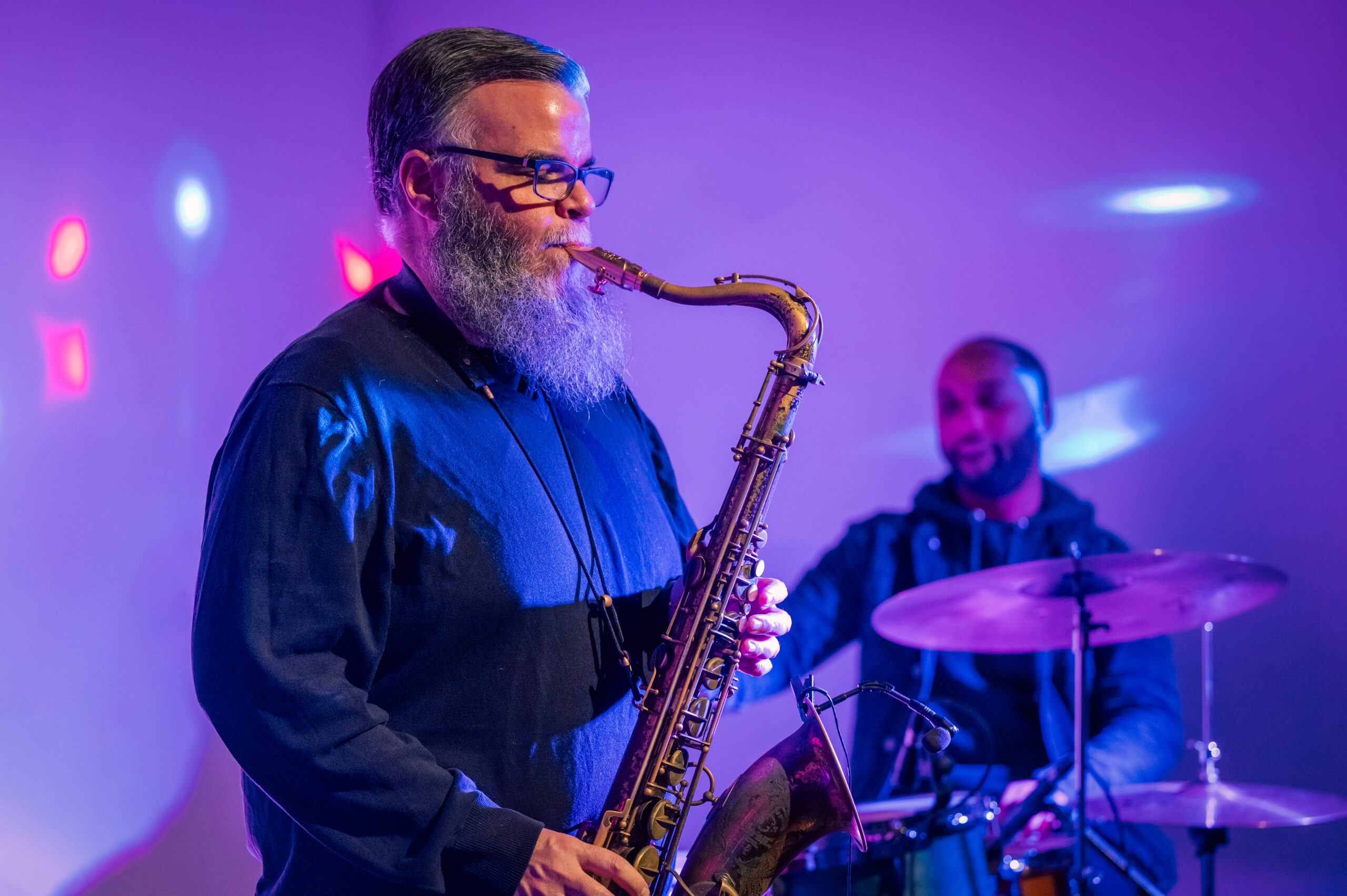
Smalls was home base for Owens for the better part of a decade.
“For a while, October ’95 to June ’96, I even lived at the club, showering at the health club across the street,” he recalls. But it was over by the end of May 2003. “It was a wild and beautiful time. But also, a sad time because I knew Smalls was closing.”
The six nights featured in the recorded series capture an unfiltered arc of emotion in the club’s final months. Recorded on a CDR directly from condenser mics embedded in front of the stage, there is no mixing, no tricks, just raw live sound, Owens says. “At one point, you hear an audience member who goes a bit crazy, and I shout back at him,” he adds. “That’s all part of the vibe.”
Owens had the CDs of these performances for 23 years before deciding to have them mastered for release. The first recording, released in July, is joyous.
“I was 29 years old, energetic, and ready, and I finally had the setup I wanted: a 1953 super balanced-action horn and a vintage mouthpiece from [saxophonist] Eric Alexander,” he explains. “It was the original John Coltrane setup. You can hear me relishing it. When you have that perfect combination of elements, the last impediment to expressing yourself disappears. The gate is fully open.”
That the opening number — The Beatles’ “Norwegian Wood” — sounds a lot like Coltrane’s iconic take on “My Favorite Things” is intentional.
“Coltrane is my biggest influence and ‘My Favorite Things’ was a huge hit for him. My quartet was deeply influenced by his quartet — it was my version of that spirit, with another pop tune that is also a high energy waltz,” Owens says. “I especially love the live versions, where he would play the melody and then go into a crazy long solo with [drummer] Elvin [Jones] bashing. That is what I was going for, expressing myself like Coltrane. And with that horn, I had no excuses.”
The series title, “The Last Late Nights,” is because most of the recordings are from the club’s final days. The last one is from May 30, 2003, two days before the club shuttered.
“I thought this would be my last gig at Smalls,” Owens says. “You can hear it in my playing. I am sure I am biased but [listening now] is some of the most emotionally charged saxophone I’ve ever heard. It was the end of a unique time. Less than a year later, I moved out of New York City to Virginia.”
It isn’t exactly a commercial project. Hearing the evolution of a group across multiple nights is something more common for legendary performers whose classic recordings are not enough for serious fans. Miles Davis’s “Live at the Plugged Nickel” is the archetype. Or Dean Benedetti’s set of recordings of Charlie Parker solos collected on a Mosaic Records set. The twenty-two songs include multiple repeats: three versions of “Body and Soul” and “Morning Bell;” two of “Dear Prudence” and “Rhythm-a-Ning.” The average track length is fourteen minutes. But for listeners who know Owens, it is a revelation to recognize his big-hearted style in his early days and appreciate how early he was able to command a room.
If the arc of the sessions runs from joy to sadness, the larger story has a happier ending. After it closed, the club became a bar, which also eventually closed. Then Small’s original owner brought it back. It is now a famous jazz bar, now with a full bar and streaming performances. Owens travels north to play there regularly.
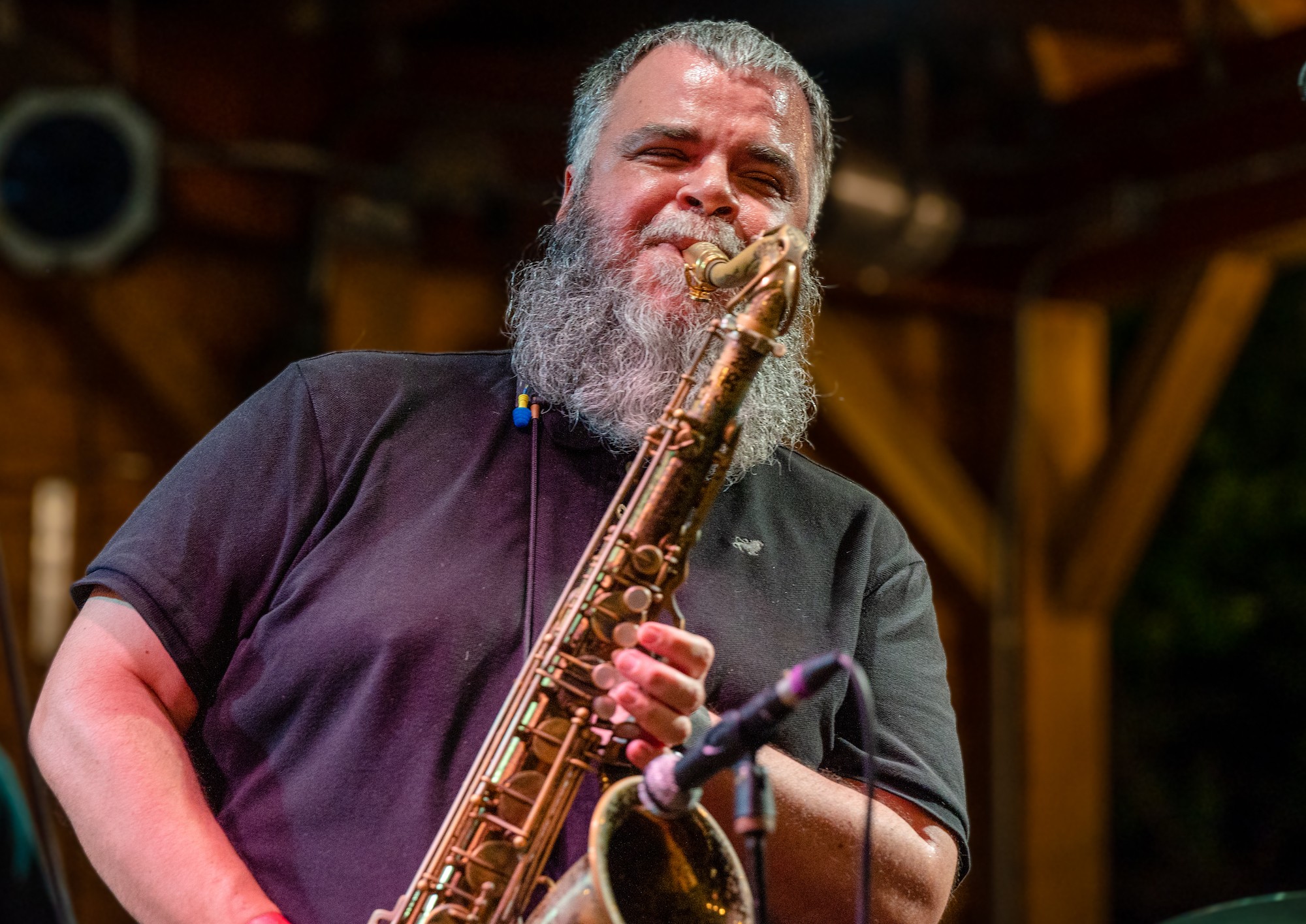
And after a traumatic childhood, defined by divorce and severe abuse, Owens has also prospered. Homeless at 15, he won admission to the Duke Ellington School for the Arts in Washington, DC, and then to the prestigious New School in New York City. His home life is the opposite of chaotic, an outcome he credits to his wife, Vijay.
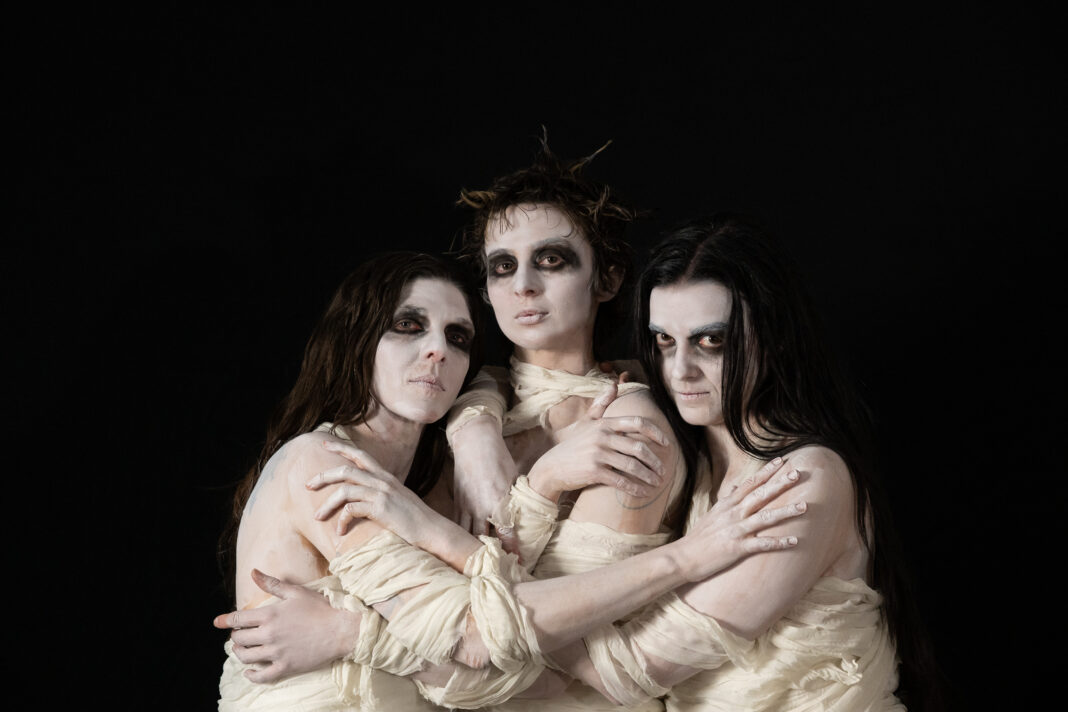
“Last Late Nights” is a departure from his album per year pace since 2014 (with the exception of the COVID pause in 2020.) The lush CD covers are the product of his long-term collaboration with artist Jessica Camilli, aka Rapid Eyes.
If the stretched out, past midnight improvisations don’t fit well into a streaming mentality, that is no problem.
“This is for serious music heads who appreciate its significance,” Owens says. “People have reached out to say how much they like it. That means a lot. I definitely hear mistakes, but I don’t care – if the feeling comes through. I’d never release an album I wouldn’t want to listen to.”
“The Last Late Nights – 1/24/03” came out on July 18. The remaining five recordings will be monthly through December. Also it is available on all streaming platforms, where the only thing it will cost you is your time.