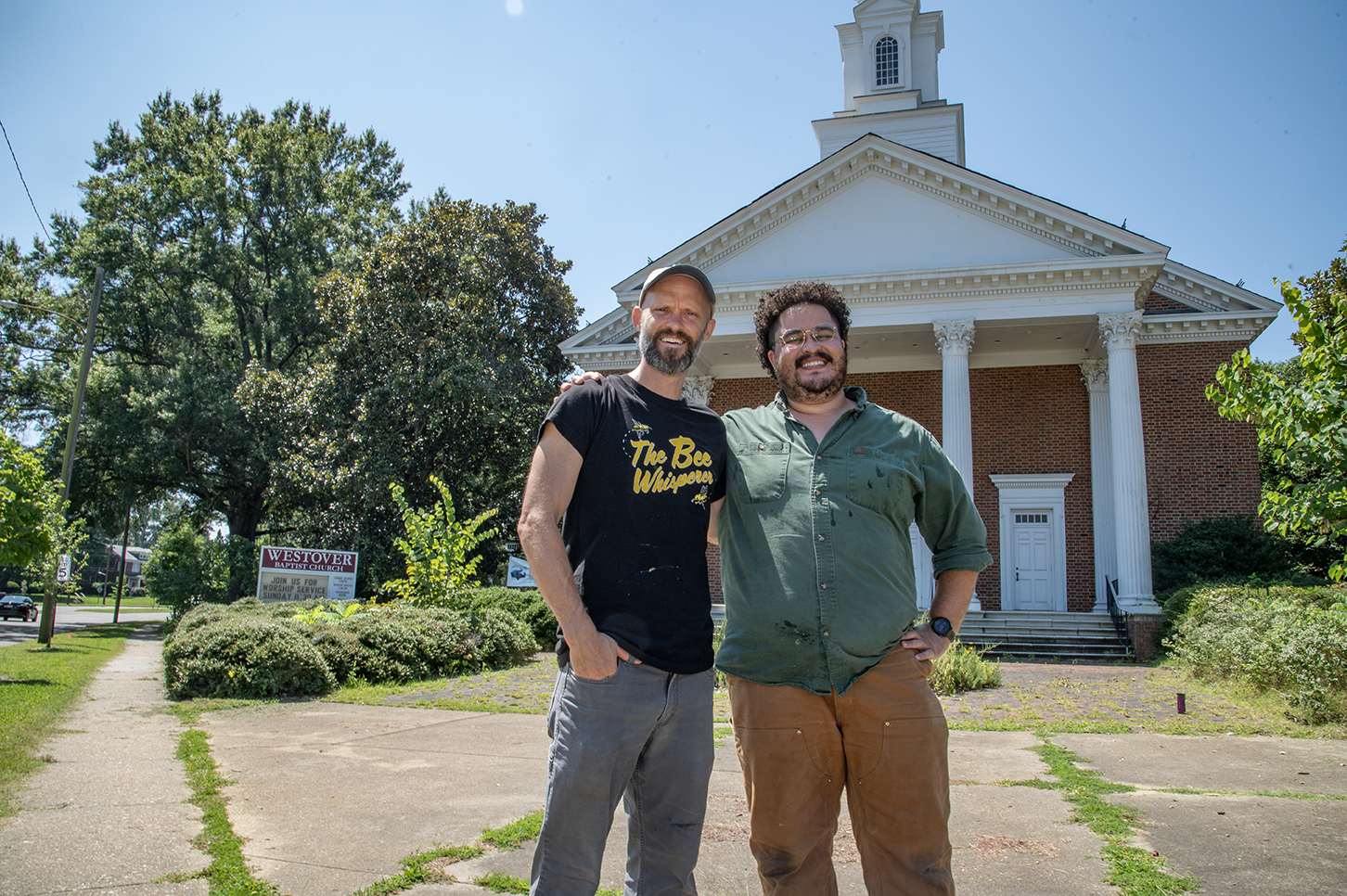
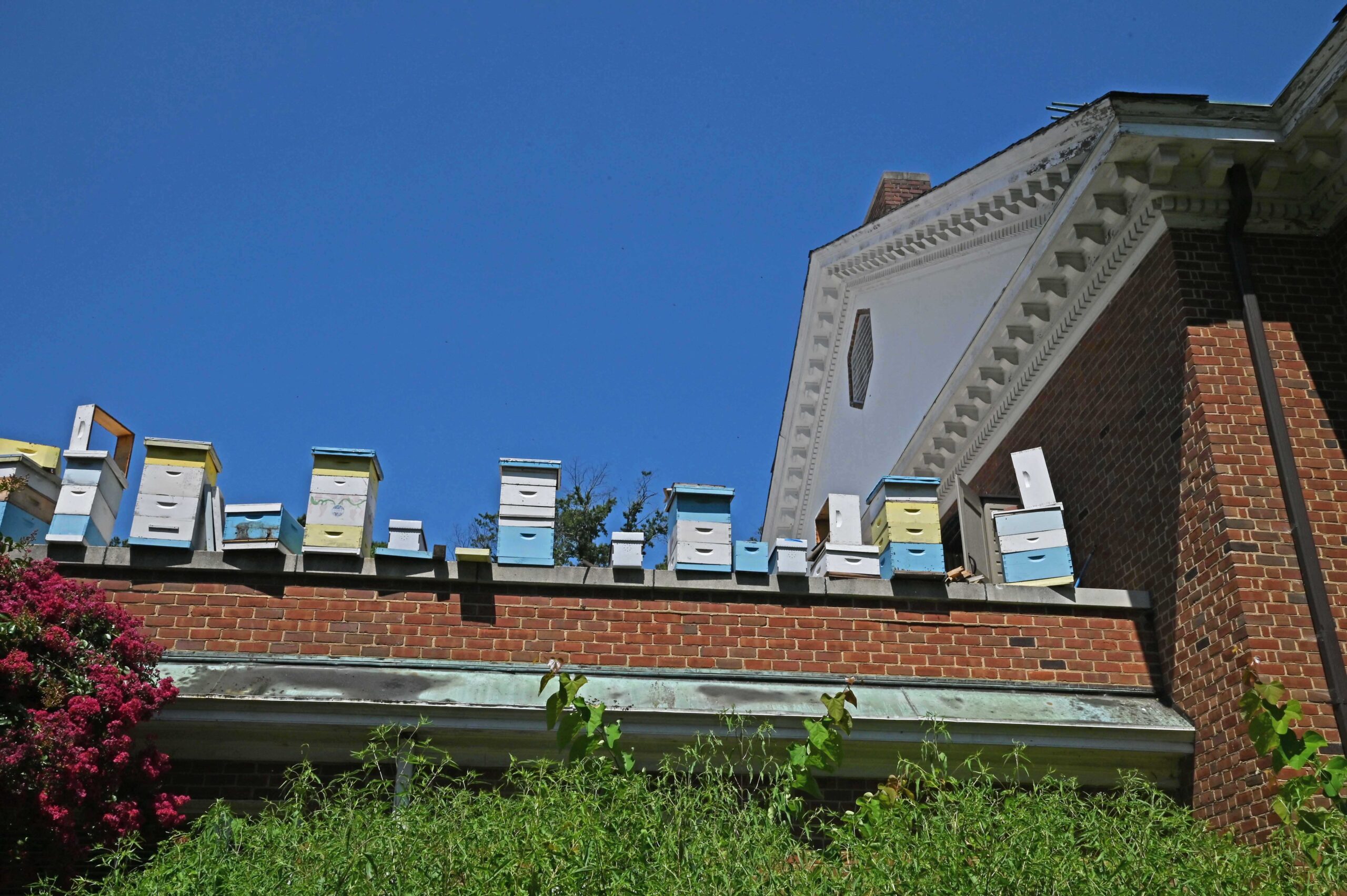
On the roof of Westover Baptist Church is a neighborhood of blue and yellow boxes.
These are the Living Water Community Center’s beehives. The bees travel as far as the banks of the James in search of nectar. On days they don’t want to fly so far, they may be glad that their Southside home has been transformed by Living Water’s staff and volunteers into a pollinator sanctuary.
Built to accommodate congregations of the 1940s, the church is larger than its current congregation needs.
“We wanted to reimagine what this space could be and how it could be used to serve the community,” says Drew Nagy, Living Water’s executive director and the pastor of Westover Baptist Church. Through conversations with church members and residents of nearby neighborhoods, the idea for Living Water Community Center came into being.
Living Water uses the church’s space to host mindfulness and movement classes, including meditation, yoga and martial arts. Classes are offered every day, on a sliding scale of $5-$25.
Community at Living Water extends to the natural world. Since the organization’s founding in 2019, residents and volunteers have replaced lawn grass on the property with plants that feed not only honeybees, but native pollinators as well.
“Not many people know that there are over 2,000 species of native bees in North America alone,” says Omar Moros Taylor, bee sanctuary manager at Living Water.
North America’s native bees do not produce honey, but they are vital to the ecosystem through their work as pollinators. “By what we’re doing here, we’re increasing biodiversity so that there can be a plethora of different types of food and habitat for native bee species, which can then ultimately boost the community’s biodiversity,” Moros Taylor says.
The interfaith monastic community seeks to mirror the biodiversity of Living Water’s physical grounds through the diversity of beliefs and backgrounds of its members.
“We realized that in this city, there weren’t many places for people to find that type of contemplative monastic, residential community,” Nagy says. He adds that cohabitation provides residents the opportunity “to continue to ask questions of how do we better live in community, with ourselves and with the environment.”
Life at the monastery centers around service and stewardship. Moros Taylor observes that many spiritual traditions suggest that humans should be stewards of the natural world. In that spirit, residents of the monastery work in the community garden, tend the bees and contribute to initiatives such as tree planting in the surrounding neighborhoods.
Trees, in addition to combating the urban heat island effect and helping to reduce runoff and erosion, provide the majority of nectar bees need to produce honey. Living Water has planted more than 700 trees and shrubs so far on the property, favoring species that bloom in late summer, a lean time for bees in Virginia.
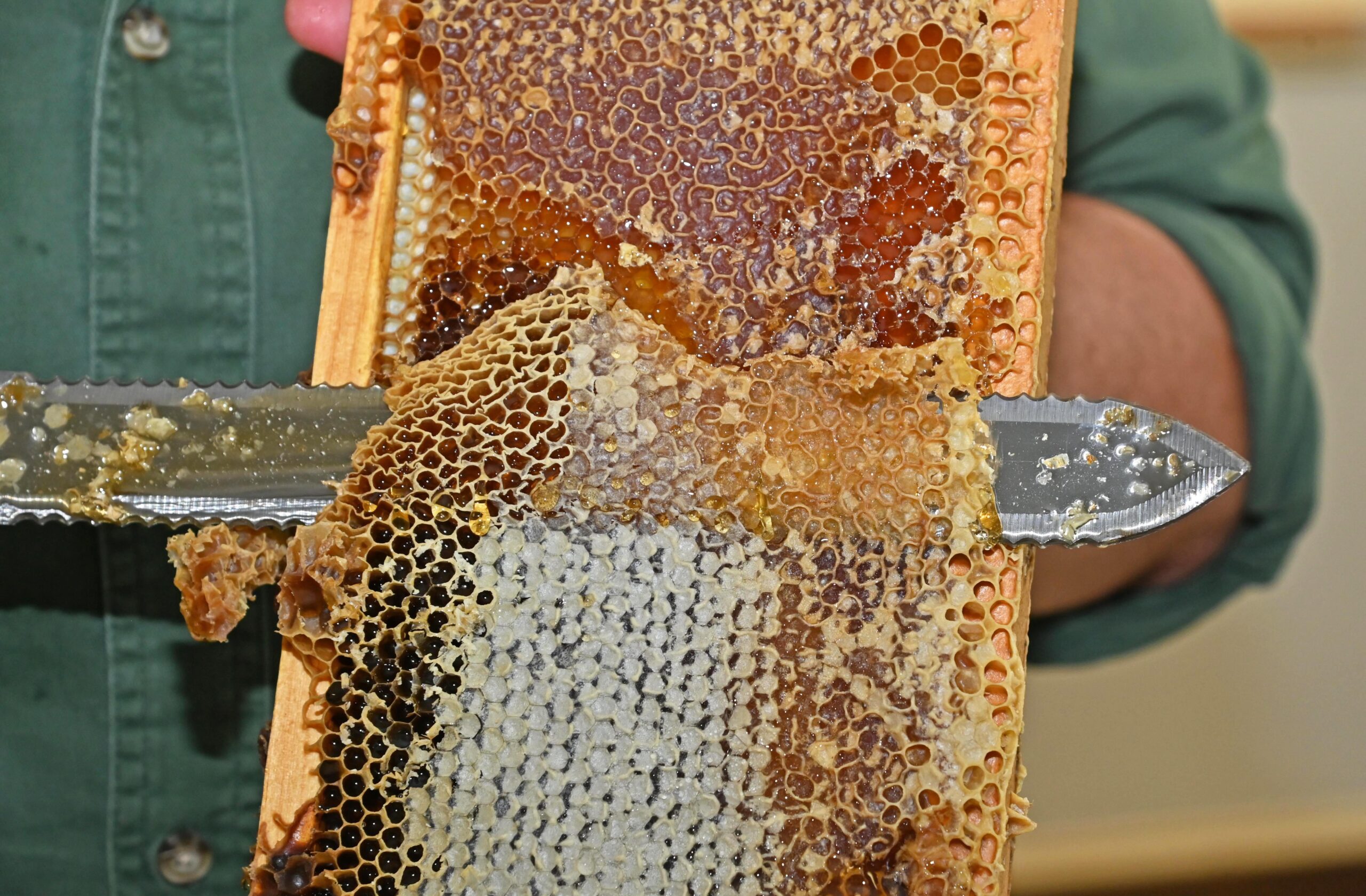
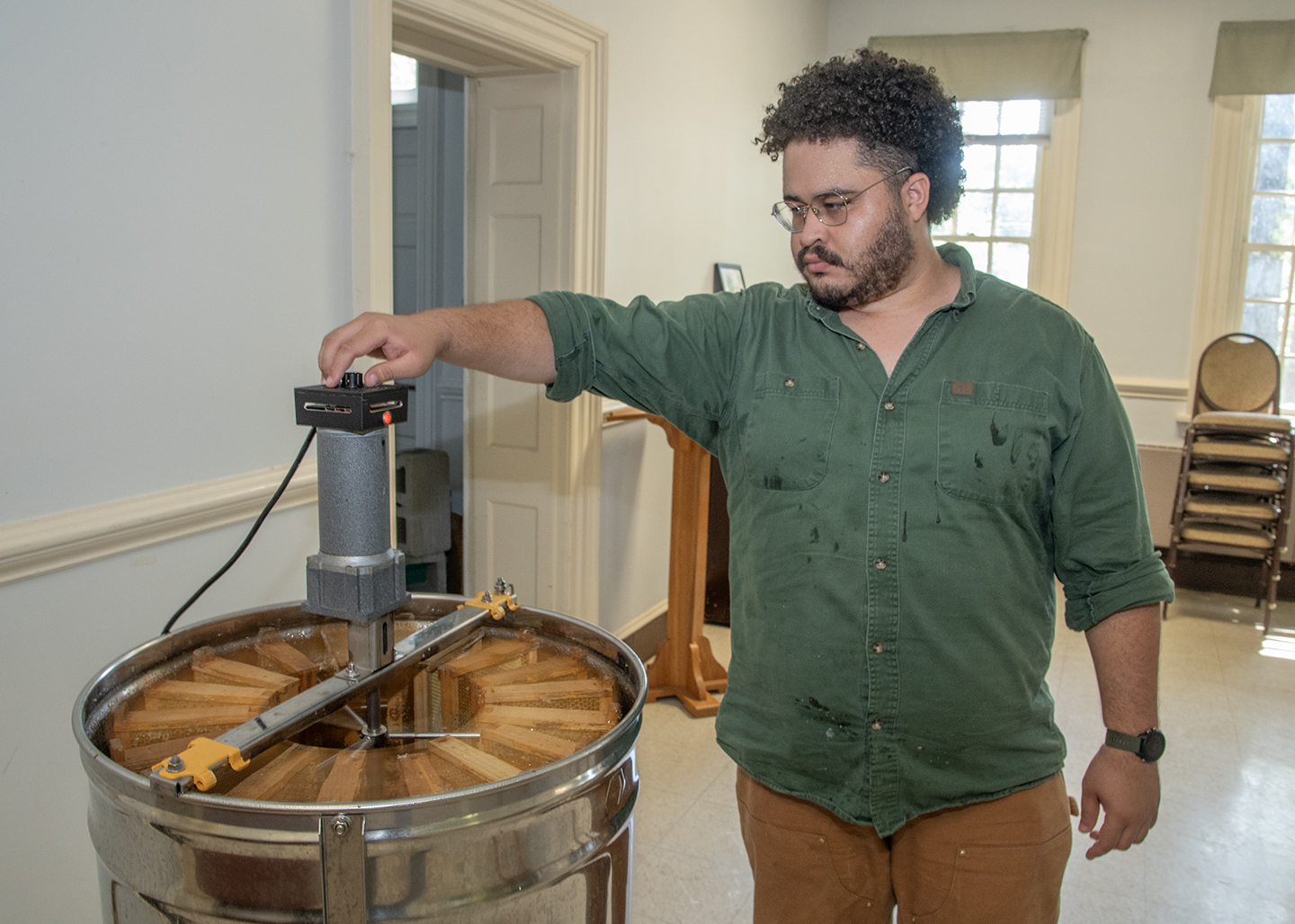
“Honey bees will produce two to three times more honey than they’ll consume in a year,” Nagy says, noting that this makes them, along with human beings, one of the few animal species that hoards.
The flavor of honey changes over the course of the season. “The early spring is lightest in color, lightest in flavor and has the most floral tones,” Moros Taylor explains. “As it gets later in the year, it gets darker in color and starts to develop a more robust, classic honey flavor. But it’s ultimately dependent on what’s blooming.”
If an area receives a week of torrential rain just after the American lindens bloom, as happened this year in Richmond, bees will have to seek other sources of nectar, and different flavors will be present in the harvest. Honey is a record of variations in weather, unique to the hive’s locality.
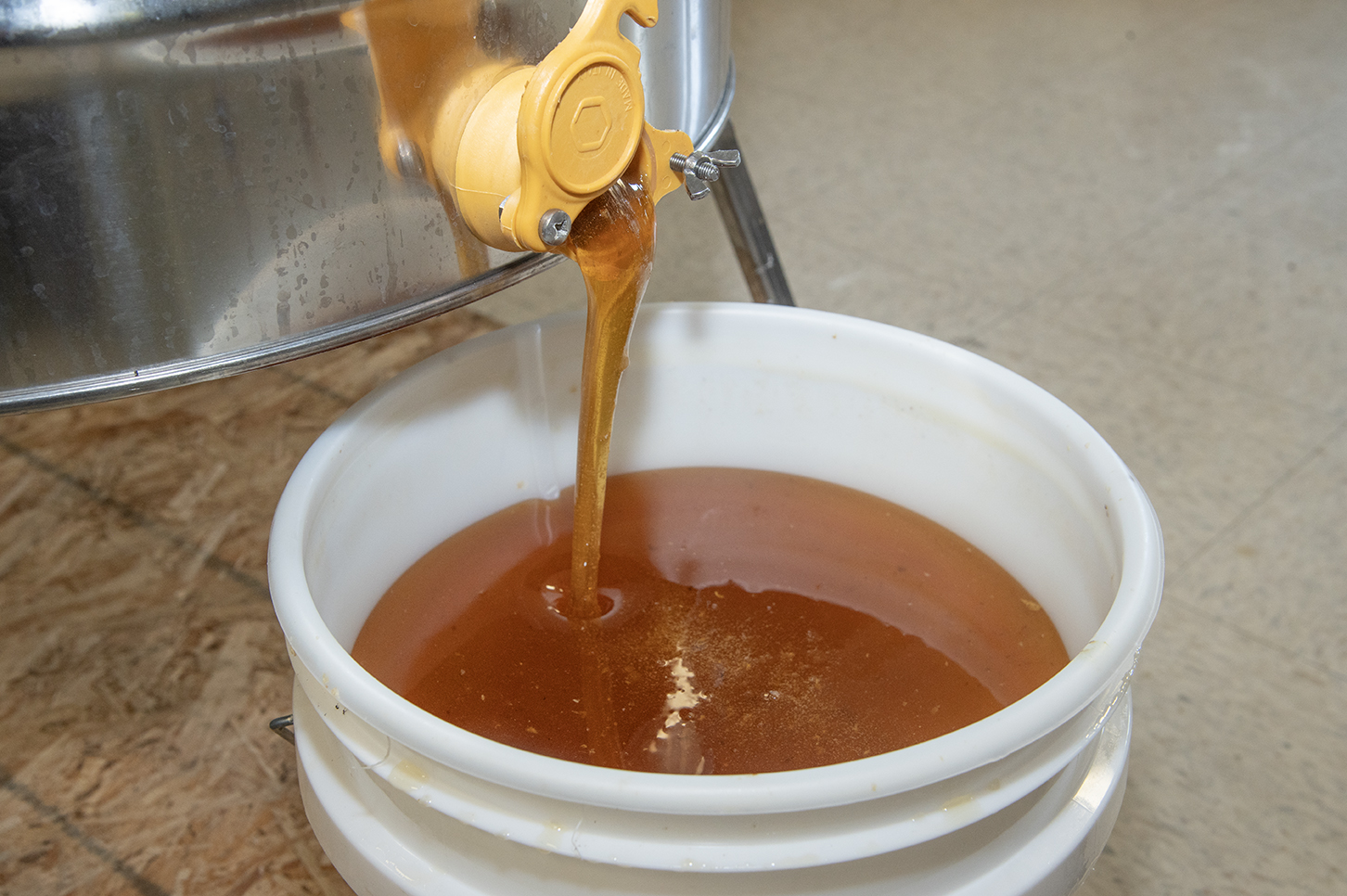
Living Water offers a honey subscription CSA—for $25 per month, subscribers receive a pound of honey, and can experience the full arc of the blooming season. Honey is also available for sale at South of the James Farmers Market on Sundays from 10 a.m. to 1 p.m.
Living Water also offers a Host A Hive program. Seventy-five dollars a month pays for materials and the labor of a beekeeper to install and tend to a backyard hive. Those without suitable space, or without a desire to live close to bees, can sponsor a hive at a school or community garden.
In previous years, Living Water has also run a year-long beekeeper training program, similar to hosting a hive, except that the visiting beekeeper trains the hive host in beekeeping. Nagy and Moros Taylor hope to resume the program this year.
Other future plans include an initiative to help people transform their yards into pollinator sanctuaries. “Ultimately, I say our goal is to make the city of Richmond the bee capital of the world,” Nagy says. “So we’ll just keep working on that.”