I’m pleased to report that “Spinal Tap II: The End Continues” is not the incomprehensibly unwatchable hackwork that’s typical of years-later comedy sequels. It holds together and wears its nostalgia with dignity. Of course it’s irrelevant; it will feel piped in from another planet to anyone under, say, 45, and that’s being charitable. But irrelevancy is not a death blow for “Spinal Tap.” Irrelevance was always the point.
The 1984 movie “This is Spinal Tap,” and the mock-doc comedies that cowriter-costar Christopher Guest made on his own, are about oddballs with odd interests refusing to go gently into the night of obscurity. Spinal Tap, a blissfully absurd rock band that quite intentionally suggests an incoherent fusion of The Rolling Stones, Led Zeppelin, Donovan, and Queen, was irrelevant in 1984. Imagine Tap in 2025, when rock has vanished from the mainstream.
“Spinal Tap II” benefits from rock’s disappearance, allowing the movie to speak to more than fond wishes for its predecessor. This film is about Boomers and an eroding culture. I thought of a forgotten movie from 1989, “Flashback,” with Dennis Hopper as a guy who looks a lot like the dude from “Easy Rider” pretending to be a F.B.I. agent, in the process mourning the vanishing and failure of an oft-mythologized resistance to American corruption. Michael McKean was in that one too, come to think of it.
McKean is an architect of the “Spinal Tap” movies, co-writing them with Guest and Harry Shearer and director Rob Reiner, who appears again as the documentarian, Marty DiBergi. McKean plays the wonderfully named David St. Hubbins, Guest is Nigel Tufnel, and Shearer is Derek Smalls. “Spinal Tap II” is set 40 years after the first movie, 15 years after the band disbanded (again) following a resurgence after the release of DiBergi’s first documentary. Refreshingly, Reiner doesn’t spend much time on this table setting.
I re-watched the first “Spinal Tap” recently and was startled again by McKean’s swagger in the central role — he’s authentically credible as a rock musician. In the second movie, he is much older and shaped like a pumpkin, with a haircut that makes him look like an elderly lady. Mind you this is David St. Hubbins, not McKean, who was crisp and sharp in that recent Broadway revival of “Glengarry Glen Ross” (which he casually stole out from under most of the other actors, often with body language).
If St. Hubbins looks de-fanged and eccentric, he wears it without self-consciousness. McKean’s lovely performance is a testament to the humbling properties of age, and to the freedom that can arise when said humbling takes you beyond vanity. Of course, when it comes to the music, St. Hubbins has plenty of vanity left to go around.
The filmmakers have allowed Nigel Tufnel to age with surprising elegance — here he’s the leading man that he wasn’t in the first “Spinal Tap.” Seeing Guest again reminded me that I wished he worked more often, and more often outside his mock-doc sandbox. Remember that he has stolen scenes in other star-studded Rob Reiner movies: “The Princess Bride” and “A Few Good Men.”
In the first “Spinal Tap,” it was suggested that St. Hubbins and Tufnel, childhood friends who were the soul of the band, were romantically involved. The casualness of that suggestion, for a movie in 1984, is notable. “Spinal Tap II” sort of re-circles that premise, with St. Hubbins estranged from Tufnel over something to do with the former’s ex-wife. Reiner and the actors play these moments earnestly in the new film, allowing them to allude to the baggage and regrets and waste that accumulate over a lifetime. McKean and Guest are poignant, particularly in a moment right before the Big Show.
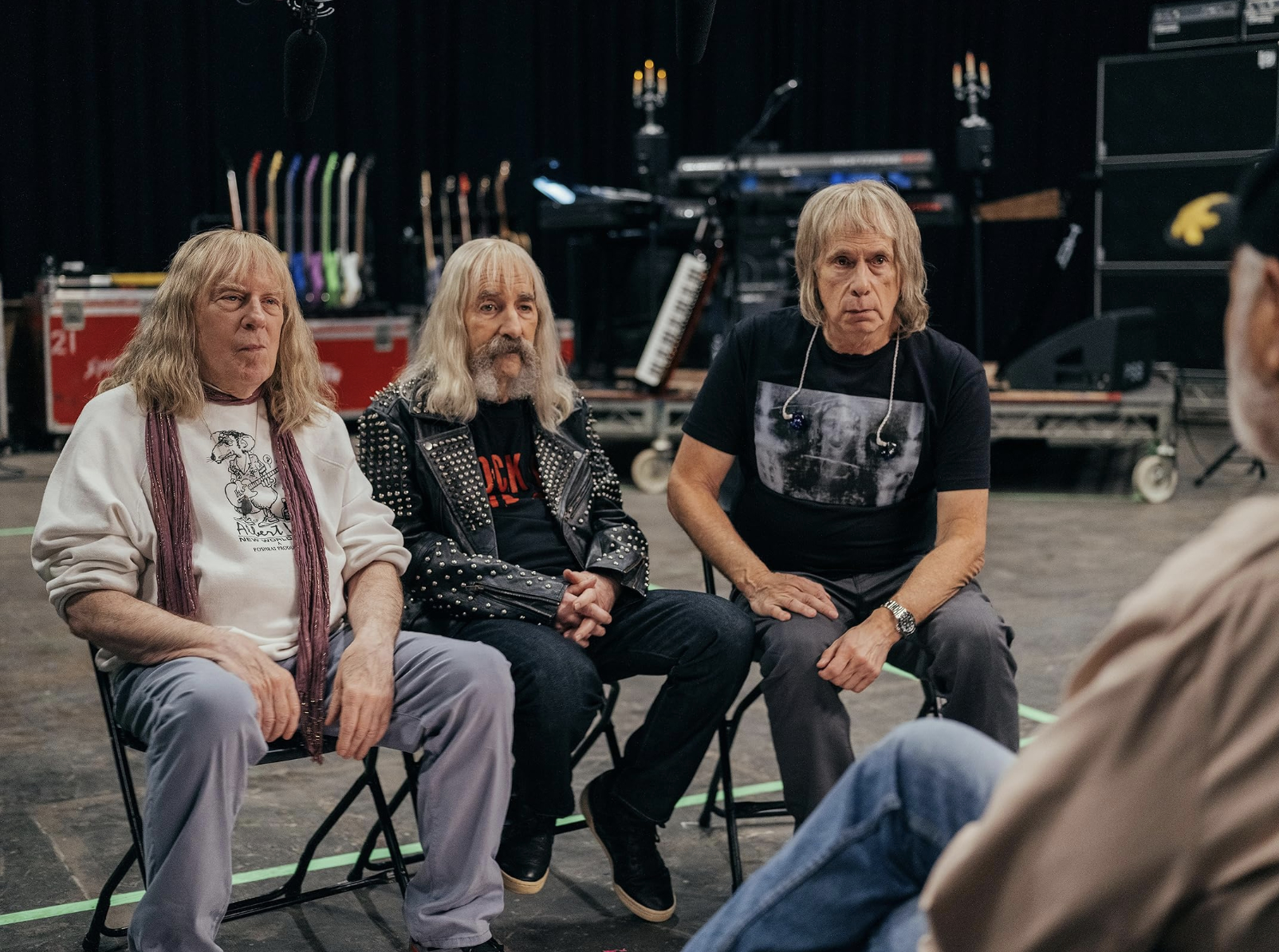
Harry Shearer? He remains the Ringo of this band, happy to be here. (I’ve never found Derek Smalls especially funny. If you disagree, your mileage should vary here.)
I sense your impatience with how seriously I’m taking these movies. I know that the first “Spinal Tap” is hilarious and formative of a subgenre of comedy, but you also already knew that. “This is Spinal Tap,” and the movies that Guest made on his own, especially ‘Waiting for Guffman” and “A Mighty Wind,” work because they take their characters seriously and bother with the finer textures of their settings. And these movies have a generosity that I don’t see in mock-doc sitcoms like, say, “The Office.”
“Spinal Tap II” is, inevitably, nowhere near as funny as the first one. It’s not as precise for starters; the documentary concept, for instance, is forgotten for long interludes. Reiner and company have nothing to say about the contemporary music industry, even as it pertains to aging, gold-watch acts still working the arenas. This “Spinal Tap” is set in its own headspace, in the tradition of its protagonists.
Many jokes fall flat, though a handful of them achieve that Christopher Guest and Michael McKean magic of transcendent ridiculousness. The cameos, which don’t make sense in the world of a band that isn’t respected, are painless but don’t really land. The exception is Elton John, who plays his worship of Spinal Tap with a soulful earnestness that’s flabbergasting. John keys into McKean and Guest’s rueful absurdism.
Am I grading “Spinal Tap II” on a bell curve? Could this movie have been a 30-minute supplement to a 40th-anniversay reissue of “This is Spinal Tap?” The answer on both counts is probably “yes.” But the movie left me feeling good. It has a pleasing wistfulness that shouldn’t be taken for granted.
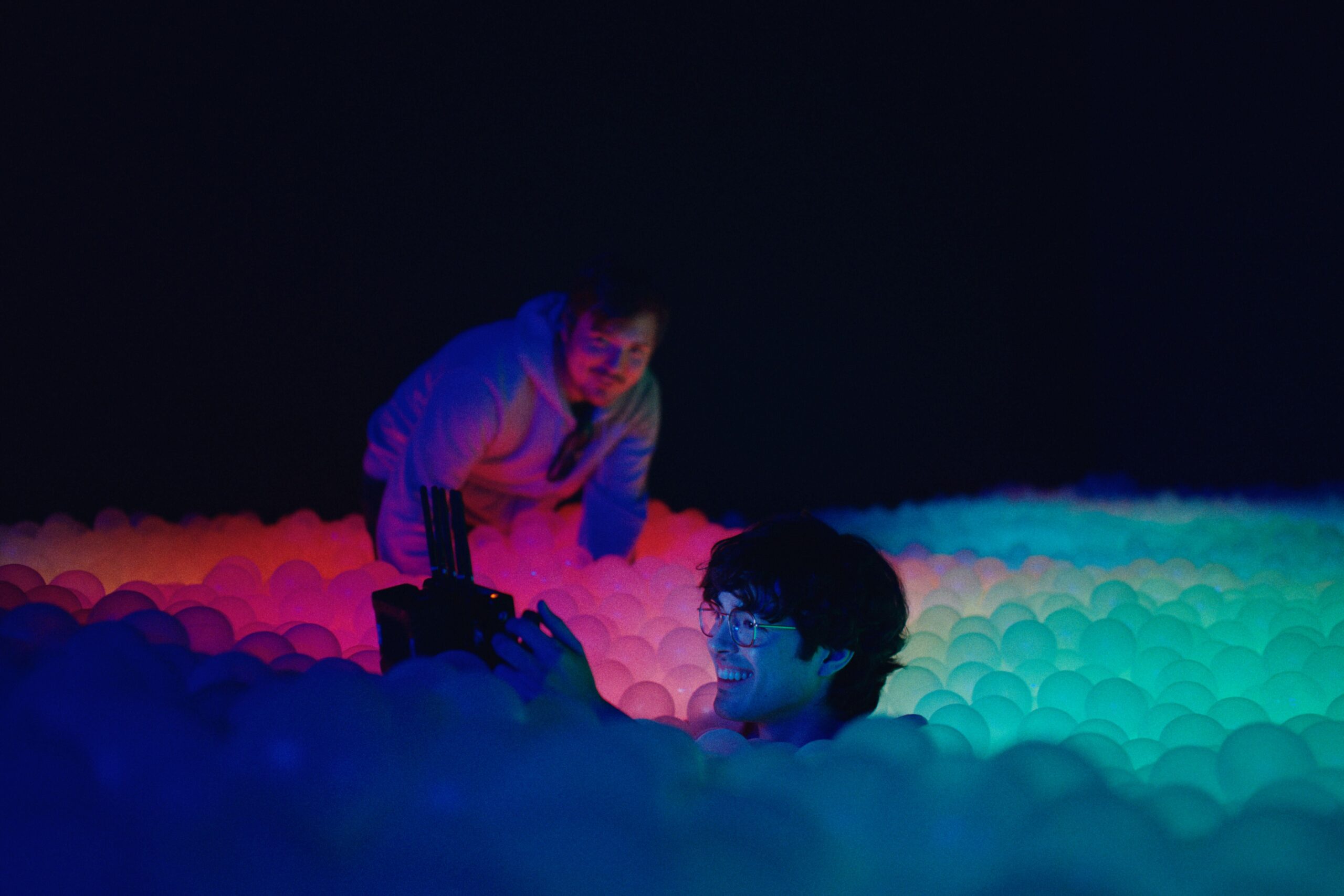
For a more modern-feeling comedy, try James Sweeney’s “Twinless.” It’s a wonderful surprise, something of a millennial melodrama that’s animated by a sharp and tender sense of humor. This is Sweeney’s second film, and he’s clearly a significant talent.
Roman (Dylan O’Brien) and Dennis (Sweeney) are thirtyish men who meet in a support group for people with deceased twin siblings. From a glance, they are a study in buddy-movie contrasts: Roman is a straight and muscled meat-and-potatoes dude-bro who is maybe a little slow on the uptake, while Dennis is a gay artist-type who uses his considerable intelligence to hide from people. As a filmmaker, Sweeney is aware of all the easy assumptions that this pair might foster, and quietly demolishes them.
Movies about romantic insecurity, made by filmmakers who are doubling as the lead actors, are often mired in vanity. Remarkably, Sweeney empathizes with Roman as much as he does Dennis. Roman is vividly wounded, haunted by his dead brother, Rocky (also O’Brien), whom we learn in flashbacks was gay as well as worldly and cultured and respected. Everything, in other words, that Roman believes he is not. This pain holds Roman back but gifts him with unexpected generosity. He doesn’t have any straight-guy anxieties over Dennis, and they become fast and close friends, unusually intimate friends who even go grocery shopping together.
Is this a movie about Roman learning that he is gay? Sweeney is after something harder to quantify than that. Dennis is attracted to Roman, which is explained in part by a nifty twist that steers “Twinless” into the neurotic terrain of Alfred Hitchcock and Pedro Almodóvar. And Sweeney’s images are swoony and obsessive, especially a tracking shot, pivoting on nesting images, that shows Dennis’ struggle to let Roman fly on his own.
But it is loneliness and feelings of inferiority that drive Dennis and Roman; and these sensations are embodied by Rocky, who in death unites them. Sweeney utilizes missing twins as a symbol of how alienated people can feel like their own phantom limb. Roman and Dennis both feel that they should be more than they are.
Sweeney is attuned to how pain can intensify punch-lines. This is a very funny movie that always seems to be on the verge of entering much darker and more dangerous waters. Roman’s grief is taken seriously, climaxing with a confessional that would be at home in a movie by Paul Thomas Anderson. Elsewhere, there are the pithy jokes and misunderstandings that one associates with a traditional romantic comedy.
The tension between grief and the desire for pleasure — for the things that allow us to feel that we belong to our world — gives “Twinless” an undertow that can also be felt, rather startlingly, in “Spinal Tap II.”
“Spinal Tap II: The End Continues” and “Twinless” are both in theaters.