Rick Wakeman’s brain is doing fine, thanks.
“It worked,” says the legendary prog-rock keyboardist about the brain and spine surgery he needed that cancelled his U.S. tour last year, including a stop at the National rescheduled for March 24. “It really has helped me. I mean, it sounds stupid, but I can walk around now. I can stand up. I don’t fall over.”
Wakeman just keeps on going. The 76-year-old musician, appointed as a Commander of the Order of the British Empire (CBE) in 2021, defined a certain kind of extravagant rock spectacle in the ’70s as the keyboardist in the band Yes, and with solo albums like “The Journey to the Centre of the Earth” and “The Six Wives of Henry VIII.” But the Rock ‘n’ Roll Hall of Fame inductee, famed for his long blonde hair and heavy sequined capes, has had many lives, among them racehorse breeder, soccer club owner, BBC TV host, soundtrack composer and in-demand session musician — in his pre-Yes days, he played on such hits as Cat Stevens’ “Morning Has Broken” and David Bowie’s “Space Oddity.”
Wakeman recently phoned Style Weekly from his home in East Anglia, an hour by train from London. “If you look at a map of England, there’s like a little bulge on the right-hand side,” he says. “I live here in a place overlooking the River Stour, and it is absolutely gorgeous, a very, very creative atmosphere.”
He talked with Style about his upcoming tour — which sees him joined by his keyboardist son Oliver, who also enjoyed a stint in Yes — and his most recent album, “Melancholia,” a real departure that was inspired by the loss of the family dog.
Style Weekly: “Melancholia” is different from what we’d expect. It’s very quiet, subdued. Not very ‘Rick Wakeman.’
Rick Wakeman: You’re right. It’s a concept album, but done on the piano. That’s what I’ve never done before. I mean, I literally play the piano every day, and I was playing one morning, and my wife came in, and she said, ‘That’s beautiful. What are you playing there?’ And I said, ‘It’s a piece I’m writing for our wonderful dog, Garo.’ We had a dog called Garo. Sadly, he died, and it was, really, very traumatic for my wife and I.
Do you often “play” your feelings?
I find when there’s things I can’t cope with mentally. I’ll sit at the piano and I’ll play. And it’s the greatest therapy I could ever wish to have. When I said to her, ‘It’s for Garo,’ she said, ‘It’s so lovely. It’s very melancholy.’ Melancholy is not a bad thing. We all suffer from it or actually enjoy it in many strange ways. It can be quite pensive, you know, thinking about things. And she said that I should do a whole album based around melancholia.
And so I started writing other pieces, and because it wasn’t commissioned at the time by a record company, I was able to do it and not in any mad rush of time. As I say, it’s a concept album…we all have these different moods that we go through. I’m just extremely fortunate that I can express mine on the piano.
Rick Wakeman – “Garo”
People were very much looking forward to your appearance here last year, and then it got canceled because of your health. Are you doing better?
Yeah, I’m okay. Shortly before the tour was to start [last year], I was having great difficulties with mobility, with walking, even standing up. It was getting worse and worse and worse. And then I collapsed in the house, and they thought I’d had a stroke. But then after a lot of tests and various things, they discovered that I had this thing called Normal Pressure Hydrocephalus, which is something that Billy Joel has as well. It’s quite rare and it’s very debilitating. The doctors said ‘Well, you can’t travel. You can’t do anything.’ And the only thing I could have done was, basically, spine surgery, and then brain surgery, where they put valves and things inside your head and reroute all the fluid down to your spinal column. It’s quite a serious operation. I said, ‘Well, I know my mobility’s really bad and I can’t walk, but if I could get round that, could I do the tour?’ And they went, ‘No way.’ They said, ‘You wouldn’t survive.’ So I had the spinal surgery in late September, and then I had the brain surgery, four-hour surgery, in November.
Has any of this affected your playing. I mean, you’re doing some complicated stuff up there.
Yeah, but I still play the wrong notes [laughs]. I did actually ask the surgeon about that before he sort of, you know, cut a huge chunk out of my head. And he said, ‘Look, where I’m delving into won’t affect your playing one iota.’ He said, ‘You’ve got arthritis in your hands. That’s gonna affect you more than what I’m gonna do in your brain.’
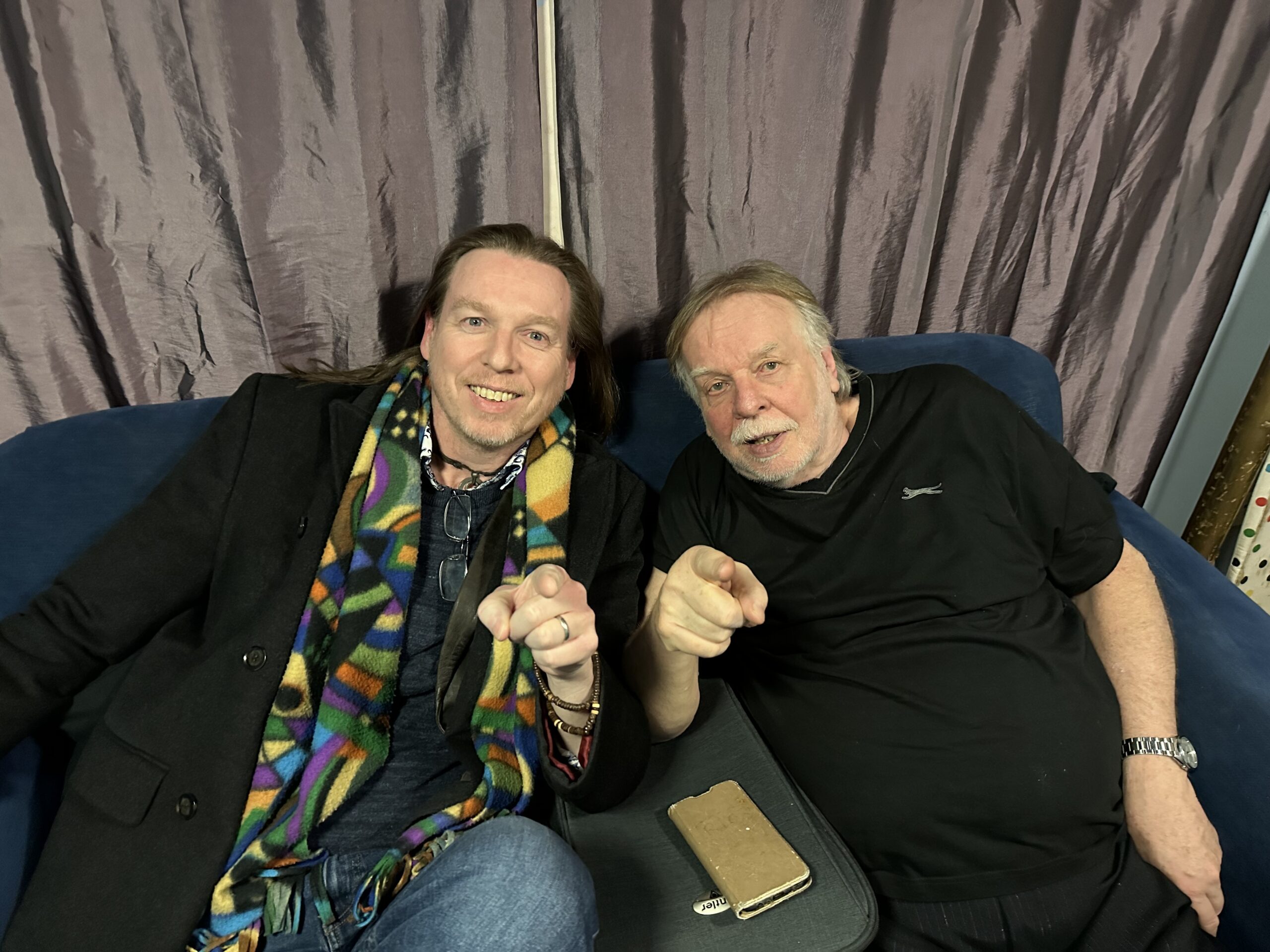
You’ll be teaming with your son, Oliver, for this tour. Have you paired up a lot?
Yeah, well, my two oldest boys, I’ve played with them both. I’ve been on tour before with Adam, and I’ve done shows with Oliver, who’s my eldest. He was in the band at the O2 in London [when Wakeman performed the entirety of his 1975 album, ‘The Myths and Legends of King Arthur and the Knights of the Round Table’ in 2016]. I don’t do the one-man shows anymore because with health issues and other various things, you know, to actually do a solid two-plus hours on my own, the hands just won’t take it.
So I need somebody with me, and I’ve never done a tour with Oliver before. We’ve done, as I say, shows together, but we’ve never done a whole tour, and I thought that could be really fun because it would give a great opportunity for us to insult each other and take the mick, you know, [laughs] which we will do. Also Oliver was two years with Yes, so he’s got some stories to tell and different music to play.
Your work with Yes was iconic. When he joined them, did he come to you and ask for advice?
What happened was that way back in 2006, 2007 I was speaking to Chris [Squire, bassist], and I told him that I really didn’t want to go on tour with them. Jon [Anderson, singer] was quite ill at the time, and I said, ‘Look, unless it’s the five of us, I don’t really want to go out with a different singer or whatever.’ And Chris accepted it and asked me who would I recommend for the keyboards? And I said, ‘Well, you know,I’m not trying to push my own family forward,’ I said, “but both of my boys would be good. Adam would be ideal, but he’s with Ozzy Osbourne and Black Sabbath, so you’re not gonna get him. And Oliver would also be good to do it, and he’d already done an album with Steve Howe, so they know each other, so that would work really well.’ And, so Chris said, ‘Great, thank you.’
Oliver did call me later on. He said, ‘Dad, I’ve been asked to do a tour with Yes. How do you feel about that?’ I said, ‘I feel that if I was your manager, I’d be wanting 15% … I got you the job.’ [laughs] I think it was a great experience for him. He really enjoyed it.
Are you still in contact with Steve Howe, the surviving founder of Yes?
Steve’s always working, and he’s down in Devon, which is the west country. I’m on the east coast of England, so, you know, we don’t see each other often. We do get messages going backwards and forwards. And the guys in the current Yes, Steve Howe’s Yes, I know most of them. I mean, people think that everybody sort of hates each other or whatever, but they don’t. I get on great with everybody.
Many older groups can’t stand each other. But not you guys.
You’re right. I mean, everybody presumes that bands are all at loggerheads and things. It’s not true. I mean, everybody that you work with, do you see them every day? Do you go out for dinner with them? The answer is no. You know, they’re acquaintances. That’s what it is. I mean, during my Yes period, when Chris and Alan [White, drummer] were alive, that was an amazing period of time. I mean, the last tour I did with them, which finished in 2005, with the “Fragile”/”Close To The Edge” lineup, was fantastic.
You ended on a high note.
Great memories and I loved doing it. But sadly you can’t bring people back after they’ve passed away. You cannot replace them. It becomes different. You can’t replace icons like Alan and Chris. You can’t do it. But it’s not just happened with Yes. I mean, with The Who, you cannot replace Keith Moon. You cannot replace John Entwistle. You can still play the music, but you can’t recreate what was unique.
You get asked about Yes so much, I’m sure it gets old. Is there something important about your time in the band that no one ever asks about?
No, not really. I mean, everybody has their own views about the best and worst Yes albums and who should have left, who should have been in this lineup, etc. And I suppose that’s what makes the band fascinating, ’cause everybody I speak to has a different view. And it really is great that a band can create those kinds of discussions from people who love the music.
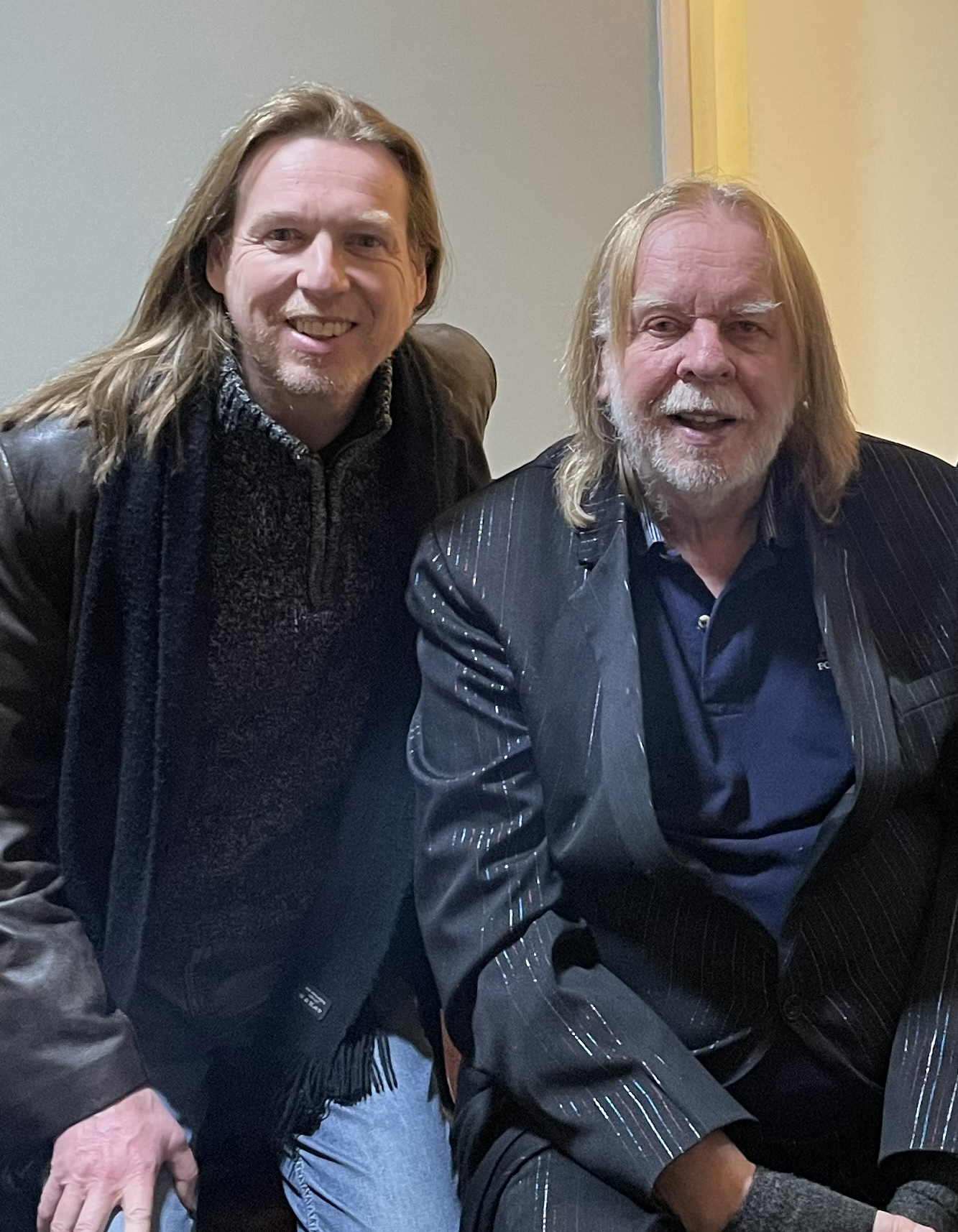
When you and Oliver come to the National, will you be doing sort of a greatest hits? What kind of show will you bring?
Well, it’s gonna be a mixture. I mean, I’ll be doing some stuff on my own and Oliver will do some on his own. We’ll do a lot of stuff together. I’ll do some of my old [material] and he’ll do stuff that he did with Yes, all instrumental. and I’ll be doing a couple of tracks from ‘Melancholia’ as well. So it’ll be a real mixture.
You know I have to ask this: Are you gonna wear the cape?
You can’t wear it when you’re sitting down to play. We tried, but you just end up doing a double flip backwards. [laughs]
Rick Wakeman and Son featuring Oliver Wakeman will perform at The National on Tuesday, March 24. 8 p.m.