After a flush of success, an audacious filmmaker might cash in on the goodwill that they have earned and release a passion project of raw and often barely coherent extravagance that announces “this is who I am.”
These movies put the pedal to the metal. They refute easy expectations and embrace wild shifts in tone, perspective and narrative, attempting to pave new roads for the artform at the potential expense of disaster. They are pawing at the manna and insanity of what drives someone to want to make movies to begin with.
Dennis Hopper’s “The Last Movie” is an example, so is Francis Ford Coppola’s “Megalopolis.” Maggie Gyllenhaal’s “The Bride!,” which I have not yet seen, sounds like it could be one. Arriving five years after the writer-director’s acclaimed “Titane,” Julia Ducournau’s “Alpha” is certainly such a movie.
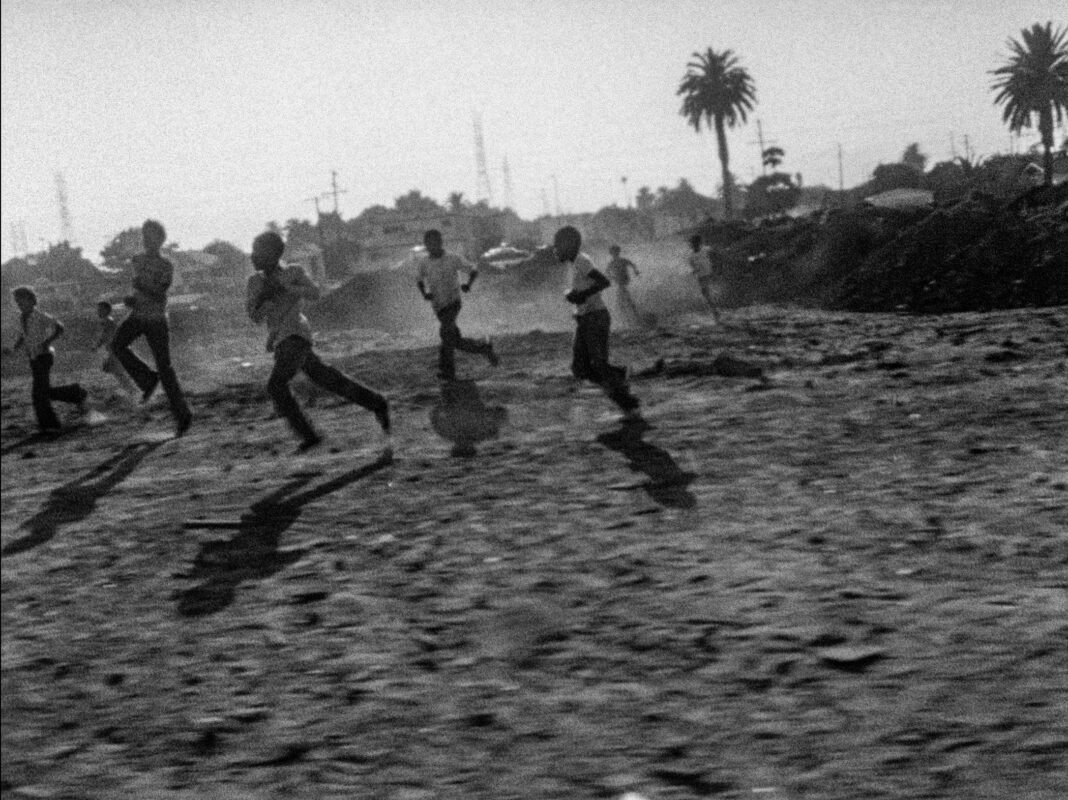
It is bleak, obsessive and repetitive. It is difficult to follow, shifting between past and present and reality and fantasy. It has a desaturated color spectrum that suggests what the apocalypse might look like from the inside of a vacuum cleaner; though, as the movie segues into fantasy, it attains vibrant and lurid hues that belong to an aesthetic that critics in the audience might term “French slasher chic.” It is rich with symbols that manage to be blunt and obscure, and it has suggestions of themes and plots in place of a story.
In other words, “Alpha” is arty. But it is also messy and alive, earning its provocations.
Alpha (Mélissa Boros) is a 13-year-old girl torn between her unnamed mother (Golshifteh Farahani), who is a doctor, and her uncle, Amin (Tahar Rahim), a heroin addict who has been circling death for years. They are of North African descent and living in an unnamed French town haunted by death, as there is a disease, communicable by blood, which is turning its hosts into stone. Literally. The addiction and family issues would be enough for most artists, but Ducournau ups the ante with the surreal body horror that ran through “Titane” and “Raw.” All three are coming-of-age movies with a bold splash of metaphor.
Alpha navigates boys and popularity as people cough up dust and gradually turn into statues, while Amin writhes in the agony of withdrawal on the floor of her bedroom where he sleeps. Amin is charismatic, emaciated, blighted beyond hope and fear of death. The movie opens with a memory of a younger Alpha drawing lines in magic marker on his arm between his track marks. That is a heartbreakingly precise detail, showing how innocence and wreckage can easily cohabitate in a house marked by addiction.
Ducournau overplays her best ideas. For instance, it is also a mark on an arm, a tattoo amateurishly inked at a party, which threatens to infect Alpha with the stone virus that is clearly the movie’s AIDS allegory, linking her in ostracization with her uncle.
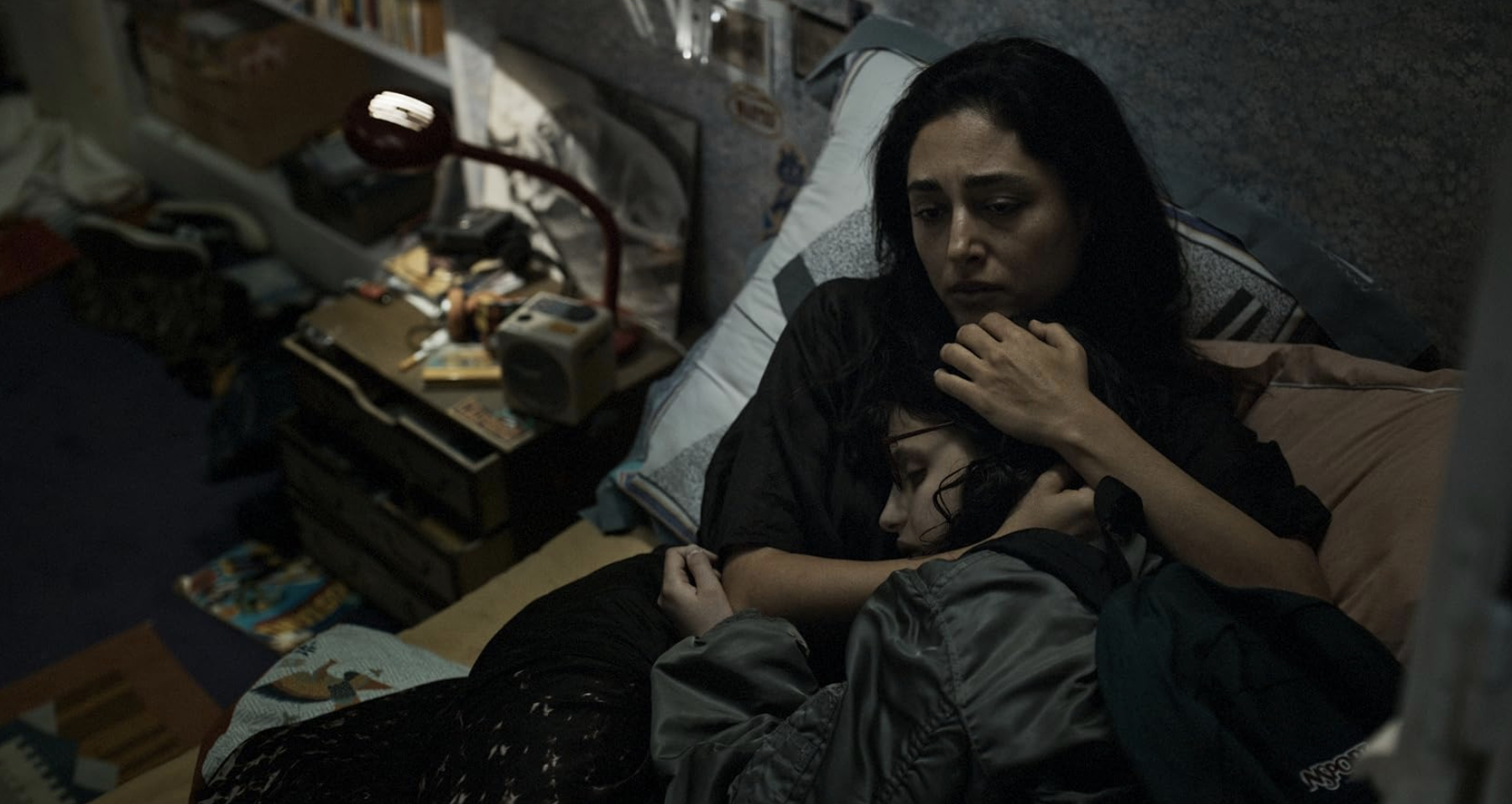
For every overworked association there are singular images though, such as a moment in which Alpha’s mother watches as Alpha and Amin twitch in synch while asleep. You wonder whether they are united in sickness or love or both. One of Ducournau’s most original ideas is the suggestion that a stupid schoolyard stunt — the amateur tattoo — inadvertently initiates Alpha into tragedy, social and familial, beyond her years.
The movie is deliberately “too much.” There are scenes of disaster that could fit into a sci-fi movie, and moments of aching intimacy between daughter, mother and uncle. Scenes of people turning into stone alternate with realistic scenes of gay people ostracized for having the AIDS allegory; of children ostracizing one another for the same reasons.
These associations linger while Ducournau digests other obsessions, all riven with anxiety, all captured with a camera that is constantly in motion. Even Alpha’s flirtation with a boy is stark and unsentimental, marked by the threat of disease and by an awareness of how people learn in childhood to manipulate each other for sex and power.
I grew tired of watching scenes in which the young girl’s tattooed arm opens and spills blood in front of her classmates. There are at least three such moments, increasingly ornate and macabre, immersing us over and again in Alpha’s ongoing rejection. One of these sequences, set in a school’s swimming pool, eerily evokes this year’s similarly themed “The Plague.” It also echoes Kristen Stewart’s “The Chronology of Water,” which jumps around in time and is defiantly unlikeable in its exploration of the intersection of childhood and atrocity. Something is in the air.
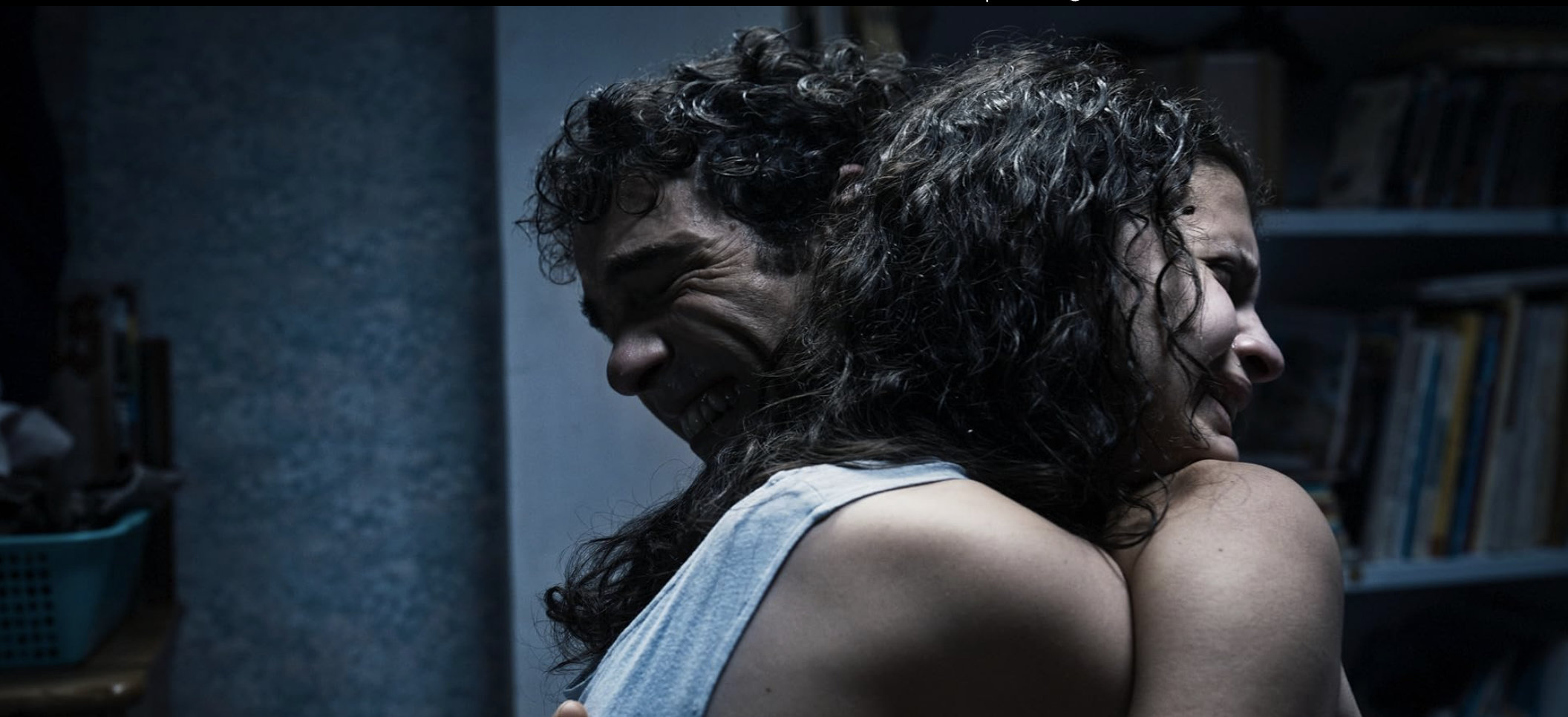
The scenes between Alpha and Amin are so well-observed that you might resent having to share them with other plot strands. Ducournau understands how people normalize addiction; the matter-of-factness of Amin’s family towards his deterioration is brutal and truthful. This movie would be more comfortable, or at least easier to digest, if we did not have to share this family story with images of people turning into stone, or if the movie did not jump back and forth in time at random.
And that is part of the point: atrocity intrudes. A breach in status quo is something that most horror films ironically cannot capture because they tell us from the beginning that they are horror movies and proceed to give us what we paid for. Most horror movies are comfortable, which is why they flourish during times of social tension. Ducournau’s maximalist style evokes the ravaging disorientation of living through multiple extremes of experience at once, namely entering womanhood while watching a loved one kill himself. “Alpha” spreads itself thin, but this thinness is resonant.
Filmmakers sometimes forget that body horror is meant to expand on real fears of decay. Not Ducournau, especially when Alpha’s mother attempts to extract a biopsy from Amin’s back. The special effects are unforgettably casual, and the disease has a poetic association. The patients become beautiful as the illness strangles them into forms of organic art. They harden into a testament to their hard-earned sense of peace. It is as if, even in this pitiless wasteland of disappointment and betrayal, illness and death, there is still God.
Concerned with malls and witches and young women who wield their fashion senses as weapons, “Forbidden Fruits” is destined to be compared to movies like “Clueless,” “The Craft” and “Mean Girls.” The influence of those touchstones is evident, but co-writer and director Meredith Alloway, in her feature debut, also plays a more original game.
“Forbidden Fruits” is set entirely in a mall, a realm that Alloway uses to represent social media in physical terms without having to constantly thrust the camera into phones. The women of this movie live in commerce, particularly clothes and coffee and jewelry, which they wield as a form of modern feminism. That feels accurate to how people use their stuff and their hunger and resentment as props in the social media hub of our ongoing culture war. This is fruitful material for satire.
Apple (Lili Reinhart) is the ringleader of what might be a coven — Alloway is ambiguous on that point for a while. Her followers are Fig (Alexandra Shipp) and Cherry (Victoria Pedretti). They submit themselves to Apple’s influence in defiance of men, which Alloway clearly sees as trading one repression for another. The group can only text men in emojis and have sex when Apple approves. They have ornate rituals, blending pop culture and politics and commerce cycles, that parody online groupthink with surprising ferocity.
Fig shows signs of independence while Cherry, who recalls the Amanda Seyfried character from “Mean Girls,” is a dim bulb, though Pedretti and Alloway etch the character beyond stereotype. Cherry is a recovering addict, which intensifies her need to follow, and her desperation becomes poignant. Into this thicket of neurosis arrives Pumpkin (Lola Tung), who plays along for a while before setting in motion a reckoning.
That reckoning takes a while to arrive, and the jokes wear themselves out before Alloway reaches her endgame, but “Forbidden Fruits” has bite. It also has a retro vibe that it wears with unusual confidence, as its surreal mixture of comedy, violence and deliberate pacing and vibrant colors recall 1980s-era horror movies. A modern movie that came to mind, which has a similar delicate, steely atmosphere, is Anna Biller’s “The Love Witch.”
This weekend, beyond the usual blockbuster and streaming cacophony, you have two accomplished, ambitious and unusual options at the cinema.
“Alpha” is playing at Movieland, while “Forbidden Fruits” is in theaters everywhere.