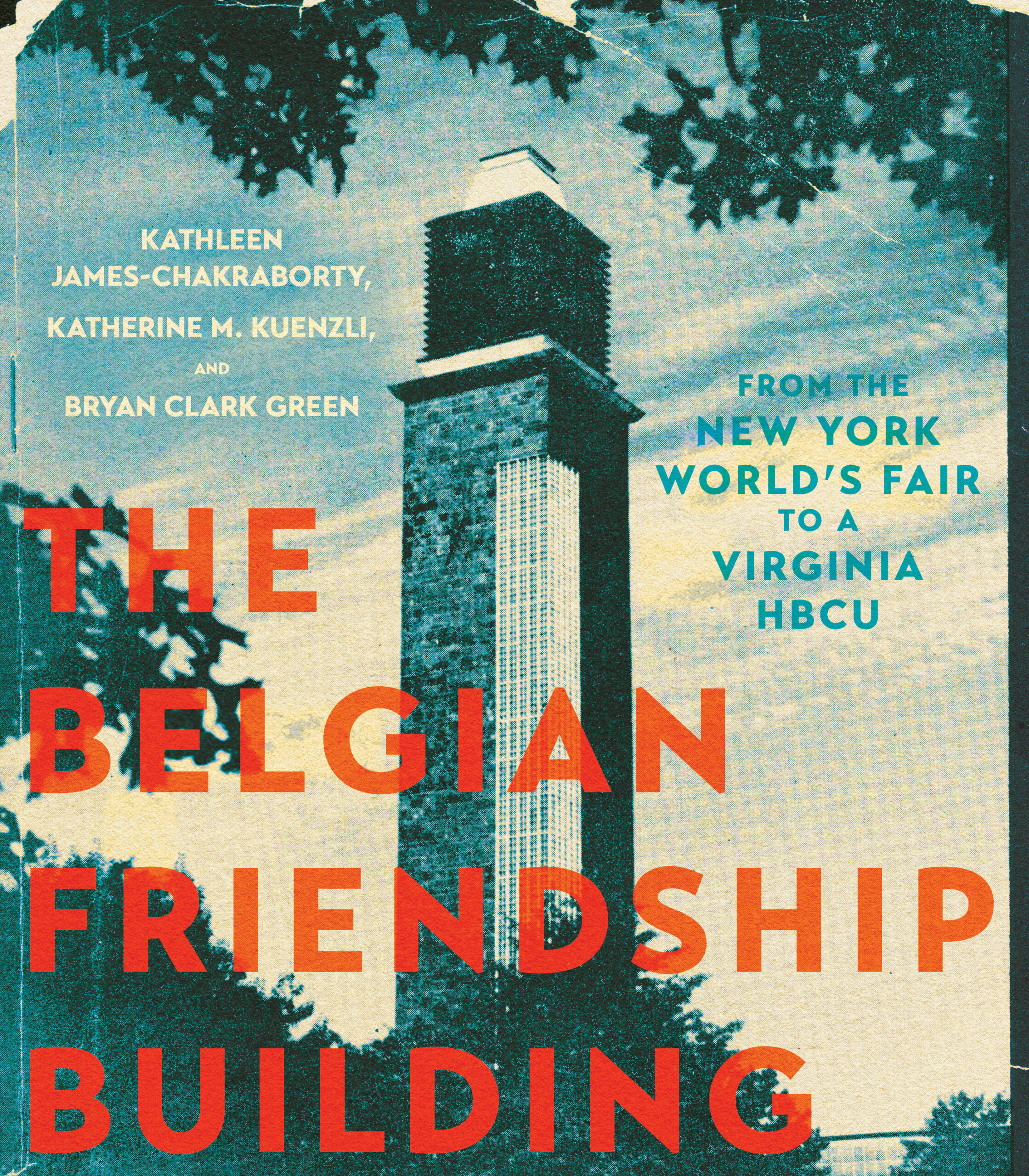
Standing out from the traditional architecture that defines Richmond is the Belgian Friendship Building on Virginia Union University’s campus. If the building’s name seems a bit odd, consider that it relates to a myth built on a series of lies concocted by man in a moment of crisis.
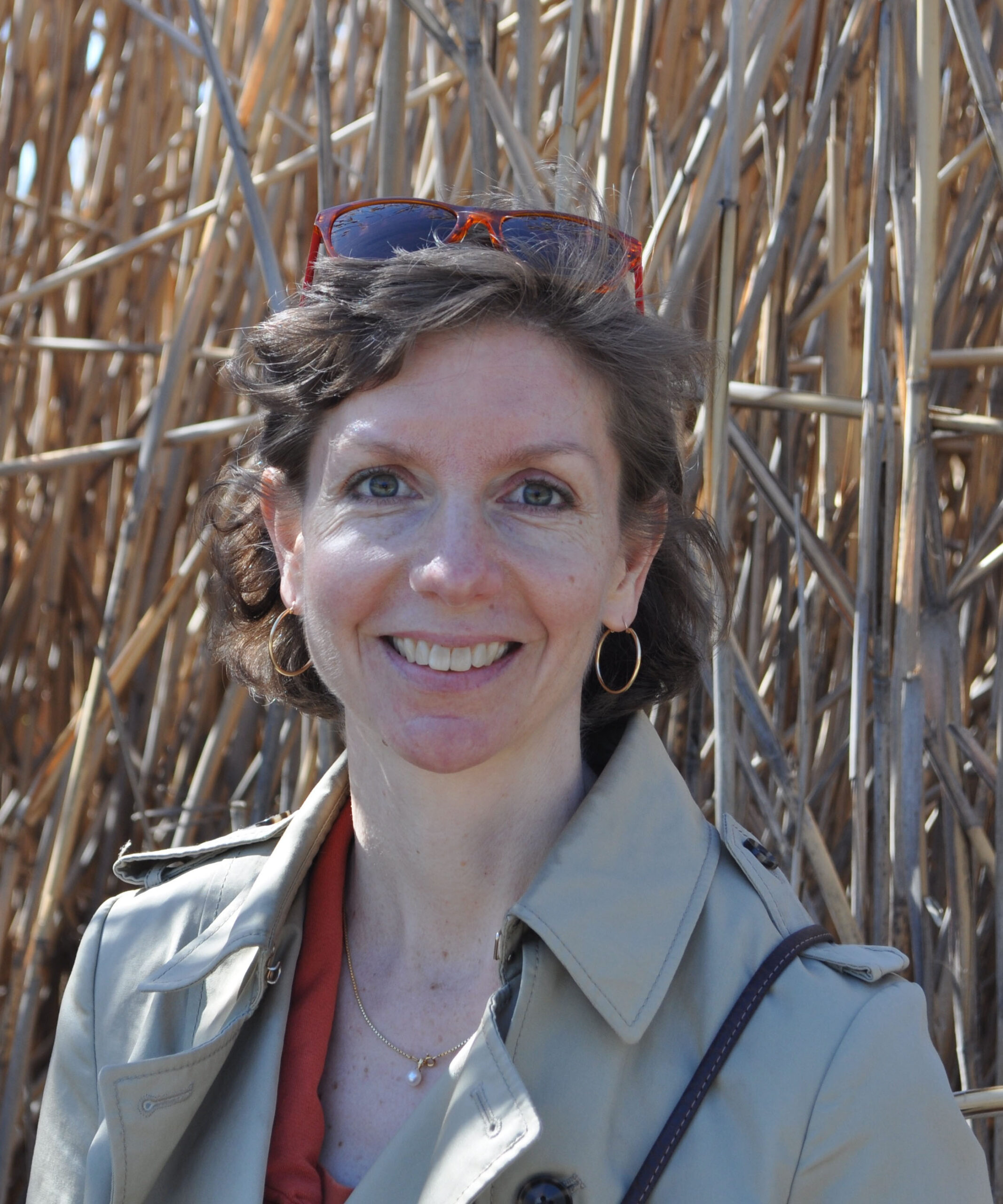
This backstory will be illuminated at a book lecture at the Library of Virginia by art historians Katherine Kuenzli and Kathleen James-Chakraborty. Their latest book, “The Belgian Friendship Building: From the New York World’s Fair to a Virginia HBCU” provides a deeply researched look at one of Richmond’s most distinctive buildings.
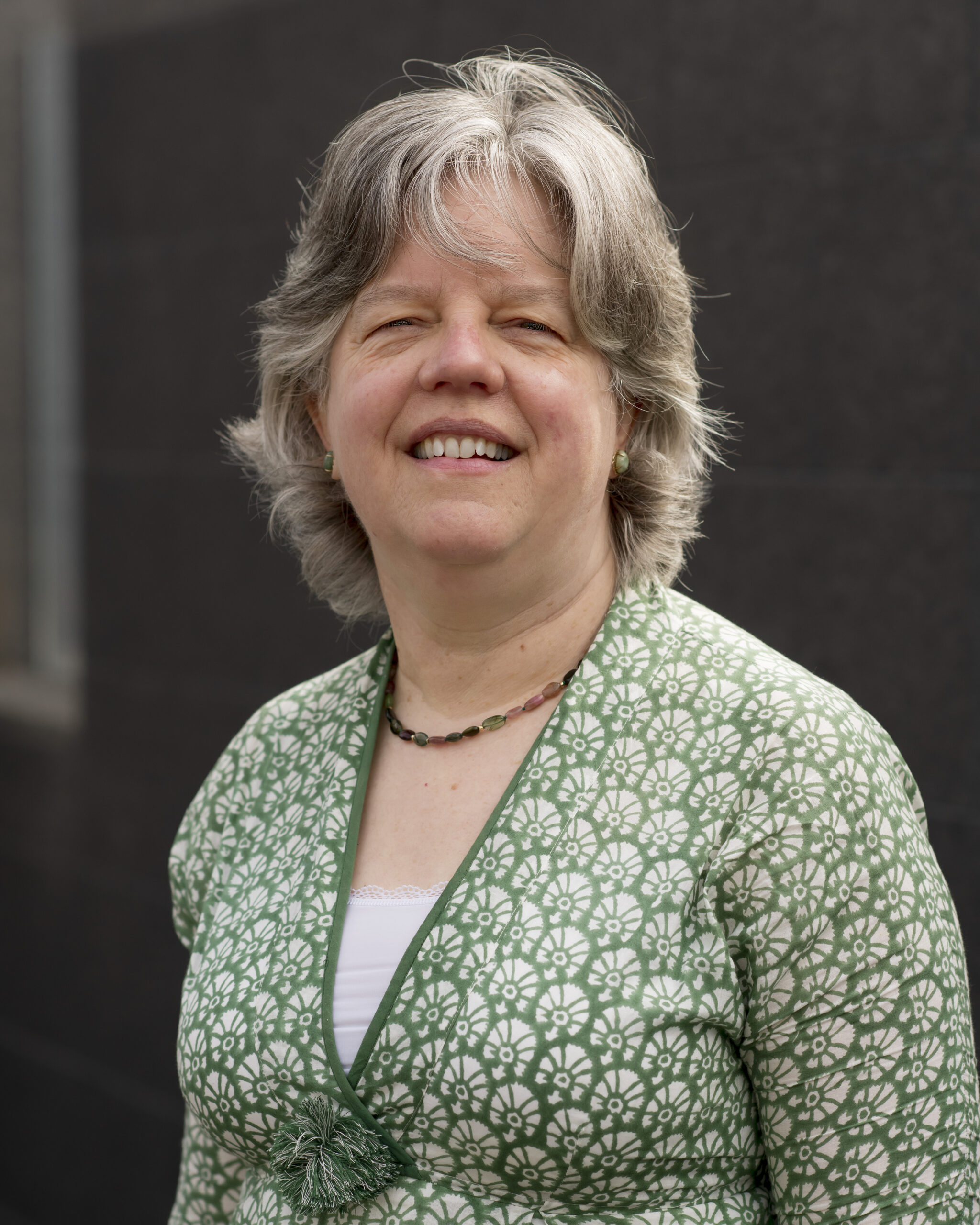
James-Chakraborty met Kuenzli when the latter was a graduate student at University of California, Berkeley and James-Chakraborty was the outside member of her dissertation committee. In 2018, James-Chakraborty visited Richmond to take a hard look at Monument Avenue. “Seeing the Vann Memorial Tower in the distance drew me through Jackson Ward and under I-95 to what I immediately recognized as a powerful counterpoint to them,” she says. “And it was designed in part by Henry van de Velde, an architect I’d long had an interest in.”
During the COVID pandemic, she collaborated on writing a lecture on the building for the Massachusetts Institute of Technology’s (MIT) Global Architectural History Teaching Collaborative in response to their call for material related to Black history of the built environment. Kuenzli joined the project in the spring of 2021 after having written two books on van de Velde. “But this project opened a whole new area of research for me that connects Belgium and the Congo to New York and Virginia in ways that are completely fascinating,” Kenzli says. “One of my motives was to learn of the Congolese and African American dimensions of modern architecture.”
The building was designed to showcase Belgian industry and artisanship, but also feature the raw materials and art of the Congo, the country’s largest colony. The tower originally held a carillon, the ensemble of bells for which Belgium and the Netherlands are both well known
Kuenzli’s task was to uncover the Belgian side of the story. The narrative of the building in U.S. archives was that the building was a “gift” of the Belgian government to a Historically Black College and University (HBCU) as a gesture of international friendship and racial uplift. “In Belgium, I learned that this story was nothing but a clever fabrication on the part of the Belgian deputy Fair Commissioner, Jan-Albert Goris, who wove a series of lies when he was backed into a corner,” she says.
Simply put, the Belgian Friendship Building, originally constructed for the 1939 New York World’s Fair and one of only a few surviving buildings from the celebrated exhibition, had nowhere to go once the World’s Fair ended. In 1938 and ‘39, the Belgian government had taken out several loans to afford the high-quality, durable materials for the Fair building, including black marble paneling, hand-molded tiles, large expanses of industrial glass, and a 35-bell carillon.
By the fall of 1940, Goris had nowhere to turn because his country’s government was split between a Belgian civil administration in Brussels under the German military occupation and a government in London that was working with the Allies to free Belgium. “The government in exile to which he reported lacked access to government funds and relied entirely on revenue from the Congo,” says Kuenzli. “Goris didn’t have the funds to pay his bills for the balance on the materials or the workers who’d been brought over from Belgium to assemble and disassemble the building and who were now were stuck in New York City after Germany’s invasion of Belgium.”
If the country failed to dismantle the building from the fairgrounds by the end of October, it would have incurred a fine from the Fair Committee in New York City. “So, Goris sought buyers for his building under the false promise that the building was a permanent structure that would be a good investment,” she says. “It was not.”
The name Belgian Friendship Building was coined by Goris, as part of his fundraising for the transfer of the building from New York to Virginia Union after VUU’s president William John Clark was persuaded by his treasurer that acquiring the building was the best way for VUU to obtain its much-needed library.
Clark’s successor John Marcus Ellison, the university’s first Black president, successfully raised the necessary funds, including a donation from Jessie Vann, whose husband Robert had been the longtime editor of the historic Black newspaper, the Pittsburgh Courier.
“The Richmond newspapers expressed a strong sense of pride in the city’s obtaining the former pavilion,” James-Chakraborty says. “But local whites contributed very little to its reconstruction.”
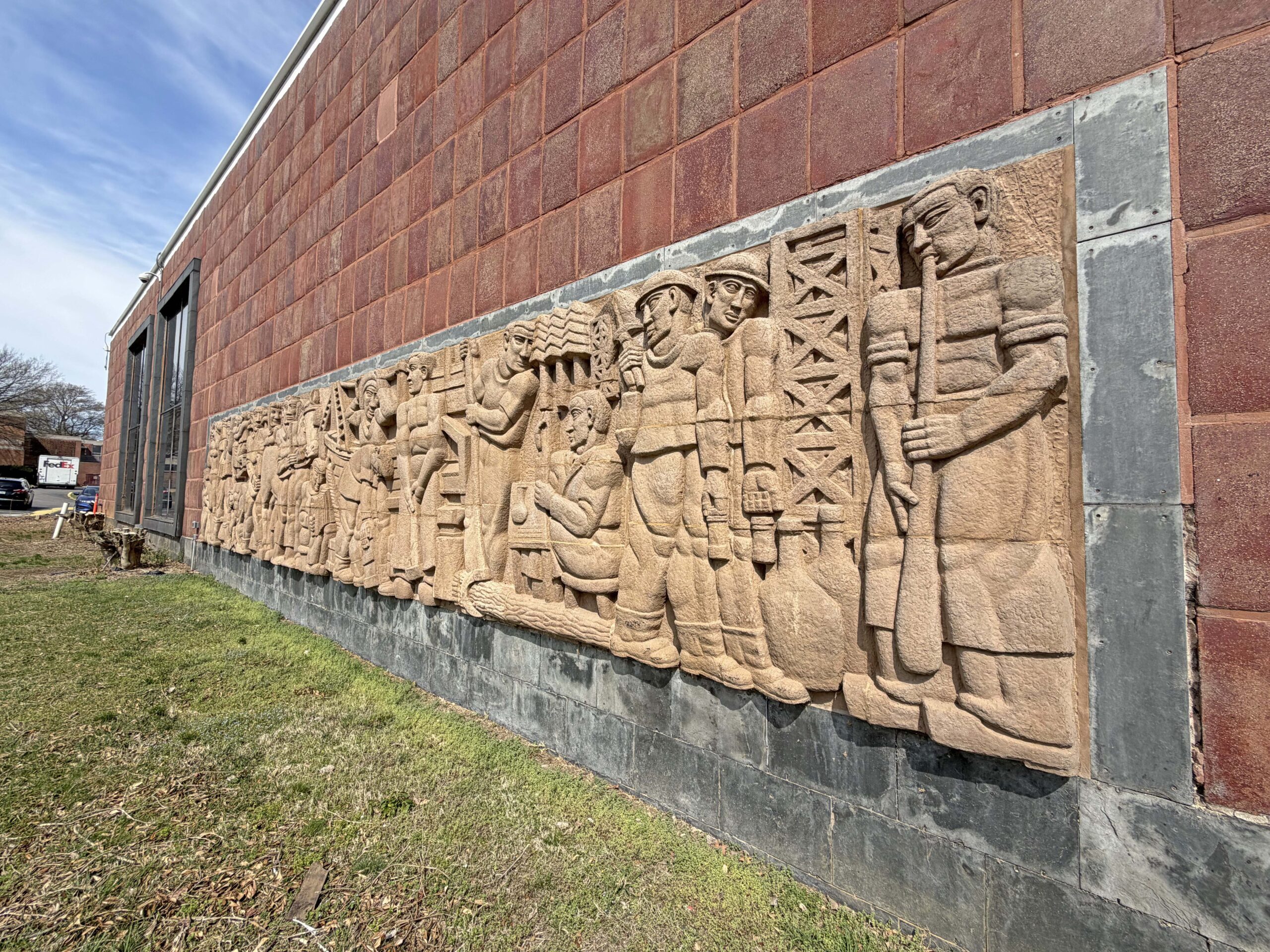
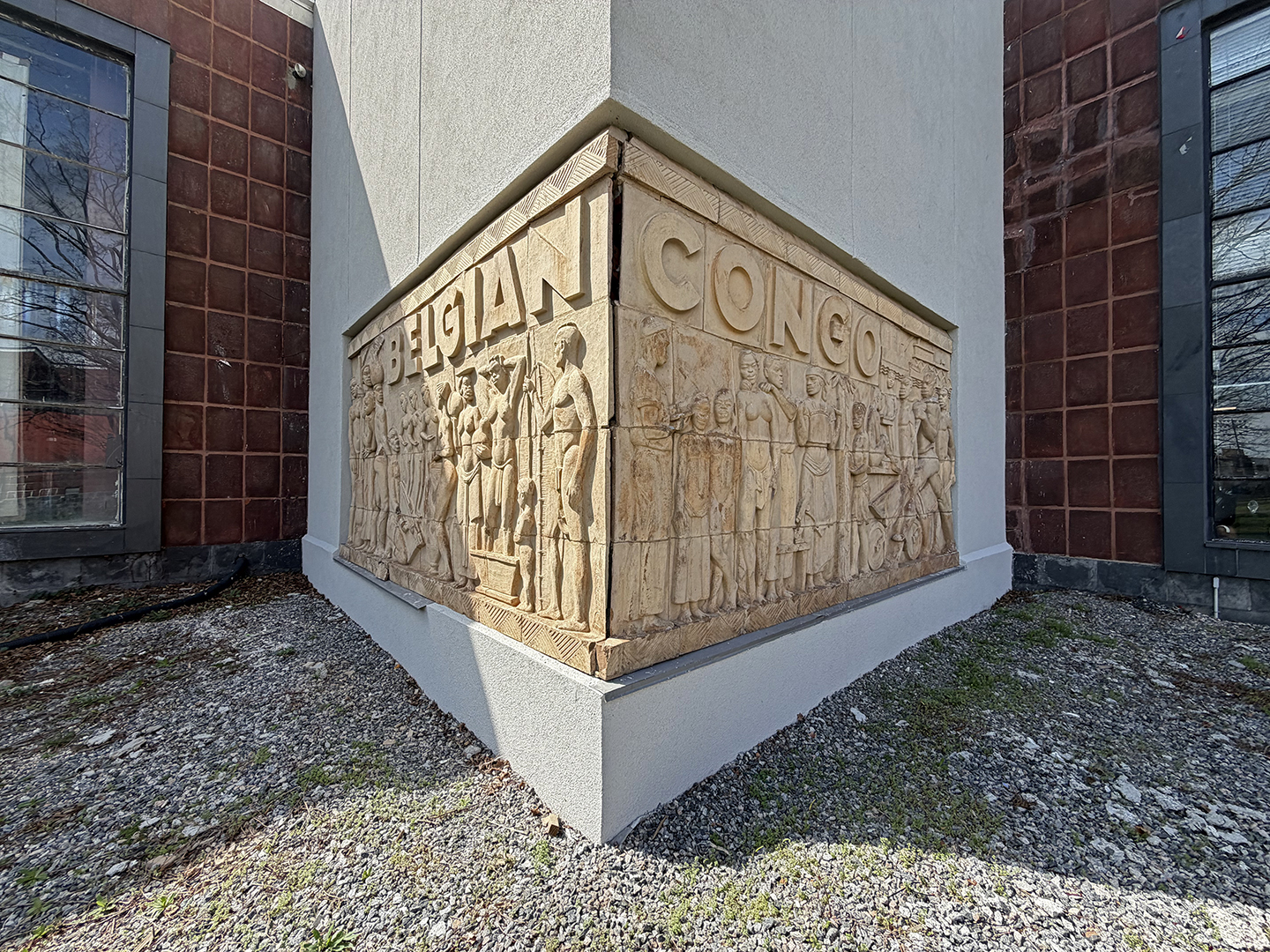
Today the Belgian Friendship Building is in a state of serious disrepair due to several factors, including reconstructing a temporary building as a permanent one. The architect who signed off on its plans for reconstruction in Richmond, the Belgian architect Hugo van Kuyck, may have known of the deceit, but he was an archrival of van de Velde and likely didn’t give the project his full attention.
Had the building been reconstructed properly, brick infill would have been added to the steel frame as a permanent backing for the tiles. As it is, there’s no moisture barrier and decades of water infiltration have taken their toll. A second challenge is that Belgian materials are difficult to source in the U.S., and the metric scale used in the building only complicates the matter. These shortcomings have been compounded by stop-gap measures due to lack of funding, which so far have not addressed the original problem.
James-Chakraborty says that the building was one of the most admired at the 1939 World’s Fair, not to mention being the earliest example of European modernism on a campus in the U.S.
“We’re hopeful, now that we know the full story behind the building, that responsibility might be taken and funds and expertise made available for its proper reconstruction,” says Kuenzli. “In light of our research, one might envision renaming the building, as well.”
Book talk with Dr. Katherine Kuenzli and Dr. Kathleen James-Chakraborty on their book, “The Belgian Friendship Building: From the New York World’s Fair to a Virginia HBCU,” will be held on Thursday, March 19 at noon at the Library of Virginia, 800 East Broad St. Free, but registration required