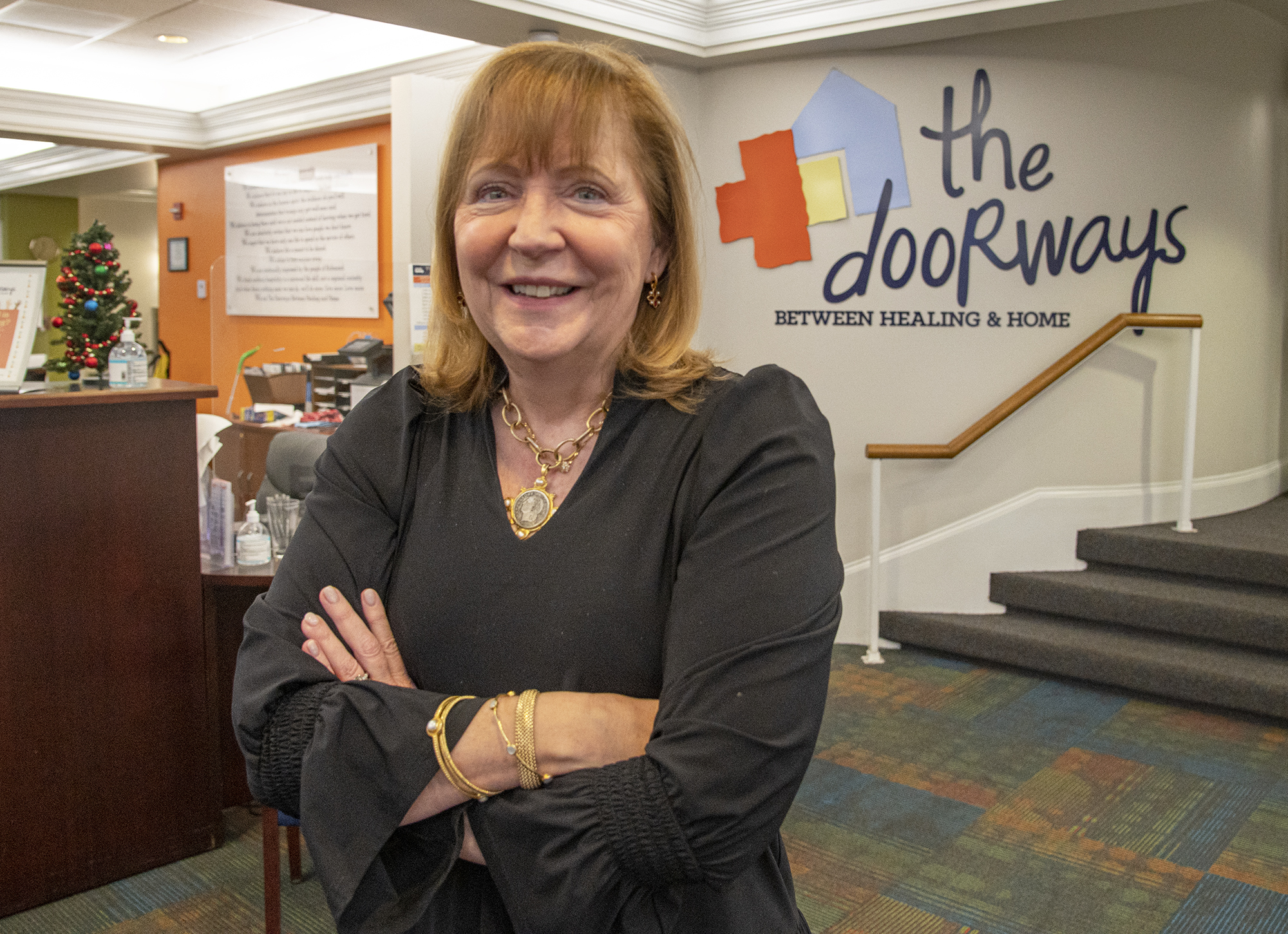
Whatever you want to say about the failed Sixth Street Marketplace, there was a restaurant in its food court, the Chicken Coop, that served the best turkey sandwiches in town, says Dolly Hintz.
“They were delicious,” remembers the 89-year-old co-founder of The Doorways, formerly known as the Hospital Hospitality House of Richmond. The largest donation-based lodging facility of its kind in the country, The Doorways celebrates its 40th anniversary this year, and we can attribute its staying power, in some part, to the lure of fresh turkey. “It’s a good thing we were eating there that day,” she laughs.
It was 1992, eight years after the Medical College of Virginia (MCV) Women’s Auxiliary, led by Hintz, had set up living quarters in an abandoned Virginia Commonwealth University dormitory building, the Zeigler House, at the corner of 10th and Marshall. The Hospital Hospitality House provided much-needed overnight rooms for the relatives of patients hospitalized at VCU Medical Center, then MCV. The concept was unique, and had proved so successful that the HHH, with maximum occupancy of 28 people, was badly in need of a larger space.
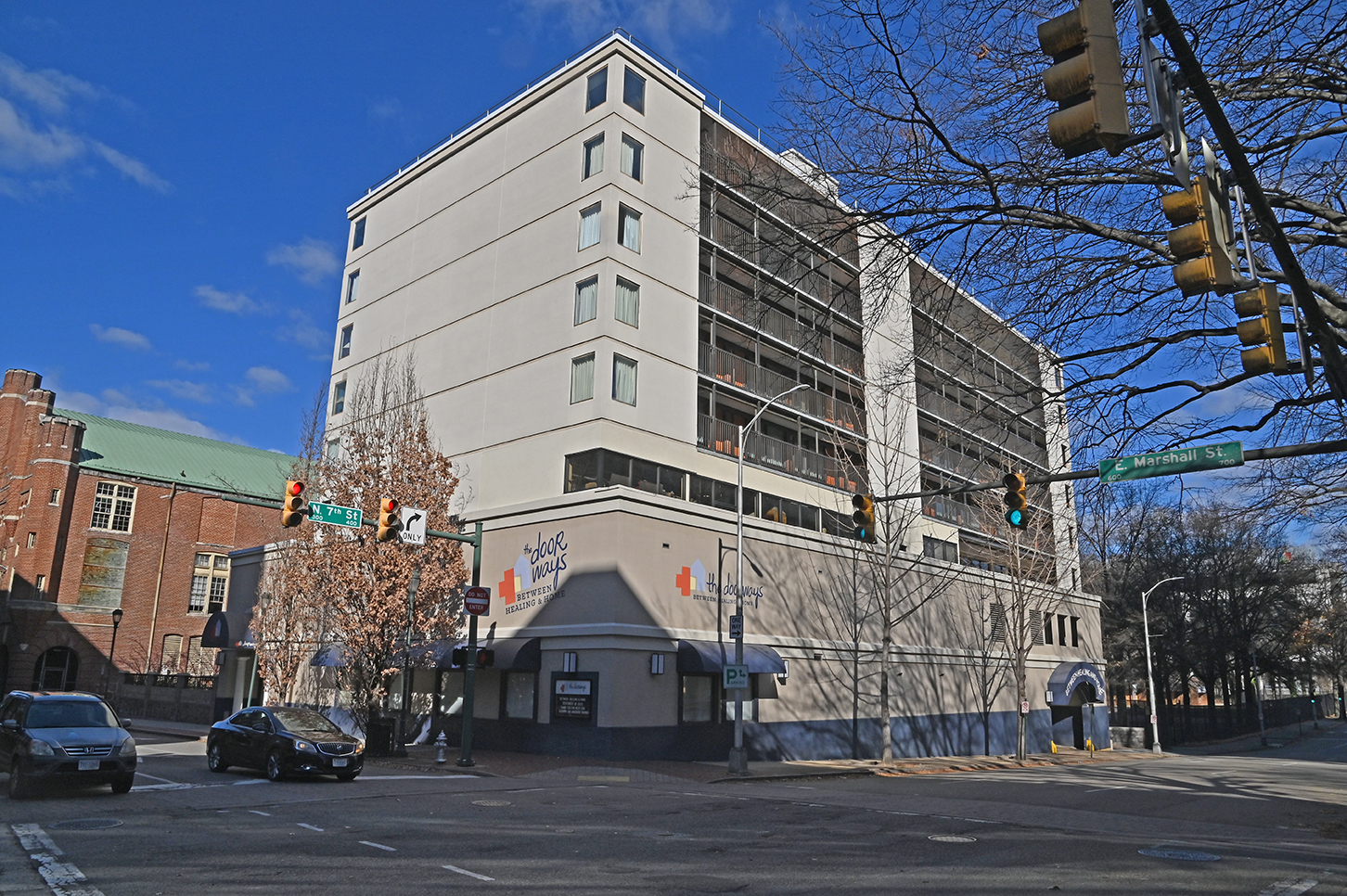
There in the Marketplace, dining out with the House’s only full-time employee, Charlie Strickland, Hintz became aware of the neighboring Days Inn hotel at 7th and Marshall, which was in foreclosure. “We went right next door and looked at it and thought that it would be perfect … a hotel with nearly 120 rooms.”
It was going to cost a million dollars to buy and renovate, not exactly chump change for a small nonprofit subsidized by community donations. But Hintz, a Chicago native who had moved to Richmond in 1981 with her husband Robert, an executive at CSX, had done the impossible before.
“I was a nurse back in Chicago. I went through nurse’s training and worked for a while, but with four kids and a traveling husband, I never got to work again [Disclosure: Hintz is the mother of Style Weekly contributor David Hintz Timberline]. But I always thought I would like to volunteer at a hospital. And that’s what brought me to MCV.” She joined the auxiliary, whose members would visit patients, distribute magazines and give comfort. One day, the head of volunteer services, Mary Still, came to a meeting with a serious concern.
“She said, ‘I don’t know if you noticed, but there are people sleeping on couches and washing themselves and their clothes in the bathrooms. These are the relatives of the patients staying in the hospital because they have no place to go.” Still told the 15-member auxiliary board that she’d heard about a small house with four bedrooms that had been opened up to house the relatives of patients at University of Virginia Medical Center in Charlottesville. Hintz and fellow auxiliary member, Jackie Nichols, visited the house, and later toured similar facilities in Alabama and Georgia.
Inspired, the ladies met with then VCU President Edmund Ackell and asked if the university had any buildings on campus it wasn’t using. “He told us about this three-story building, the Ziegler House. It used to be an old dormitory used for nurses but had been empty for a long time and they were going to tear it down.” The house was perfectly located – only a block and a half from the hospital – but it was in serious disrepair. “It was a mess, full of pigeon poop. But it was perfect because it had a big living room and a den and a kitchen and eight dorm-style bedrooms.”
Ackell told the auxiliary that it could have the building for $1 a year “but that we had to pay for the renovation and that was going to cost at least $250,000 … we also had to furnish it.”
Something Special
The auxiliary had never raised more than $5,000 so this was a real challenge.
“My husband had beautiful handwriting and he wrote this one-page letter with just the basics,” Hintz recalls. “It said, ‘We want to provide a home away from home for the people who travel to Richmond to be with their loved ones while they undergo treatments or deal with a heavy illness.'”
The members pulled together their collective church and club mailing lists and began a begging campaign. The community response was immediate and donations poured in.
“We went to churches and community groups with our slideshow and we did our spiel,” Hintz says. Eventually, the Carpenter Foundation awarded the project a $10,000 grant and CSX gave $50,000. “That is what gave us legitimacy and told people we were serious.” A fundraising event, Something Special, raised another $100,000. One supporter, Arthur Korn, had connections in the furniture business and donated twenty beds and mattresses, while Circuit City gave appliances. “We were blessed,” she says. “If we needed something, somebody came up with it.”
The setup was bare bones, though. The kitchen was so small that there wasn’t space to store much food, which was donated by Ukrop’s. “The house was dorm-style, four women in one room, four men in another. It wasn’t an ideal situation but people were so grateful.” The HHH opened in February 1984 and was at “the little house” for nine years.
Hintz quickly saw that this was more than a boarding house. “We realized that we were serving the forgotten member of the healthcare team – the relative, the support person for the person who is ill. It’s so important.” But, she adds, hospitals were evolving. “In the late ’80s, medicine started to change and now patients weren’t staying in the hospital as much. They needed to stay in the area so they could go back for treatment, cancer patients or transplant or heart patients. They wanted them out of the hospital. That’s when we knew we would need a bigger house, not just for the relatives to stay but the patients to stay.”
“As health care changes, we’ve evolved to meet the needs,” says Stacy Brinkley, President and CEO of The Doorways. “At first, it was a nice thing to have for family members while their relatives were inpatient. But now so much of health care is done on an outpatient basis, and specialty healthcare is done in larger cities, in teaching hospitals, so people have to travel for some of that life saving care.” These days, she adds, more than half of the 117 guest rooms at The Doorways are housed by a patient as well as a family member.
The move to the “big house,” as Hintz calls it, was possible thanks to financial help from the MCV Foundation and VCU Medical Center, which now have part interest in the building. An anonymous $100,000 donation, still the largest in the organization’s history, was also instrumental. The increased space meant that clients having treatment outside of the VCU Health System – like the VA Hospital and Sheltering Arms – could also be accommodated (all guests have to be referred by the attending hospital).
These days, the average length of a stay is six-and-a-half nights but 40% of guests are housed for longer than a month. “We have some that are here for six months to a year depending on treatment,” says Brinkley, adding that The Doorways asks for a $15 a night donation “but no one is ever turned away for an inability to pay. Slightly over 50% of our guests cannot afford to pay.”
Since its founding, the facility [once known as MCV/VCU Hospital Hospitality House] rebranded as The Doorways in 2015, has served more than 215,000 guests and provided more than 1.3 million nights of lodging. And 79% of the guests are Virginia residents; the rest come from every state in the nation and around the world. “And it’s all because of this intrepid group of ladies who were brave enough to tackle the problem,” says Brinkley.
The Next Phase
Dolly Hintz came to realize, over the years, that The Doorways wasn’t just a place to stay. It was an integral part of the healing process.
“Someone introduced me to a gentleman not too long ago, and he gave me a hug. He said, ‘My wife passed away, we’ve been here for a month, but after I left her bedside, everybody was here for me.’ That is what it was all about. They spend the day at the hospital and come back to the house and there is somebody to talk to, someone going on the same journey.”
“We have volunteer groups who come in and make meals,” says Jessica Hale, communications manager of The Doorways, giving a tour of the kitchen, designed so that four different families at a time can prepare food. “I love that there are always tables pushed together because the guests want to create a communal space. and so they all get together and form these beautiful bonds.” The rooms at The Doorways are modest, but there are comfortable sitting areas on each floor with TVs, games and books.
The facility’s YouTube channel (https://www.youtube.com/@thedoorways503) spotlights many of the guests who have come through the doors, like Henrietta and Jose Burgos of Zephyrhills, Florida, who had two visits a decade apart as Jose endured separate liver transplants. “This place is always in my prayers,” Jose says. “Without it, I don’t know where we’d be.” “You get positive feedback from other people,” his wife adds, “and you pray for each other, and you get to know each other and help each other out in situations.”
In the old days, the Hospital Hospitality House had one full-time and one part-time employee. The Doorways, with an annual budget of just over $3 million, now boasts 23 full time and 12 part time employees, with more than 500 volunteers, who do everything from make dinner (with food provided by Feed More and, still, Ukrop’s) to clean the building to write thank-you notes.
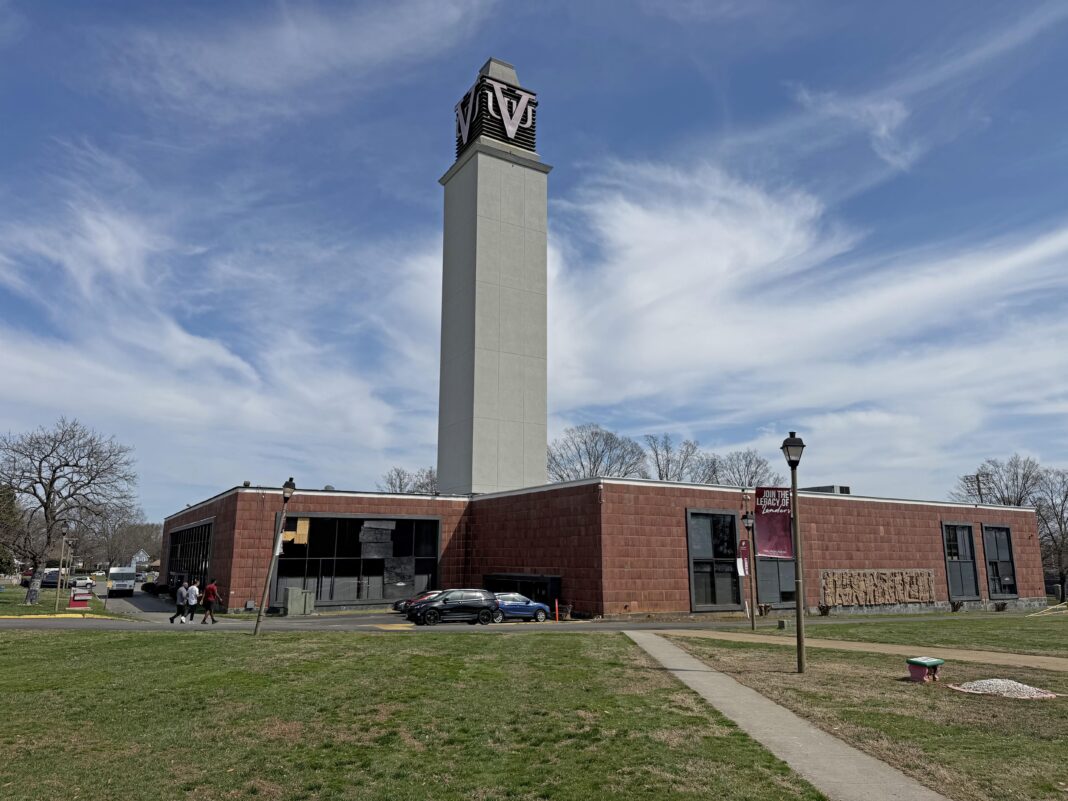
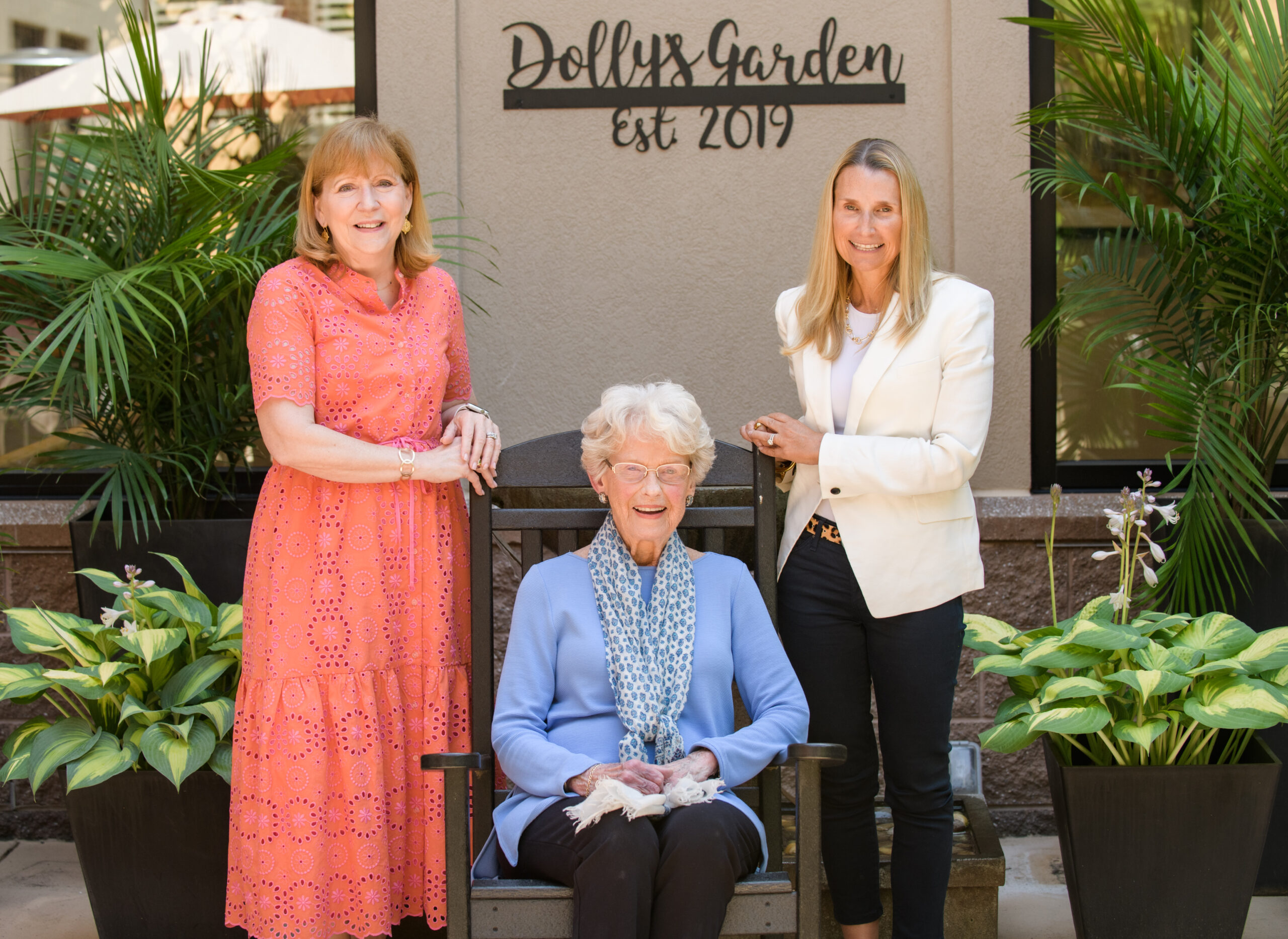
“We’re in an old building, so we’re continually upgrading and enhancing it in consideration of the comfort of our guests,” says Brinkley, stressing that The Doorways is currently looking for a new location (plans to be a part of the Navy Hill development were scuttled when that project was voted down). The facility has embarked on a major fundraising campaign, and cajoled the retired Hintz back in to help. “They brought me out of mothballs,” she laughs. In honor of the facility’s 40th anniversary, The Doorways is having an open house on Feb. 7 and will throw its big annual fundraiser, a celebrity chef foodie event called Savor, on March 2.
With the success of the project, it’s a puzzle to Hintz why it hasn’t been duplicated across the country. “There are still major medical centers that don’t have something like this, and when they do, they charge. You would think there would be more.”
One of her 13 grandchildren, Bryant Hall, was recently treated at Boston General Hospital for a malignant brain tumor. He and the family had to rent an Airbnb so he could be there for treatments. “But they could afford to do that. Many people can’t,” Hintz says with a sigh. “There is still such a need.”
For more on The Doorways, visit their website at https://www.thedoorways.org.