What does it mean to be a product of your environment?
While our core identities may be concrete, our surroundings — and the changes that occur over our lifetime — undeniably shape who we are. For Vietnamese American artist Kenny Nguyen, that existential geography comes to life in the physical world through dozens of colorful, meticulously painted and sculpted strips of silk; work that will make up “Confluence,” the upcoming exhibition at The Branch Museum of Design.
Raised in rural South Vietnam, Nguyen grew up surrounded by fruit trees, coconut plantations and the rivers of the Mekong Delta, which he observed flowing along their natural path and carving out the earth around them. Later, his environment would change dramatically when he moved to Ho Chi Minh City, pursuing a career in fashion. But perhaps the most transformative change of all came in his early 20s, when his family made another move to Charlotte, North Carolina.
As he acclimated to the United States, Nguyen felt the pressure of clashing forces — a new language, a new home with a comparatively slower pace than Ho Chi Minh City, and the pull of his former life in the face of an uncertain future tethered to his desire to remain close to family. Attempting to continue a fashion career in Charlotte proved to have its own challenges, and over time he knew he had to adapt — the question was how? After considering the ways his fashion skills might translate, Nguyen went back to school to pursue a new path in fine art, despite having “no direction,” he recalls.
“That was my transition into something more conceptual,” he explains. “Instead of using canvas, I was stretching and painting on silk. I found it very interesting that I was transforming the material and using it in a new way.”
Since then, Nguyen has produced work that aims to capture the ephemeral and contradictory nature of both transforming and being transformed by one’s environment; pieces that are visually abstract yet deeply personal — metaphors for memory and the nature of identity within the diasporic experience.
“Making my pieces is a process of figuring out how to balance everything that has influenced my work,” he says. “I don’t limit myself to being a painter or a sculptor. I see myself as making art that tells my story and is meaningful to me.”
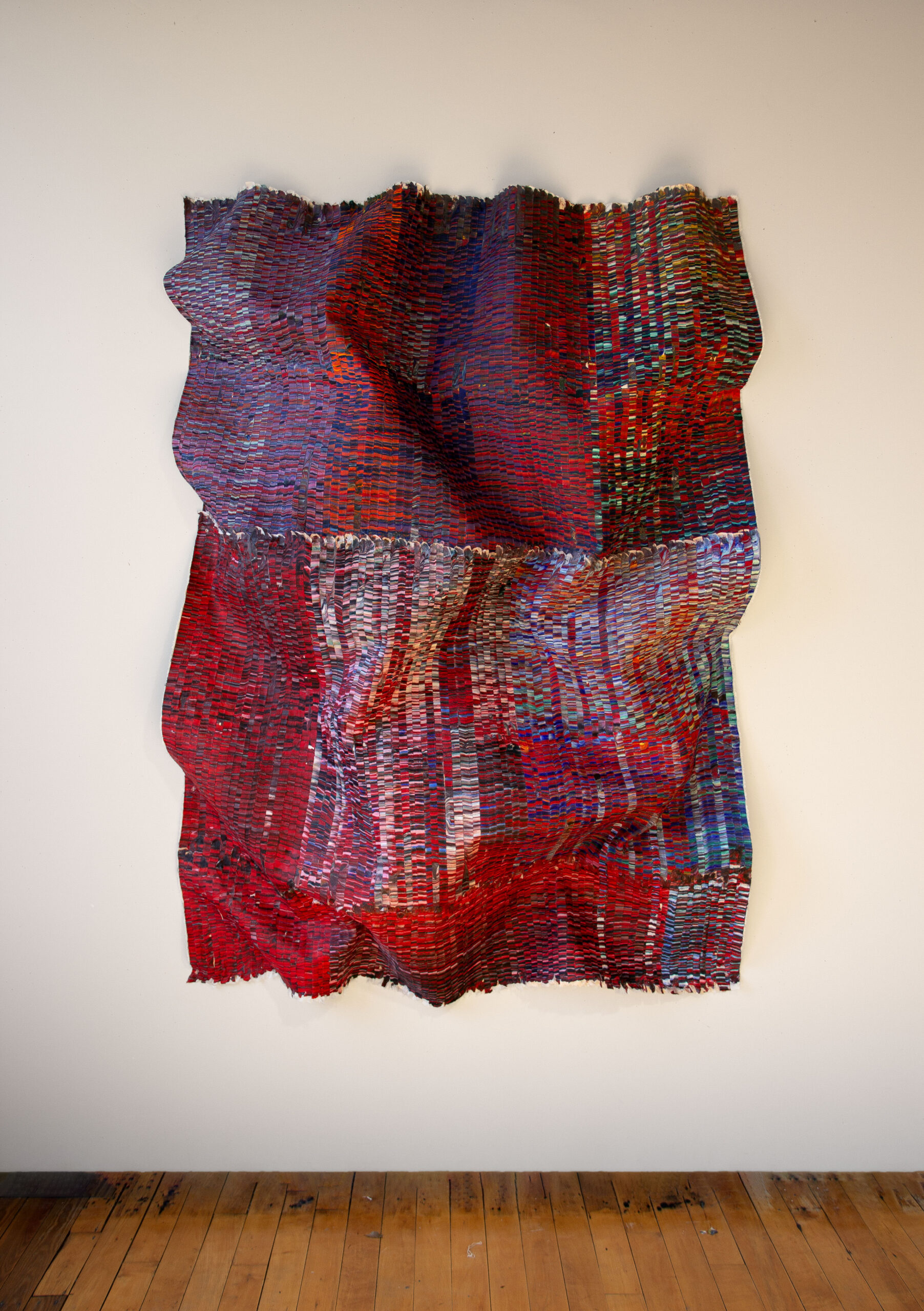
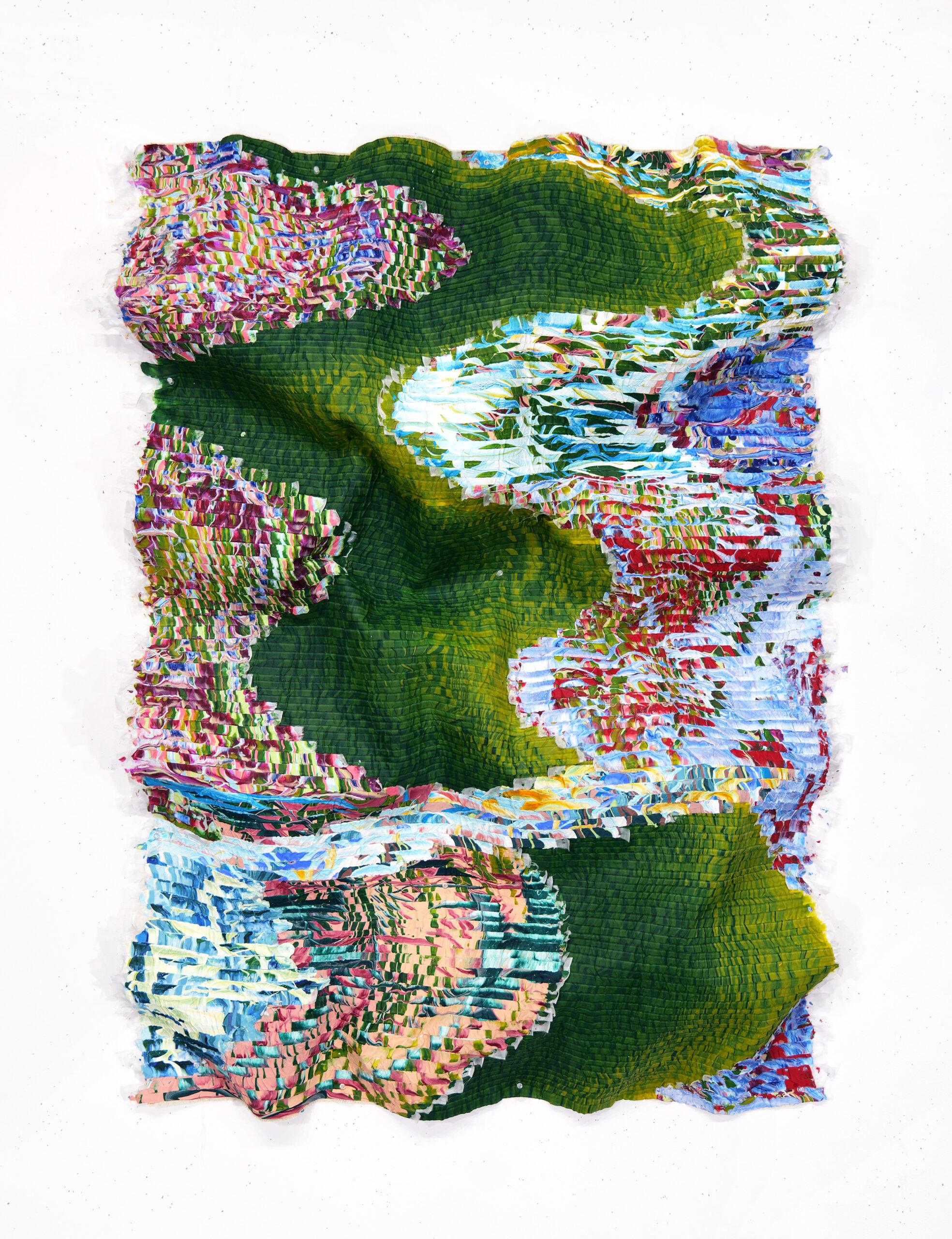
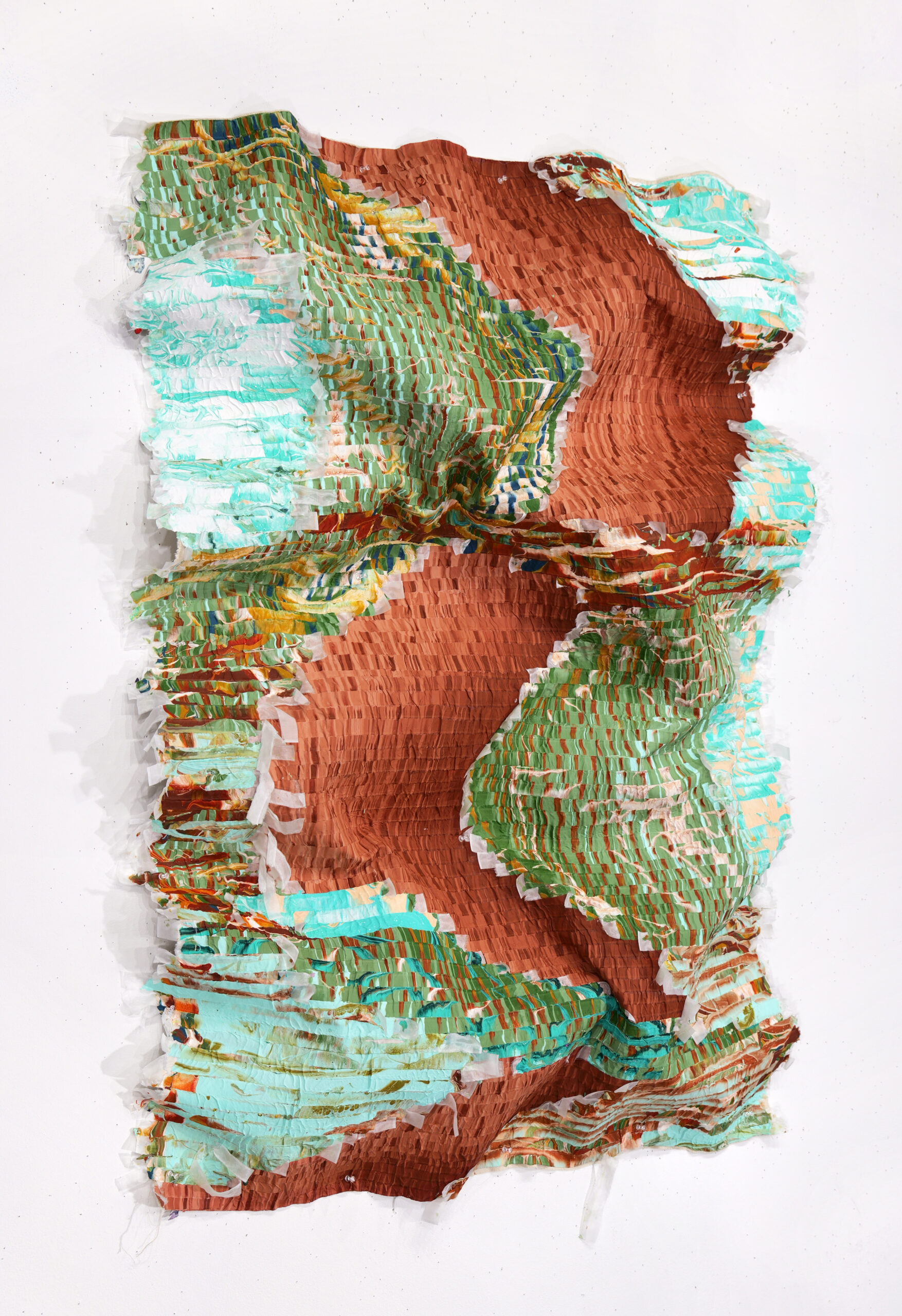
To make his work, hand-ripped silk strips are dragged through mixed patterns of acrylic paint to create a foundation, with no two pieces turning out the same. The flurry of colors is particularly important, Nguyen explains, drawn from memory and adding yet another layer of personal narrative.
“When I moved here, I had to relearn language in an interesting way — in Vietnamese, we have a completely different way to express colors,” he says. “We don’t have a separate word for green and blue, for example. So even the way that we speak reflects the way we see the world.”
Once painted, each strip is placed on the canvas while still wet, being layered as they dry before being sculpted and pinned in direct response to the architecture and lighting that frame it. With their presentation constantly morphing, the works become living things, endlessly pushing and pulling against their surroundings to take on a final form.
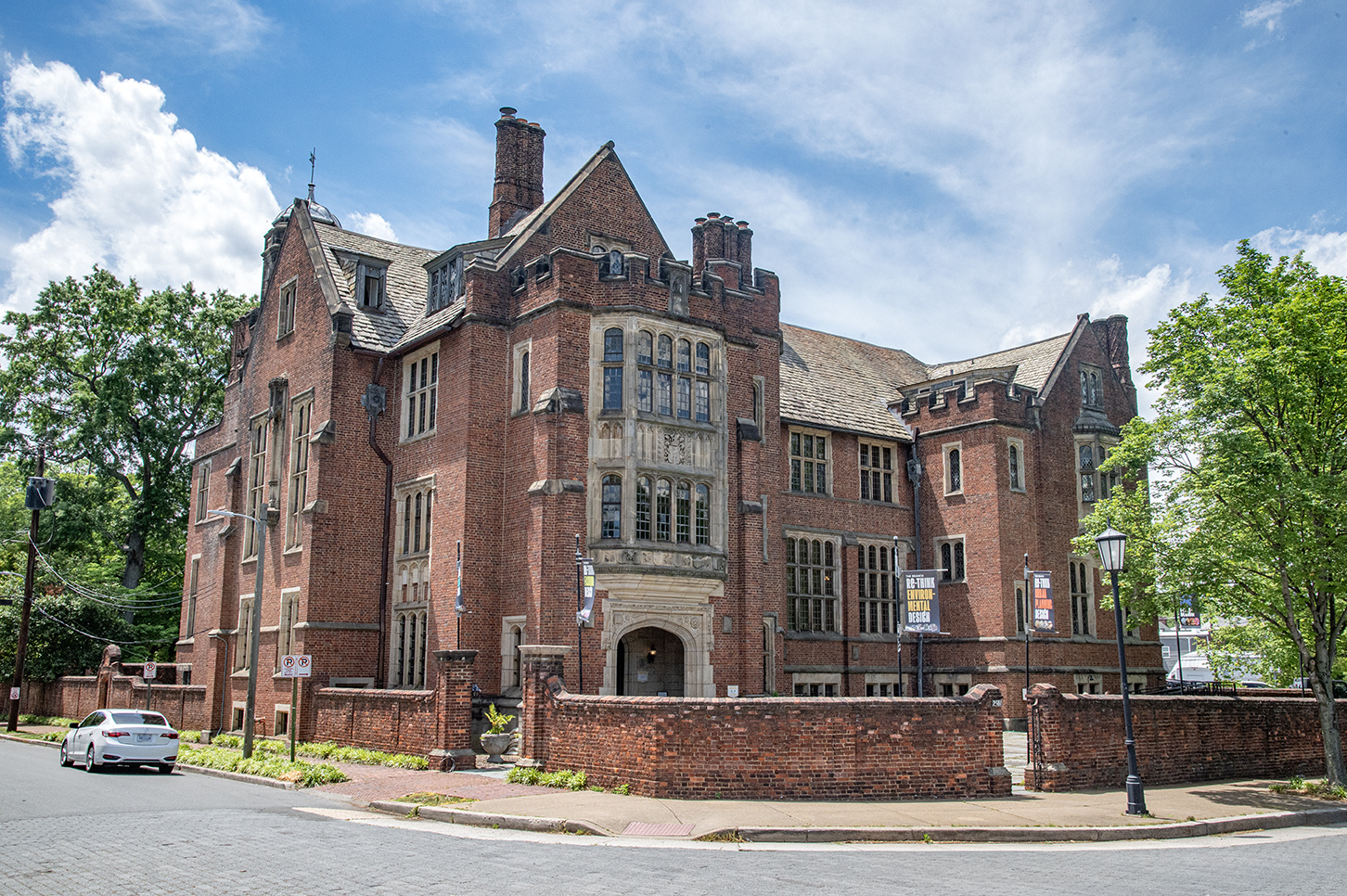
At the Branch, Nguyen had the opportunity to play with the museum’s unique architecture, as well as its history as the home of John Kerr Branch and Beulah Gould Branch in the early 1900s.
Branch museum fostering community
“Nguyen’s work bridges what the museum was and what it can be,” says Kristen Cavallo, who was appointed executive director at the beginning of this year. “This house was historically a home for tapestries; they were a big part of the Branch family’s original art collection. Kenny makes work that falls into an indescribable but related in-between. This house was designed to hold big, monumental pieces, and he’s taken that to a new place within this exhibition.”
Walking viewers along a timeline, “Confluence” begins with a series of Nguyen’s early fashion sketches before transitioning into what Cavallo described as his “monumental pieces.” An intimate finale awaits in a series of bespoke works created specifically for the Branch.
For the museum — now in the early stages of a fresh rebrand under Cavallo — the exhibition marks another step in its continued effort to appeal to Richmond’s many art students as well as emerging and established working artists and creatives. The broader goal, they emphasize, is to foster community as an antidote to the chaos of the current era.
“I think everyone has felt like they don’t belong at one point in their lives,” says Katie Hoak, marketing director at the Branch. “To hear about an artist and see their work can remind you that you’re not alone and that you can channel that into something meaningful.”
Nguyen echoed the sentiment — for him, each piece holds its own story but also becomes a mirror for viewers to find traces of their own experiences, and explore their own place in the world around them.
“The pieces are ephemeral and beautiful, and beauty can stand on its own; it doesn’t need a description,” he says. “I always want people to see how, as a hybrid piece, it transforms the space around it. My hope is that my art inspires people to ask questions.”
Kenny Nguyen’s “Confluence” will be on display at The Branch Museum of Design from Wednesday, Sept. 10 – Dec. 10.