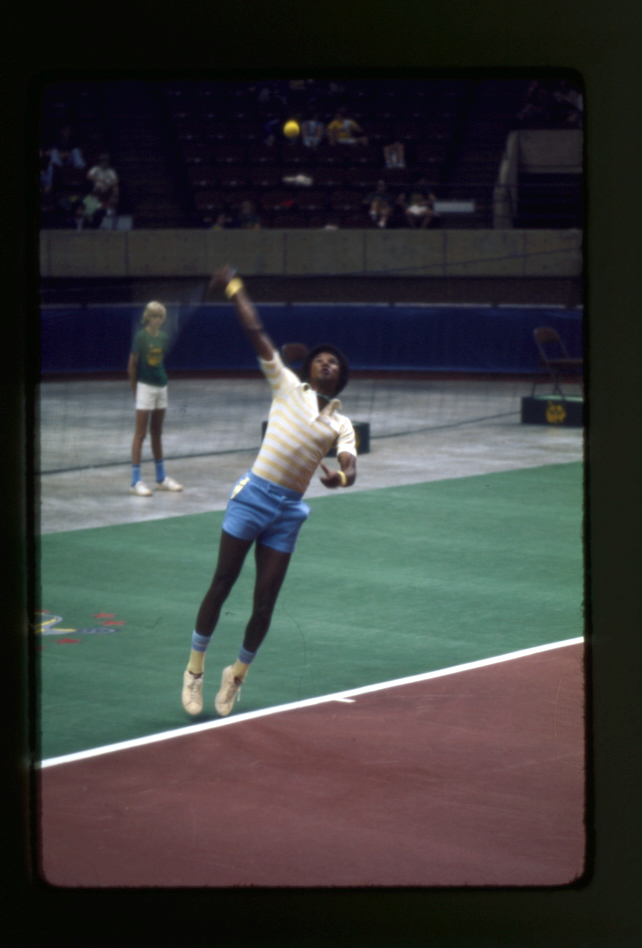
It’s hard to overstate the whiteness of tennis back when Arthur Ashe began playing circa 1950.
Long associated with wealth and privilege for its high economic barriers to entry and coaching — to say nothing of the history of racism at America’s country clubs — tennis has a legacy of white elitism.
The players of Ashe’s day were overwhelmingly white. The dress code was white. Even the ball was white — today’s “optic yellow” balls were officially introduced by the International Tennis Federation in 1972 to aid color television viewers.
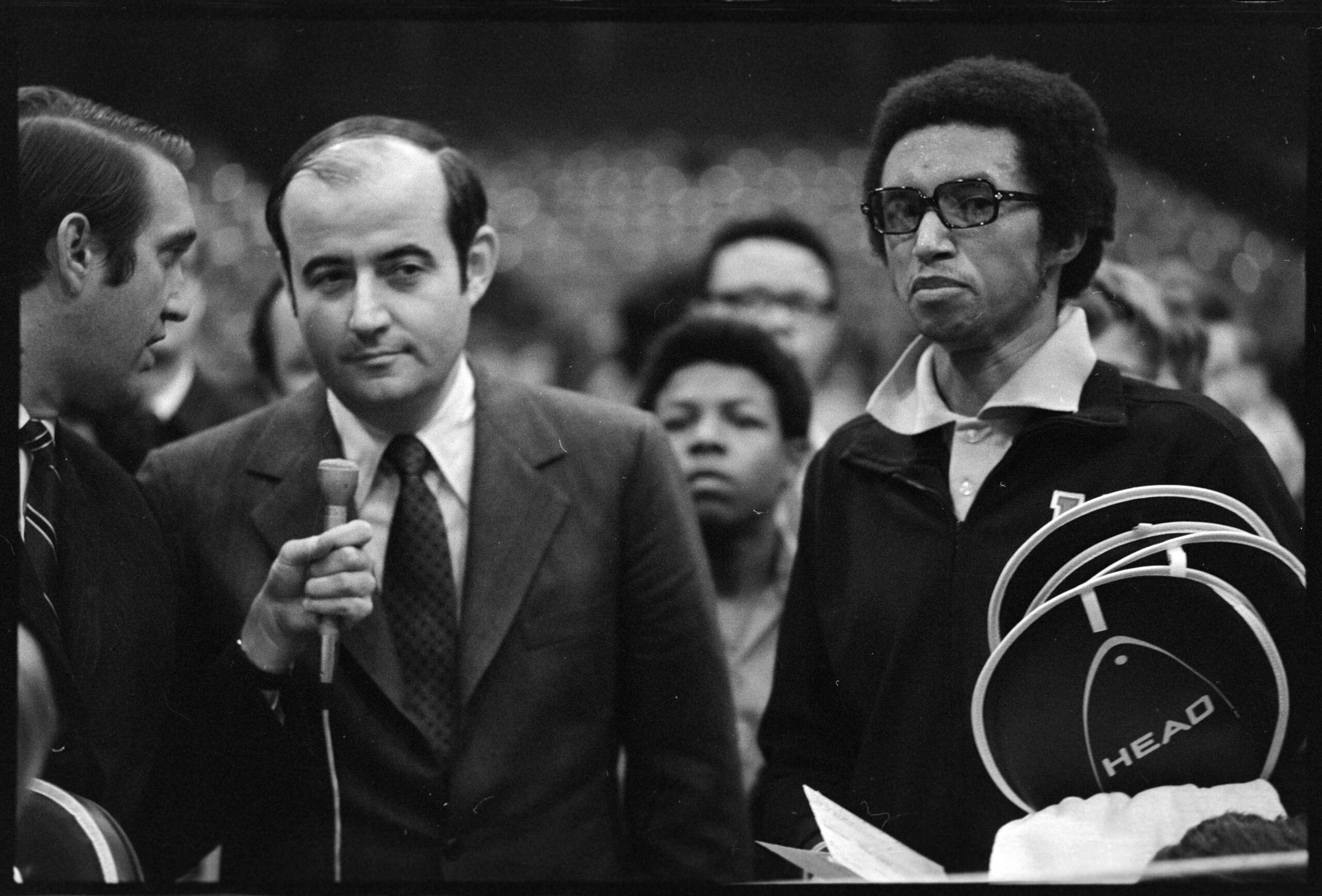
Despite barriers of race and class, Ashe would become the only Black man to win singles titles at Wimbledon, the U.S. Open and the Australian Open; he was also the first Black player to be selected for the United State Davis Cup team. Off of the court, Ashe was a humanitarian, activist and author — a “multi-hyphenate” before the term even existed.
Ashe and his legacy are currently being celebrated at the Black History Museum & Cultural Center of Virginia with “Arthur Ashe: An Enduring Legacy,” a new exhibition in honor of the 50th anniversary of Ashe’s win at Wimbledon.
Mary Lauderdale, the museum’s director of curatorial services, says the idea for the exhibition came about a quarter century ago on the 25th anniversary of Ashe’s victory. A BBC film crew came to the museum in the interest of doing a story about how Richmond was commemorating the win.
“Unfortunately, we weren’t doing anything here,” Lauderdale says. “They were very disappointed because they were going to broadcast over in England what was going on here. They said, ‘This is his hometown. It’s a big deal [in England]. Why isn’t it a big deal here?’”
Recounting his rise to become an internationally renowned athlete and activist, the exhibition starts with Ashe’s humble beginnings in Richmond. Growing up, Ashe’s father was the caretaker of Brook Field Park, a 16-acre public space where the city’s Main Post Office now stands. During segregation, the park was Richmond’s largest public space where African Americans could recreate.
Ashe and his family lived in the park’s caretaker cottage, giving the aspiring athlete easy access to Brook Field’s four tennis courts. A display of a 2018 Richmond Magazine feature by Samantha Willis about Ashe and the history of Brook Field Park appears prominently in the exhibition.
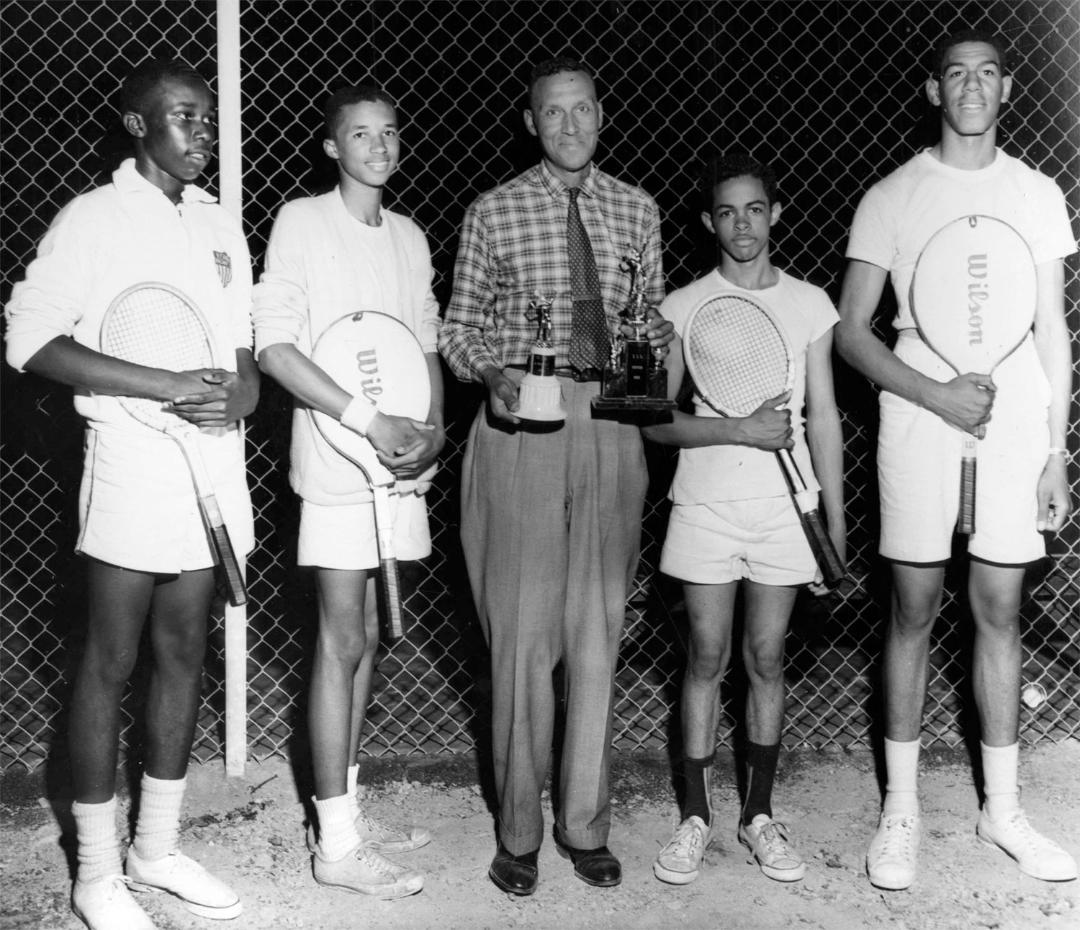
Ashe initially attended Maggie L. Walker High School but moved to St. Louis for his senior year because various racist policies in Richmond barred him from progressing in tennis.
“He grew up in Richmond at a time when he was not allowed to fully participate in the tennis community, even though he was a talented young player,” says Tosha Grantham, co-curator of the exhibition and creative consultant for consulting firm Middle Path Creative.
Ashe would go on to attend the University of California, Los Angeles on a tennis scholarship, then win fame and fortune playing tennis; many, including the Association of Tennis Professionals, ranked him 1975’s top tennis player in the world.
After concluding his tennis career, Ashe became an occasional columnist for The Washington Post, a TV commentator for HBO and ABC, and authored a three-volume, 1,600-page history of Black athletes in America titled “A Hard Road to Glory”; he said the latter effort was more important than any of his tennis wins.
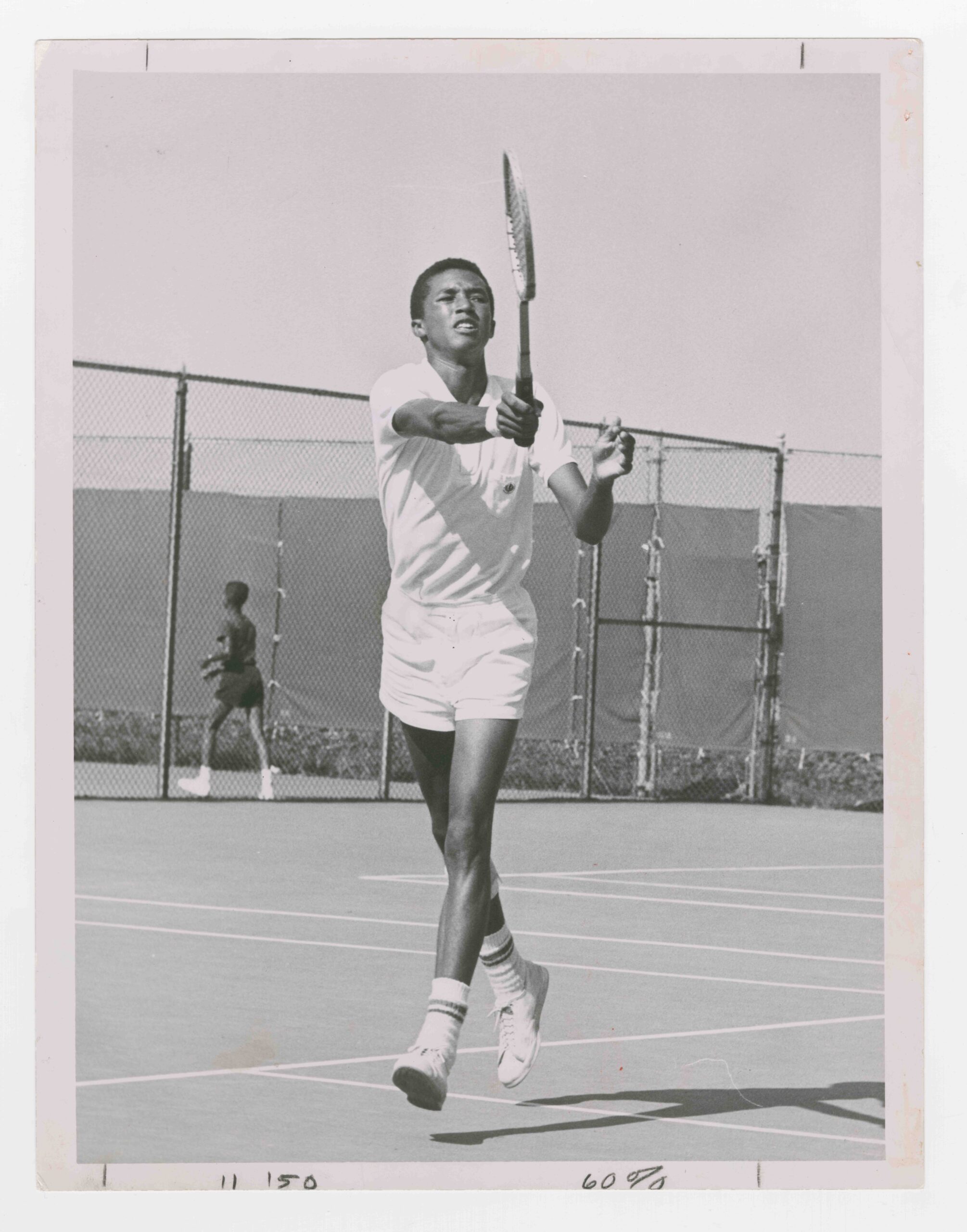
Ashe was also an active civil rights supporter, participating in numerous projects and protests in opposition to Jim Crow-era segregation, apartheid in South Africa, and poverty and injustice in Haiti. He was arrested in 1985 for protesting apartheid and in 1992 for protesting America’s treatment of Haitian refugees. After Ashe publicly acknowledged that he had HIV — which he believed he contracted through a blood transfusion for a heart bypass surgery — he worked to increase awareness of the virus and raised millions to combat it.
Ashe died in 1993 from AIDS-related pneumonia. Upon his death, Ashe received the rare honor of lying in state at the Virginia Executive Mansion. New York’s Arthur Ashe Stadium, the main court of the U.S. Open and the world’s largest tennis arena, is named in his honor. Locally, the Arthur Ashe Monument on Monument Boulevard and the city’s Boulevard are named in his honor. Since the removal of most of the city’s Confederate monuments after George Floyd’s murder, Ashe is the last man standing on Monument Avenue.
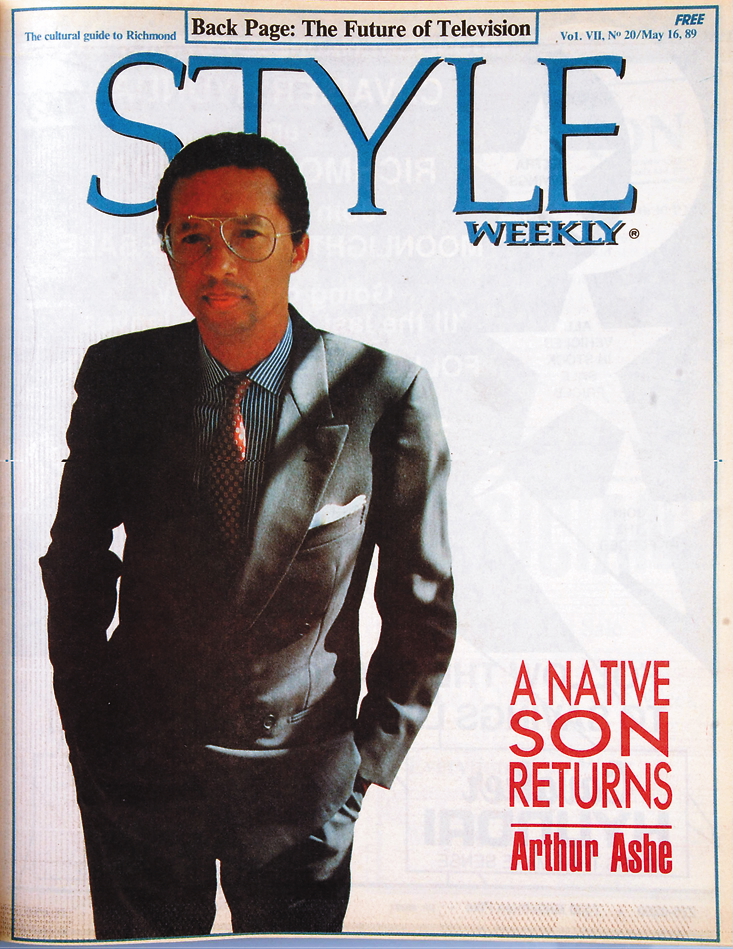
To Grantham, Ashe’s legacy is one of dignity in the face of hardship.
“He triumphed over several different types of adversity, always with grace and always with professionalism, to be a cool cucumber, and always a mastery of his game,” she says. “In the ultimate analysis, people realized how much courage [he had], and how revolutionary [he] was.”
“Arthur Ashe: An Enduring Legacy” will be exhibited through June 13 at the Black History Museum & Cultural Center of Virginia (BHMVA), 122 W. Leigh St. For more information visit blackhistorymuseum.org.
A panel discussion about Ashe and his legacy titled “A Place for Us: Richmond” will take place from noon to 2:30 p.m. on March 21 at the BHMVA. The panel will include Charles Brown, Leonard Edlow, Stuart “Moe” Thacker, Samantha Willis and Yolanda Hester.