Update posted on Friday, Nov. 3 at 2:22 p.m.: More than 20 local businesses and organizations are behind a press release sent out last night and shared on social media this morning regarding the Richmond International Film Festival’s decision to screen the documentary, “Affirmation Generation.”
“Affirmation Generation is a film that distorts the facts around gender-affirming care to perpetuate a dangerous, transphobic agenda,” the statement reads. “We are further disheartened by RIFF’s decisions to defend this film in multiple statements and to threaten lawsuits against transgender members of our community who expressed criticism.”
Some of the groups behind the statement include: Diversity Richmond, Seven Hills Medicine, Richmond Triangle Players, World of Mirth, Virginia Pride and Carytown Cupcakes, among others. The statement asks the festival leadership to ‘reconsider their position and contemplate how to make amends with our community.'”
Original story below:
Last month, the Richmond International Film Festival screened “Affirmation Generation,” a documentary film that has generated protest nationally. Members of the local LGBTQ+ community took issue with the festival for showing it and voiced their concerns at RVA Magazine. All of that content – a letter to the editor, two responses from the film festival’s founder Heather Waters and a podcast – was removed from the media outlet’s website without warning or explanation.
RVA Mag’s founder and CEO, R. Anthony Harris, didn’t answer questions about why the content taken down. “I don’t have anything else to add on the topic right now,” he wrote in an e-mail.
The film, formerly titled “No Way Back: The Reality of Gender-Affirming Care,” centers the experiences of a handful of people treated for gender dysphoria. According to a press release, it examines “the risks and side-effects of gender-affirming medication and surgeries.” An Associated Press article published last March cited a review of 27 studies of nearly 8,000 people who had transgender surgeries, primarily in Europe, the U.S. and Canada, with an average of 1% expressing regret.
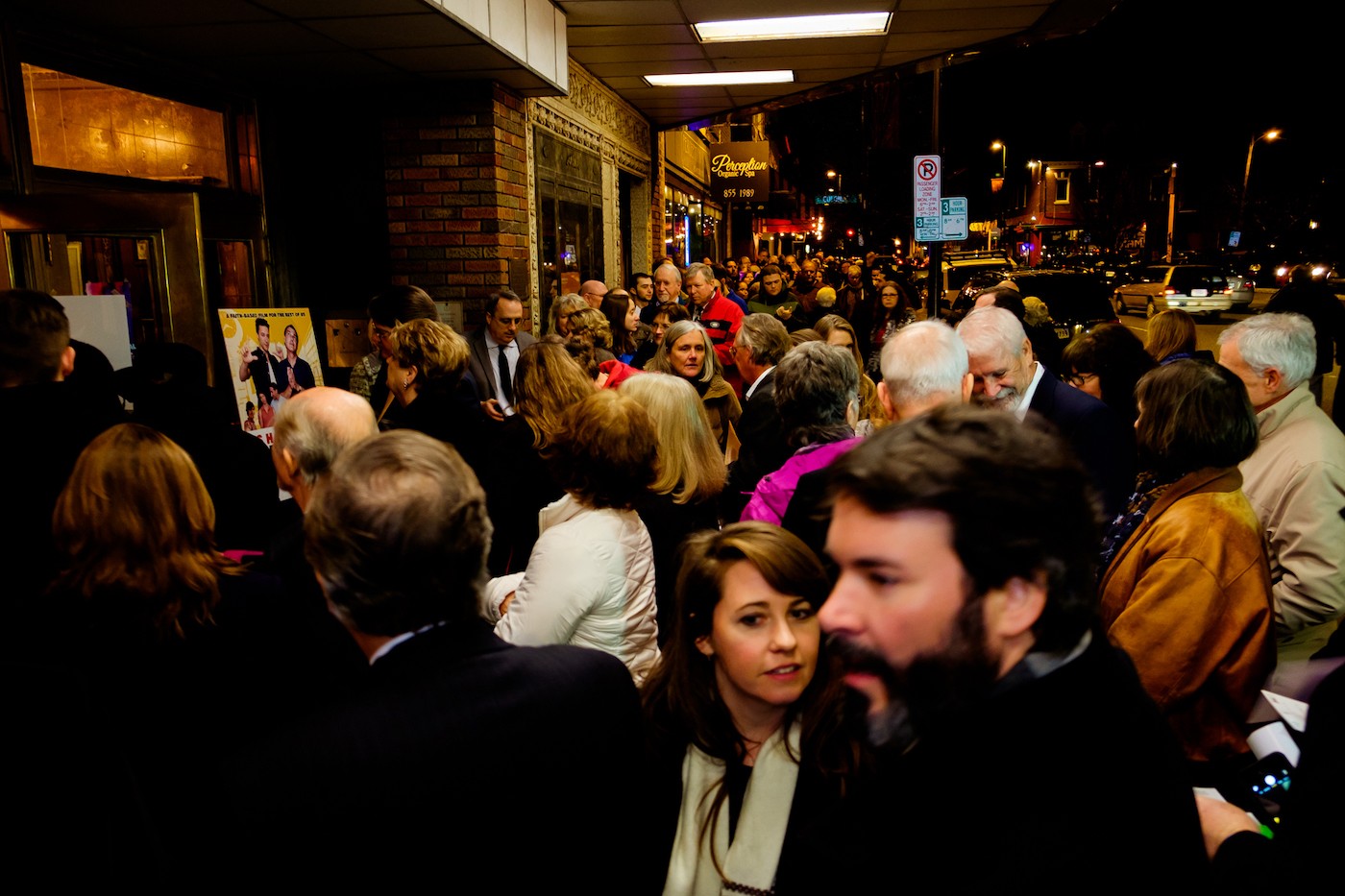
Waters says the documentary, which screened on Sept. 30 at the Byrd Theatre, generated the most protest of any film that has been shown in the festival’s 13-year history, as critical comments were left on the festival’s social media and that of the Byrd Theatre.
The original letter to the editor posted on RVA Mag’s site on Oct. 6, and removed later, was written by Penny Page, a local transgender advocate. She’s since reposted it to her Instagram account with additional comments: “Since I wrote about the transphobic ideology @riffrva helped spread, I’ve been contacted by the Founder and Producer of Richmond International Film Festival, who suggested I’d committed libel. Libel, of course, would be something they could sue me for. I wish they would,” she wrote.
Waters says that she contacted RVA Mag after Page’s letter was published and that the decision to remove the content was made by them. She confirms that she has no pending legal matters against the publication. In her published responses to the magazine, Waters took issue with the festival being referred to as “transphobic” and “racist.” She also suggested that the podcast could’ve invited someone from the festival to speak about the decision to show the film.
“It was [RVA Mag’s] decision to pull the content. I expressed my concern, deep concern over it. I do not feel that it was balanced,” she explains. “I don’t think at this point there should be any contentiousness. If anything, I think it would be [appropriate] to look at ways, constructively, to make things right.”
The missing podcast
Although it’s been removed online, Style Weekly obtained and reviewed the podcast about the controversy surrounding the film. During the roughly hourlong podcast, RVA Mag writer Christian Detres leads the interview with guests Page, the first transgender person to run for office in Henrico County, and Aurora Higgs, a speaker and diversity, equity and inclusion (DEI) specialist, both of whom are described as trans people living in the community. Together they offer detailed critiques about why the film was a bad choice for inclusion at the festival.
Detres begins by describing the film as a “tool of the enemy” while referring to a current “war on trans bodies,” adding that he found the local screening of the film to be “odious.” Page describes the film as “a lot of ideology based on fake science” that has no place at the festival and says that RIFF must “make amends.” Higgs notes that the festival has the artistic freedom to show the film but must also accept the consequences, adding that it should invest “dollars” to open doors for “people the film has harmed,” as well as apologizing to other filmmakers at the festival.
Reached by a reporter last week, the host wouldn’t talk on the record about what happened to the podcast. But Detres offered hope that the conversation would continue – without RVA Mag. “In the aftermath of this and because of how … the conversation’s escalated, we trust the trans community to take the lead in this conversation,” Detres says. “[RVA Mag] may have been part of starting the conversation [but] we know when we need to step back. The voices that need to be heard are not ours.”
Higgs was surprised to hear that the RVA Mag content related to the film had been removed. “I looked and I couldn’t find the statement, the interview, any sort of trace that there was ever discussion about the film,” she says. “I sort of predicted that something like this would happen in lieu of like, an apology, or a reckoning. I’m not surprised that there was doubling down or that these conversations are no longer … available to the public, because this is just what happens.”
Doc banned by AMC Theatres
In June, a protest led by Queen Trans Project, a transgender advocacy group, caused national chain AMC Theatres, the largest in the country, to remove the film from its theaters. After that decision, the name of the film, presented by Panacol Productions and Deplorable Films and directed by a person using a pseudonym, was changed to “Affirmation Generation.” The online platform Vimeo also removed the film from its roster, before changing course and restoring it a few days later.
In Richmond, Seven Hills Family Medicine, which focuses on primary, gender-affirming and reproductive health care, posted a letter on its site on Oct. 1 titled “An ‘Intriguing’ Film: Platforming Pseudoscience,” criticizing the documentary for using retracted and debunked sources.
Waters says she only became aware of the social media backlash against the documentary a day and a half before the festival’s Sept. 30 screening at the Byrd Theatre.
“This was a very difficult decision for me to make,” she says regarding the decision to continue the screening after initial complaints. Waters explains that films submitted to the festival are viewed by a panel of film industry professionals, including herself, and judged on specific criteria. The accepted films become official selections.
As far as why the RIFF chose to screen the controversial film, Waters released a statement on the festival’s website.:
“The decision was based on the following: RIFF believes in the power of dialogue, and we welcome everyone to participate in the festival. At RIFF, we do not program based on personal opinions, and instead seek an unbiased and beautifully diverse approach in our programming … Beginning in the spring, the festival reached out to various organizations with invitations for discussions, cross promotions for films and orgs, and joining efforts to create enriching experiences that reflect our richly diverse community. In some cases, we extended invitations for participation in panels and in Q&As. This was also the case for the film, “Affirmation Generation.” Produced by a member of the LGBTQ community, it examines a few people’s experiences with medical, physical, and mental health during or after gender transition. We recognized there are many other stories or experiences, and conducted outreach in the spring and summer in an effort to welcome all to the film screening and any discussion that followed, including possible engagement to join the conversation and offer differing views … What happened to our ability as a society to disagree and voice reasonable dissent? Why is it necessary to be forceful or raise [threatening] accusations when one does not agree with another’s decision?”
Jeff South, a retired associate professor of journalism who taught at Virginia Commonwealth University for 23 years, opined that he was “surprised and somewhat disturbed” that RVA Mag would decide to unpublish content related to this film. From an ethical standpoint, he notes that the outlet should have sought a comment from the Richmond International Film Festival or included them in the original podcast discussion. South also believes that the rebuttal from Heather Waters and any further reporting should’ve been published in a follow-up article by RVA Mag.
“Transparency is a key value in journalism. As journalists, we push government and other institutions to be open about their activities and decision-making. In the same way, news organizations should be transparent, too. If a news outlet feels compelled to take down an article [or podcast], the editors should explain why.”
Higgs and Page stand by their criticism of the film, weeks after their thoughts and statements were removed from RVA Mag’s site.
“I just hope people pay attention to these institutions and how they claim to hold spaces for voices, especially difference of opinion,” Higgs says. “And [when it] comes to things that actually make direct critique of those institutions, how all of a sudden those values of hosting different voices seem to go away.”
Disclosure: Jeff South and VPM News Director Elliott Robinson are board members of the Virginia Pro Chapter of the Society of Professional Journalists.