The earliest evidence of humans intentionally cooking over an open flame dates back 780,000 years. We’ve been playing with fire — and our food — ever since. While we’ve spent eons perfecting kitchen gadgets that would dazzle our prehistoric ancestors — from high-tech combi-ovens to the air fryers of us plebeians — the thrill of trying to tame the flame continues to captivate.
For some contemporary chefs, the struggle to master this elemental mode of cooking isn’t just a technique, it’s a calling. We sat down with several of the city’s culinary firestarters to learn why they’ve chosen to reconnect with the open flame.
Restaurant Adarra
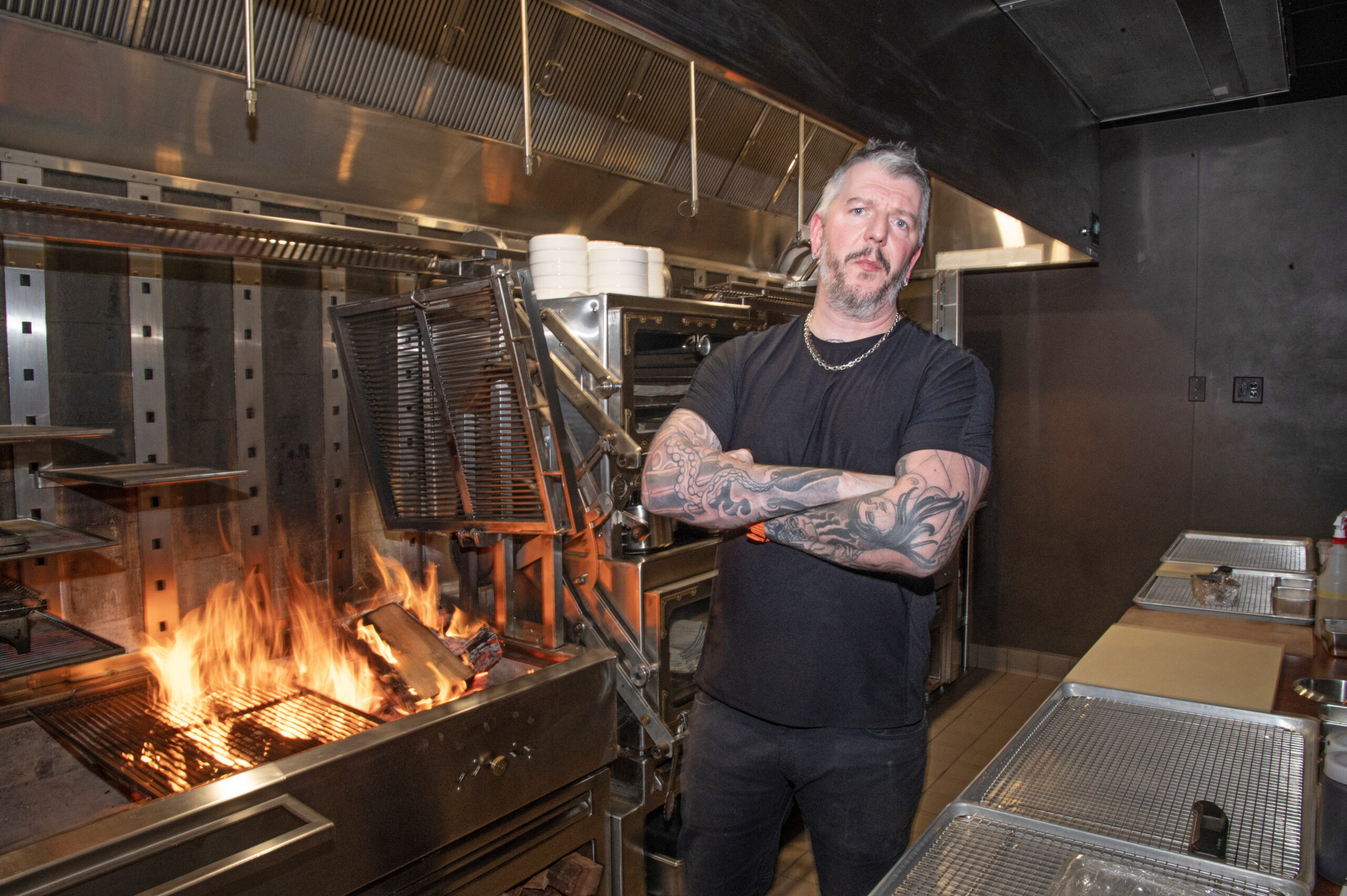
In Richmond’s Oregon Hill, you’ll find Restaurant Adarra, a Basque-inspired sanctuary where diners are welcomed by the restaurant’s true main character: the kitchen’s massive hearth. Here, Chef Randall Doetzer proves that sophistication often lies in restraint — a philosophy he honed while traveling through Northern Spain and beyond.
“Go anywhere in the world and you’ll find someone making a fire, then sourcing the best things available — which tends to be exactly what is there, at that exact time, over exactly whatever wood they have,” Doetzer says.
This mindset fuels Doetzer’s deep enthusiasm for presence, beginning with sourcing. Adarra operates almost exclusively through personal relationships with in-state suppliers. On any given day, the menu adapts to the haul, be it boxes of lion’s mane mushrooms or gargantuan whole tuna. With the quality of ingredients secured, Doetzer embraces the variables he can’t control, including the fire itself.
“Basically, we work backwards from the farmers and the fire,” he explains. “You don’t necessarily get to do what you want with the fire; you do what the fire lets you do.”
The Adarra hearth is a visceral experience. Red and white oak (a favorite fuel for many of the chefs we spoke with) burns bright and evenly in a continuously adjusted pile. The heat is, expectedly, intense. Doetzer trusts his staff to perform their own unique dance with the flames to reach a shared destination. The reward for the trouble is an excellence with its own unique fingerprint — one marked by time, effort and precision.
“Cooking this way doesn’t make sense unless you’re fully committed to the best possible results; it’s ridiculously expensive,” he says. “But doing this is a way to combat the obsessive, online, weird nature of everything right now. It forces you to stop. You have to figure out what you’re doing. That’s what we want for this entire space.”
Visit Adarra at 501 S Pine St. for dinner service 5-10 p.m., Thursday-Monday.
Two Fire Table
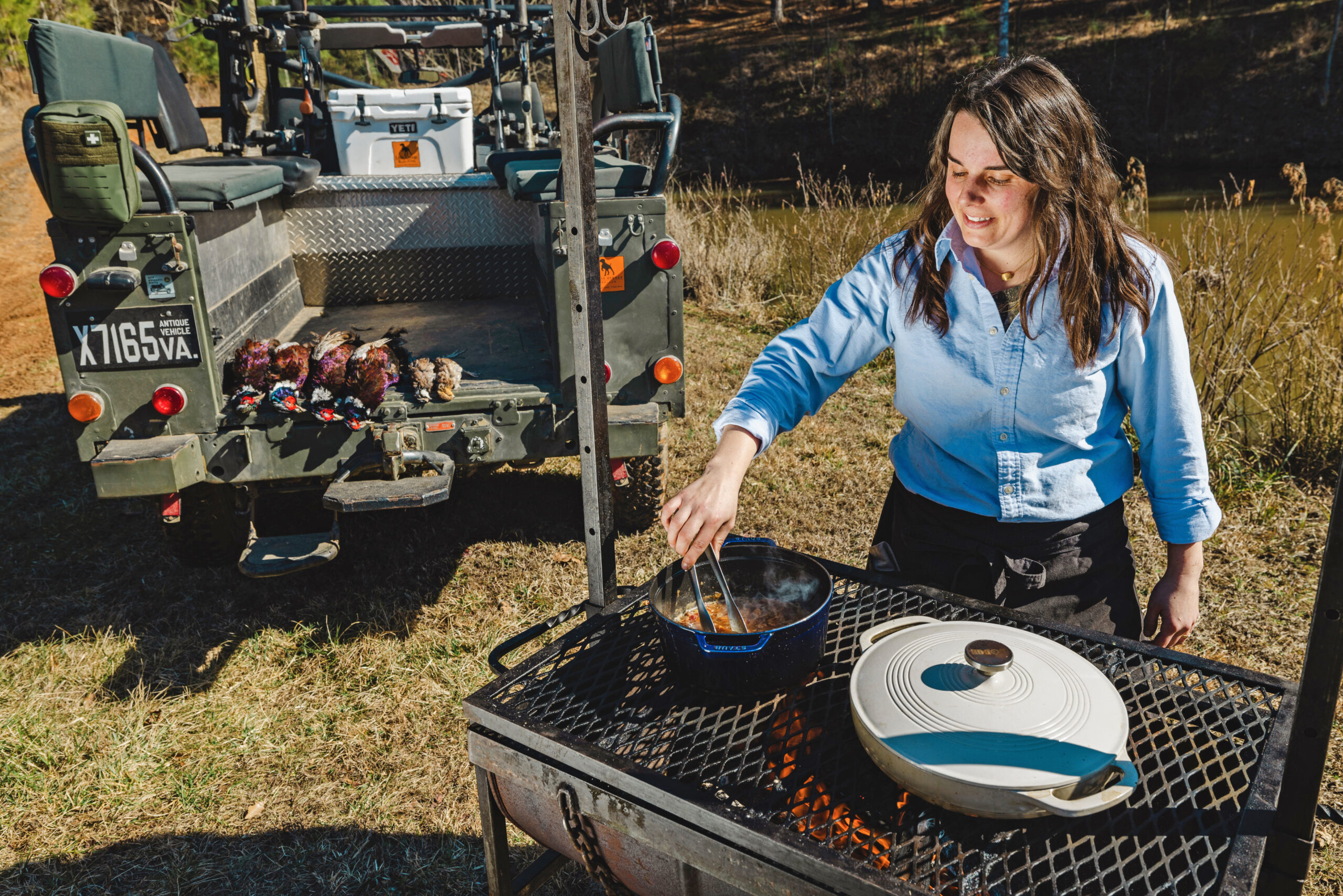
Chef Sarah Rennie began her education in fire at Asheville’s Farm & Sparrow bakery, working in the secluded countryside with an oven built inside a garage. The experience sparked a lifelong obsession with the connection between heat and raw materials.
“I fell in love with not just the time it takes to cook with a wood-fired oven, but also with what it means to use local ingredients,” she says. “When you choose to work with fire, you’re already putting so much effort into the technique. Why would you not also make those connections with farmers to use the best ingredients possible?”
Her journey has led her to tend fires around the globe, from the ovens of Sub Rosa Bakery to remote campfires in South America and Mongolia reached via horseback. She found the fire to be a universal place of community — a common language spoken through food. Inspired by that connection, she launched Two Fire Table, a traveling open-fire project anchored by two custom, barrel-bottom grills.
Having grown from hosting private events for 20 guests to serving over 100, Rennie is entering 2026 with a focus on public, intimate dinners and collaborations with partners like the James River Batteau Company. Across her work, she remains focused on seasonal Virginia ingredients, believing that quality needs little intervention.
“Cooking with fire is so simple that if the ingredients are great, you don’t have to mess with them,” she says. “I can focus my creativity on the cooking technique, knowing the ingredient itself is already fantastic.”
Learn more about Sarah Rennie and her 2026 lineup at twofiretable.com.
Lost Letter and The Brooklyn

In Scott’s Addition, Patrick Phelan and Megan Fitzroy Phelan have built a style-heavy culinary empire that includes Lillian Oyster Hall, Lost Letter, and their newest venture, The Brooklyn.
The latter two, in particular, showcase the nuances of open-fire flavor. Lost Letter utilizes an outdoor grill for everything from charring summer nardello peppers to grilling pineapples for pork al pastor, alongside a Binchotan (white charcoal) hibachi-style grill used during service. At The Brooklyn, the flame takes center stage via a wood-fired oven and a custom grill that imparts dishes with bold caramelization and smoke, a perfect complement to a robust list of classic cocktails and wines.
Phelan finds comfort in the constraints of the medium: “I’ve found it advantageous to place technical boundaries around a menu,” he says. “When you don’t have everything at your disposal, it keeps the menu focused. It speaks to the slow food movement that Italian cuisine embodies — the idea that you have to take your time to build flavor.”
The duo has been bringing live-fire cooking to Richmond for years, notably during a 2016 pop-up series at Sub Rosa Bakery. It was during those sessions that Phelan fell in love with the “full-body experience” of the hearth.
“You would leave those pop-ups thinking, ‘That was exhausting,’” he says, laughing. “But it was so much more fun than just turning a knob and watching a pilot light come on. We’ve kept that spontaneity because you’re rebuilding the fire every time you bring an ingredient to it.”
Whether fueling with wood or charcoal, Phelan emphasizes that the flame requires a constant game of discovery.
“Fire is an open statement,” he says. “Is it super-hot embers that have been there for hours? Is it a batch of small kindling for instant flame? Snuffing something out or adding moisture to get smoke? That part, I really love.”
Visit Lost Letter (2939 W Clay St.) for dinner 5-9 p.m. Wednesday and Thursday, 5-10 p.m. Friday and Saturday and 5-9 p.m. Sunday. The Brooklyn (1616 Summit Ave.) is open 5-10 p.m. Wednesday-Sunday.
ZZQ
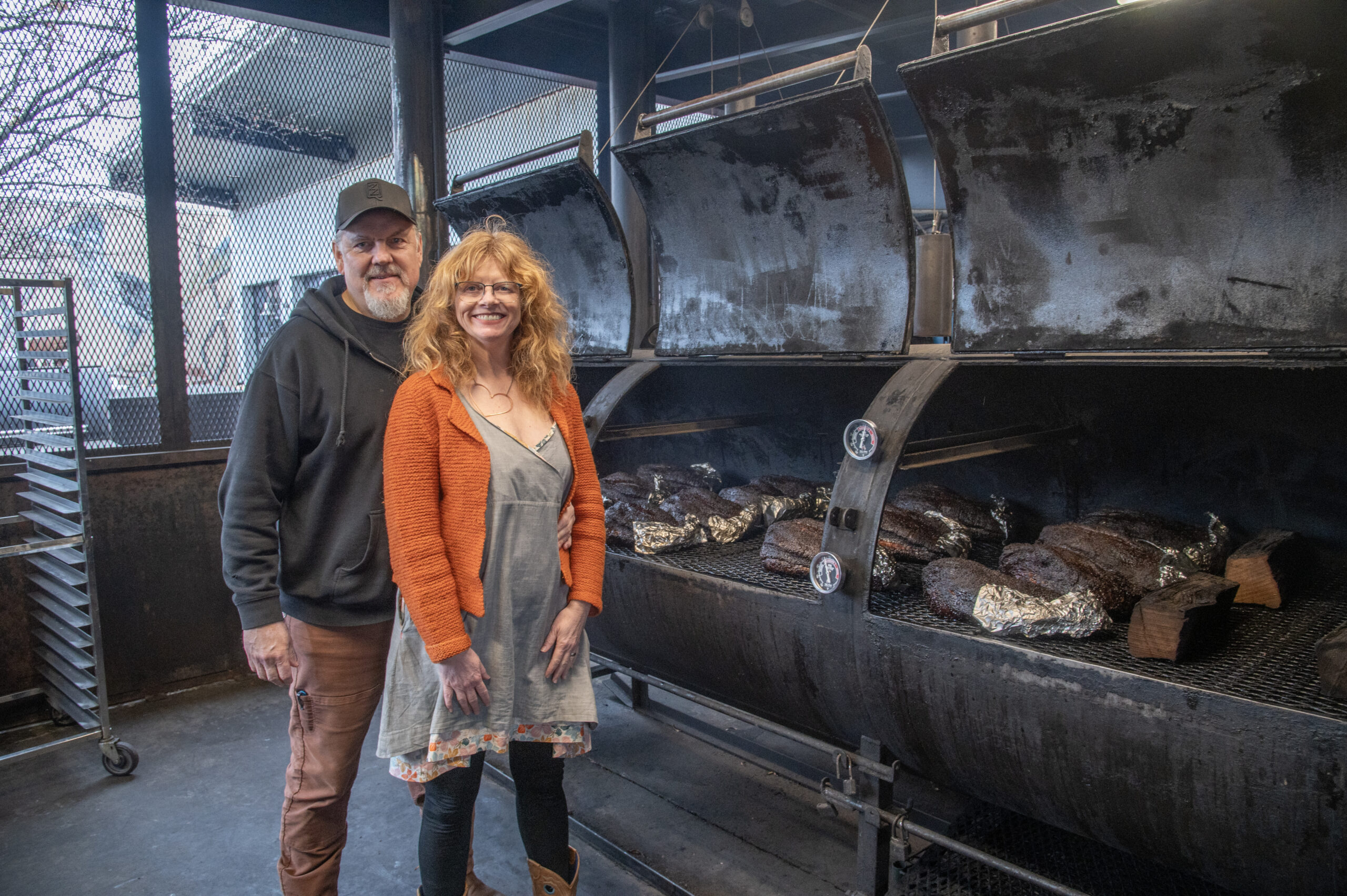
Self-taught pitmasters Chris Fultz and Alex Graf of ZZQ appear to have come a long way from their careers as trained architects — but their precise approach to barbecue betrays a designer’s eye. It’s an influence that permeates everything from the blueprints of the restaurant they designed themselves to the high standards of their smokehouse.
“The way I was taught is that you have to master the fundamentals before you can be more creative and original,” Fultz says. “There’s a tradition [in barbecue] that you have to respect and make a commitment to.”
Blending Virginian and Texan traditions (Fultz is a native Texan), the duo has evolved from a DIY business into a Richmond barbecue landmark. At the heart of their operation are traditional offset smokers from Austin Smoke Works, where they maintain a rigorous commitment to integrity. By favoring old-school, all-wood techniques over modern automation, they use regional oak and hickory to fuel a process that is as much about human connection as it is about heat.
“Ultimately, there’s a gesture of feeding another human being that gets lost in the automation,” Graf explains. “That gesture, I believe, of having a human team preparing everything is felt all the way at the end.”
For Fultz, barbecue is a fusion of art and science, blending ritual and intuition with a constant stream of “puzzle-solving.” The variables change daily, dictated by everything from the humidity to the pitmaster at the ready. As it turns out, the only way out is through — the pit is an endless educator, and the reward for continued practice is an eventual “sixth sense” for the flames.
“It takes time to get to the point where you can truly master something and know that you don’t have to pay attention to the dial on the smoker,” he says. “You can pay attention to other factors that matter more, like: How does the meat feel? What does it look like? What does your fire look like? Is it too aggressive? Is it smoking?”
This refusal to take the path of least resistance has earned ZZQ a cult-like following. For the pair, the labor isn’t just a byproduct of the job — it’s the entire point.
“I believe if you’re going to do something, you’ve got to do it the right way, and for me, it’s the old-school way over open fire,” Fultz says. “And that’s not the most cost-effective way, but I will never compromise on that.”
ZZQ (3201 W Moore St.) is open for lunch and dinner 11 a.m.-6 p.m. Wednesday-Sunday.