Food trucks are unique avenues for chefs to share their cultural identities, family recipes or passion for the culinary arts. But with the influx of brick-and-mortar restaurants, do Richmond’s mobile kitchens, cafés and bakeries still have an allure?
It has been a wild ride in the industry, but food trucks are still sought after — it’s these vehicles that have given Richmond some of its most distinct food experiences in the past decade.
“The variety of food trucks has gotten a lot better over the last eight-ish years,” says Evan Taylor of First Stop Donuts. “What used to be just tacos and barbecue … now you’re getting everything.”
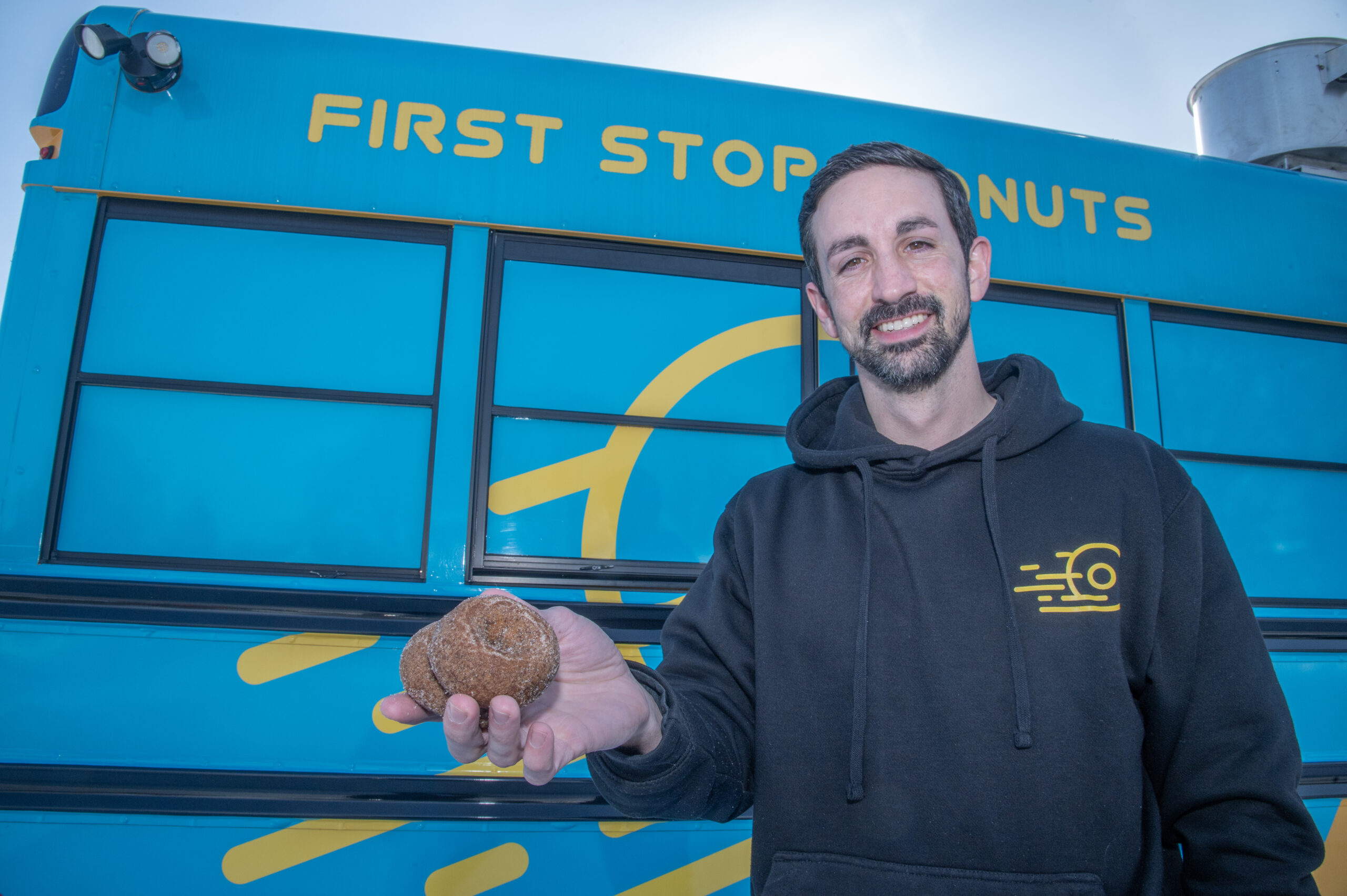
Taylor founded First Stop Donuts in 2019 with apple cider donuts being their forte. He decided on this pastry after noticing a scarcity here. “I just felt there was opportunity,” he says. “There was obviously a risk; it’s a niche product.”
But while First Stop’s fresh apple cider donuts are the main draw, Taylor, who has a marketing background, wanted his business to stand out more. Enter Flubert, a converted small yellow school bus that serves as First Stop’s home.
“I came at it from a different angle from other food trucks,” he says, noting that other operators let their expertise in food guide them and don’t necessarily focus on marketing. “I wanted to come from the other angle — to create a fun and colorful brand … at the front of what I’m doing.”
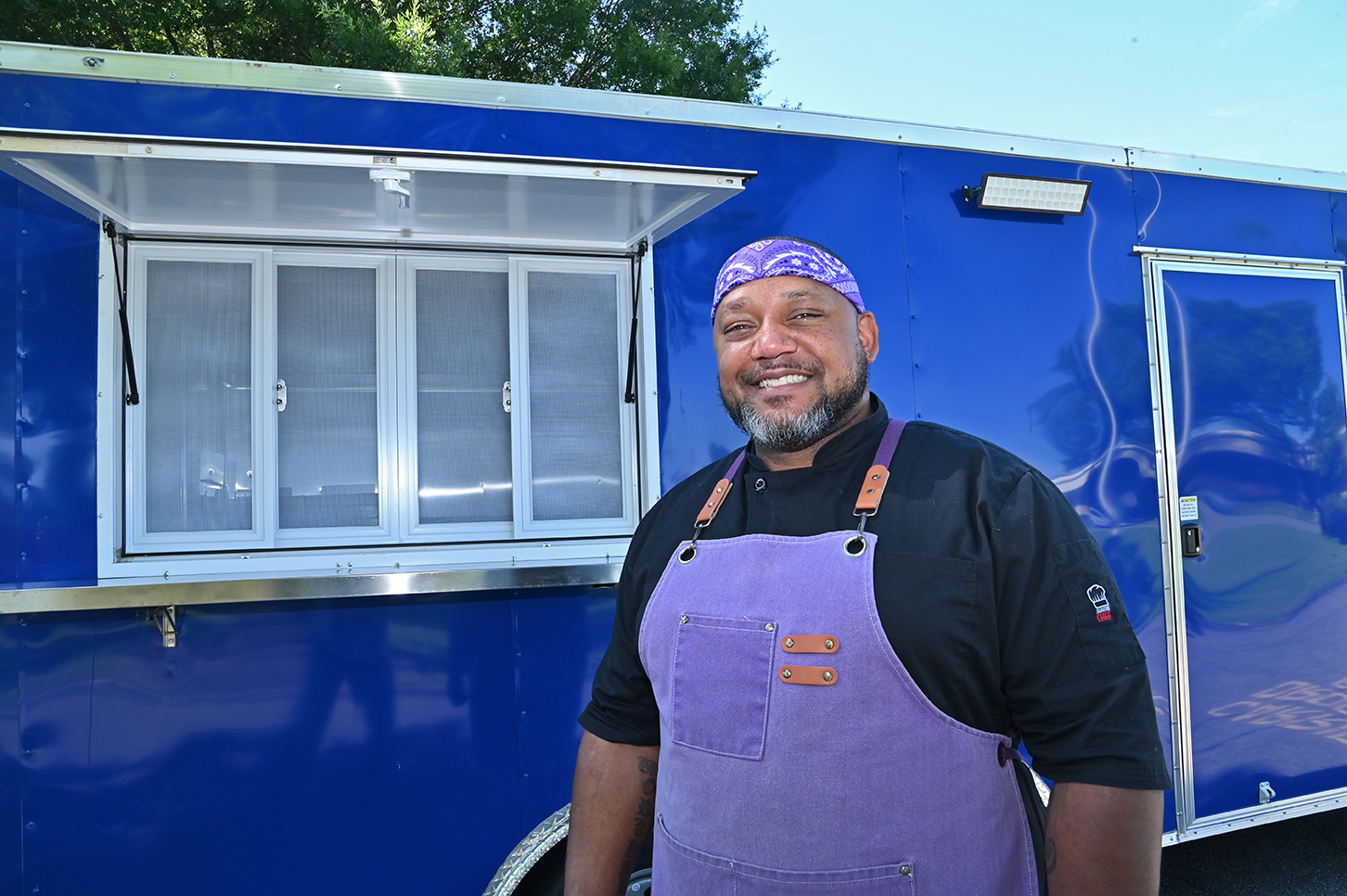
For some food truck owners, however, it’s not just attracting customers with tasty food alongside the playful and quirky, but using the truck as a stepping-stone to their culinary dreams, such as Wumami’s George T. Carroll Jr.
“[Having a food truck] was something I always wanted to do,” says Carroll, who started Wumami in summer 2025. “I had worked in multiple restaurants, but I wanted to do something for myself … to immerse myself with people and have more interaction.”
Carroll worked at local restaurants like Max on Broad and Chez Max, and was executive chef at The Savory Grain before starting Wumami — the opposite of many food truck journeys. His experience, though, gives him a unique edge and perspective.
“It’s different when you’re standing behind a stove in a building all day,” says Carroll. “[With a food truck] it’s that interaction with the community — seeing direct reactions from customers’ faces. It’s all about the people for me. I just really want to connect with the city.”
While Wumami’s debut season lasted only four months last year, it left Richmonders obsessed.
Rolling up everywhere from SwapMeet RVA at Main Street Station to Ruby Scoops in Brookland Park, Carroll’s creative menu features everything from signature dry rub-coated wings to the occasional bayou hoagie special — a catfish sandwich with collard green tartar sauce, pickled onion, cilantro and jerk honey — which has gained quite a fanbase.
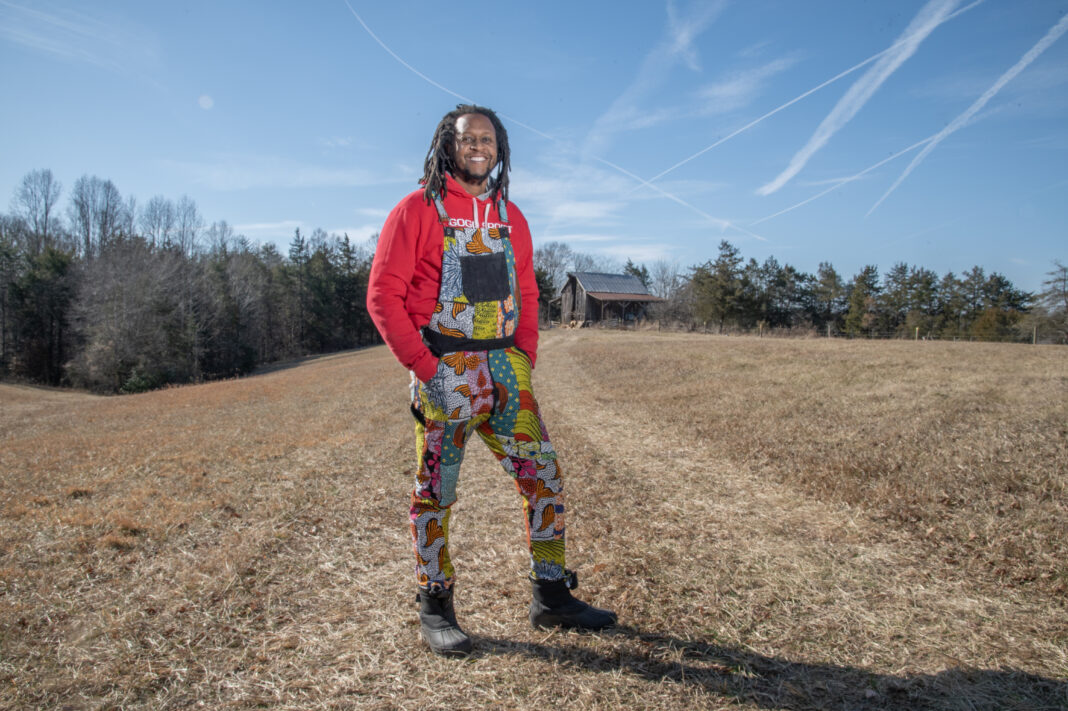
Some food trucks, such as 1115 Mobile Kitchen, emerged after noticing the industry was overlooking opportunities.
While attending music festivals and concerts with friends, founder Henry Fletcher noticed there weren’t always dietary-inclusive food trucks, especially for vegans. “It was difficult to find a place we could eat together and get food in a quick manner, so we could get back to what we’d paid our ticket for,” he says.
In 2020, Fletcher opened his food truck specializing in chicken sandwiches — all of which can be made vegan. “Our main goal is to feed and fuel the active and creative community through a delicious chicken sandwich that’s also dietary inclusive,” says Fletcher.
While the demand is there, Richmond’s food trucks have had to adapt over the years. For instance, when 1115 got started, the pandemic was actually beneficial to food trucks. “When I started, we were going into neighborhoods [because] a lot of people were working from home,” says Fletcher. That soon changed. “Service quickly dropped off around 2022,” he says. “We kept going into neighborhoods but noticed every time we went sales got slower and slower.”
Clients have also shifted from smaller events to larger and private ones, like personal catering, schools, churches and corporate gatherings.
There are plenty of other challenges, especially the weather. If it’s not sunny and beautiful, food trucks risk losing out. “This last December was the coldest in six years of running [First Stop Donuts]. We were shut down a lot because we couldn’t go out,” says Taylor. “The opposite is true in late June and early July; [with] 100 degree days, it’s not safe to go out there.”
There are also chaotic schedules, survival during the off-season, vehicle maintenance, the constant setup and cleanup and trying to make do with space limitations. “It’s like playing Tetris,” says Carroll. The growth of in-house and ghost kitchens at spots where food trucks were once royalty — like breweries — has been an obstacle, too.
“It seems like a lot of the Richmond market doesn’t really open up to what food trucks have to offer unless they’re at [certain] events,” says Fletcher. “If we were to pull up at a random place without a lot of customers, we’d have our regulars search for us, but people not interested in tapping into food trucks will stay with restaurants.”
Perhaps one of the biggest issues for food truck operators is the persisting myth of these kitchens once referred to as “roach coaches.”
“A misconception of food trucks is that [people] don’t think we have as rigorous of health inspections as restaurants,” says Fletcher. “If anything, it feels more rigorous.” Last year, his truck dealt with about 20 random visits from health inspectors, often during the middle of service, just so they could check in on things.
Throwing one’s hat into the food truck ring might seem crazy, with its unpredictability and the surge of physical restaurants. But Richmond’s food truck scene has proven that it’s worth a try. The Richmond Food Truck Association was founded to highlight just how wonderfully diverse our city’s food truck scene is.
There’s enough interest that some are now even converting into or adding brick-and-mortar operations, like 1115. Fletcher recently secured a spot in The Fan with hopes of launching in late 2026. Carroll is also open to doing so when the time is right.
So no, Richmond’s food trucks haven’t lost their charm and relevance. They have to always be ready to adapt, but the draw remains.
“You might be at a music venue, festival, or [RVA Big Market in] Bryan Park … that outdoors, active perspective Richmond specifically craves,” says Taylor. “That’s part of the draw … you can grab high-quality food on the go and also enjoy the outdoors.” 6
Hungry? Head to firststopdonuts.com, 1115foodtruck.com and wumami.net.