It’s been a banner year in Richmond for arts and letters, worthy of the whole damn alphabet. Thanks to an uptick in local literary events, bookworms of the city were encouraged to not only read more broadly, but also — and importantly — to break off from solitary pursuits long enough to get out and gather, to listen and watch and talk with each other for a change.
Events included interdisciplinary performances that paired readings with music — such as the “Parallel Listening Series” at Gallery5 — and even dance, in the case of Avery Fogarty’s shapeshifting poetry salon at the Greenhouse Gallery. Along with inventive programming, the city saw a new crop of bookish forums flourish in unlikely spaces, such as a real estate agency with the “Flying South” literary series at Nest Realty, which has been hosting readings by a variety of local and traveling authors consistently since the spring of 2024.
“Author RVA” finished its first year at the Institute for Contemporary Art at VCU with the extraordinary roster of national authors Atossa Araxia Abrahamian, Eric Puchner and Gary Shteyngart in conversation with its co-host trifecta of Richmond-based novelist and Lit Hub Senior Editor Jessie Gaynor, author and host of NPR’s Planet Money” Mary Childs, and the ICA’s Community Media Center Director Chioke I’Anson.
“Mỹ Documents” (One World) was already one of my favorites books of the year before author Kevin Nguyen came to town for the seventh annual “Read Up Richmond,” where he spoke with Director of Education at Virginia Humanities Emma Ito. Richmond Public Library did a tremendous job with the series which also included the tie-in event, “The Japanese Experience in Virginia, 1900s – 1950s: Jim Crow to Internment” presented by Ito.
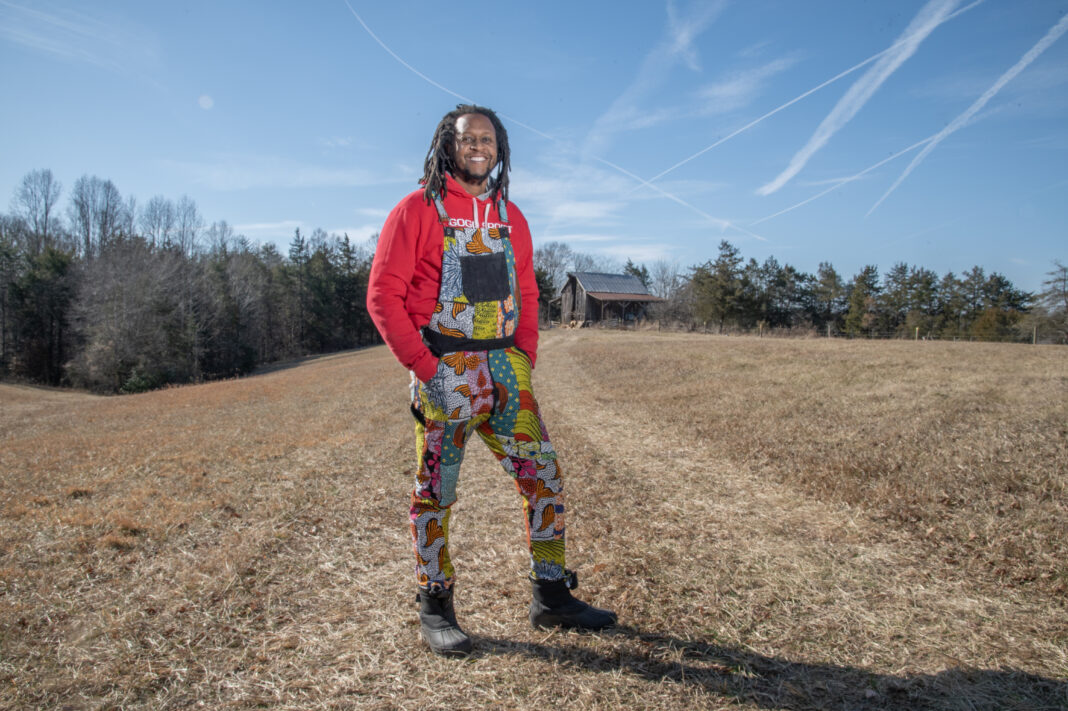
For the proverbial feather in Richmond’s literary cap this year, the city saw the debut print edition of its own literary zine, The Oregon Hill Review. Started by Richmond-based poet and dream chronicler Mathias Svalina “to find some grounding amid the most recent waves of fascist BS.” There was a full house on hand for the launch of the first issue at Shop Two Three, where contributors read and sales were donated to Richmond Reproductive Freedom Project.
I won’t be able to write about Svalina for a while after this — having already covered his distinction as ‘most surreal tour guide’ for Style’s Best Of issue — but earlier this month, he published a book that’s among my favorites of the year. I didn’t know what to expect from Svalina’s first short story collection, “Comedy” (Trident Press) even if its single word title seemingly sets the stage. Despite all its humor and imagination, “Comedy” doesn’t ever make a point of being ‘ha-ha’ funny. Instead these stories are rife with ‘aha’ moments.
The comedy in “Comedy” could be described as dystopian, deadpan or absurdist. There’s a lot of body horror at play, demonstrated throughout by a parade of severed appendages. The titular character in “Comedy”’s titular story, no less, interacts only with severed heads and the worms within. If ever adapted for the screen, “Comedy” would be rated R for sequences of grisly bloody violence and gore and maybe some language.
Yet Svalina’s setups across these 17 stories follow their own logic and strike a balance between heart and whimsy; bodies and minds; along with the real, unreal and merely imagined. For instance — and stop me if you’ve read this one before — there’s the one about the man who thought he was marrying a house in “The Man Who Married a House.” Or the one about a couple of pregnancies in “The Pregnant Couple.” Somehow they land, somewhere. A credit to their author’s ability to enlist readers’ trust to go along for the ride. It’s feat any stand-up comic worth their yucks would say “kills.”
Sure enough, “Comedy” is of a piece with Svalina’s decade-plus work writing and dispatching dreams for his Dream Delivery Service, and a pair of these stories first appeared in a zine related to that project. “New Orleans” recounts a steady stream of transfiguration in the second person, where you go from being a patient to on a carousel ride, to a tailor tending to Dwayne “The Rock” Johnson, to a storm cloud and so on, until — without giving anything away — “you are on a roller coaster that runs through Bourbon Street & there are parts of Bourbon Street no one has ever seen, that can only be seen from the vantage point of this roller coaster.“ Here and again in “Train,” Svalina erects a kind of feverish dream-world building that I found myself revisiting on and off the page.
In keeping with dream states for fodder, overarching morals are obscured and punchlines aren’t rehearsed for delivery or pat timing. True to form, reccurring patterns and traumas emerge, and one story will segue into the next. Also there’s blood everywhere.
In “Red” an imaginary friend has a hole in their head, but the gore is more the stuff of magical surrealism than horror. After all, in dreams blood is more than the carrier of oxygen and carbon dioxide to and from bodily tissues, or the primal stuff to be spilled and splattered. Any armchair dream interpreter will point out blood’s symbolic value as Lifeforce or Passion; also Loss, Trauma, and Conflict.
In “Phase Change” bodily harm is pervasive though abstract, “left to cake & dry into one mess.” It’s a familiar post apocalyptic scene, well suited for a bottle episode of your favorite prestige TV series, expertly rendered here to leave many questions and very few answers.
“Hearts” is the most grounded story in the collection, settling into the nameless narrator’s realistic account of their family, for which every member has their own particular heart of: gold, stainless steel, aluminum, brass and lead. Fraught and relatable relationships emerge between his three brothers — youngest, next to oldest and oldest. When doctors discover more about two of the brother’s biology, it’s a toss up as to whether the materials have yet more metaphoric significance or are just common stuff, found around the house and grown on trees. Funnily enough, I don’t think either interpretation matters or is at the heart of the story so much as when the brothers watch the 1989 film “Roadhouse” together at a time of great mortal crisis.