
Admirers of filmmaker Jafar Panahi may be startled by the apparent straightforwardness of “It Was Just an Accident.” Panahi has been imprisoned twice by the Iranian government for making intensely personal and political movies on the sly. And while this production was also mounted with secrecy, the neorealist strategies of evasion that have often informed Panahi’s style — hidden cameras, non-actors — seem to have been traded for a newfound polish.
Hidden cameras were still used here, and much of the extraordinary cast is composed of non-actors, but Panahi lulls us with moody nighttime vistas and the sort of narrative hooks that one finds in potboilers. The self-reflexive framing devices of movies like “This is Not a Film,” “3 Faces” and “No Bears,” among others, have been subsumed into a more traditional story. But gradually, this tightly wound hostage scenario opens up to become a classic Panahi examination of life in an authoritarian society.
An illusion of straightforwardness gives way here to secrets within secrets, to an awareness of constant surveillance, felt by the guilty and innocent alike, though those words sound too simple. This is a gradations of guilt kind of movie, as Panahi refuses to sentimentalize even the people who survived months or years of imprisonment and torture. Emotionally, “It Was Just an Accident” sometimes recalls the American thrillers made by Fritz Lang in the wake of his fleeing Nazi Germany.
If this sounds too coffeehouse for you, perhaps after seeing a new exhibit at the forum, fear not: “It Was Just an Accident” is a full-blooded movie, a profound moral tale that twists your guts. Since Panahi isn’t under the hypnosis of genre formulas, he can do what he pleases, working intuitively to forge an unpredictable movie that oscillates in tandem with the obsessions of his characters and the energy of everyday life.
It opens with a man driving his wife and daughter somewhere in the country in the middle of the night, when they hit a dog. This causes an issue with the car, and the man stops at an auto shop. Tension hums under these scenes, perhaps because they trade on the fears that are stoked by many horror movies, namely of the white collar-seeming professional who is forced to enter a primordial world. Panahi effortlessly tethers our empathy to this family, allowing us to mistake them for the protagonists.
And then Panahi begins to screw with our orientation.
Soon, we are seeing the discussion of the man’s car from an office in the top floor of the auto shop. In the office is Vahid (Vahid Mobasseri), who takes an interest in the guy with the car, especially his limp, which has an unforgettable, halting rhythmic sound that will become the film’s sonic leitmotif — an emblem of inconvenient vulnerability and of the inescapable humanness of someone who may not be who they claim.
Vahid is convinced that the man with the family and the car is Eghbal (Ebrahim Azizii), aka “Peg Leg,” who tortured him and his friends when they were imprisoned by the government. With disconcerting suddenness, Vahid kidnaps this potential Eghbal and throws him in his van and intends to bury his tormentor in the desert.
But uncertainty grips Vahid; he can’t pinpoint the face of the man who stained his life. Vahid was blindfolded during his torture, and all he has to go on is the sound of that limp, and the nature of the man’s leg injuries. And so, Vahid reaches out to others in bustling Tehran, to those in a network of the resistance.
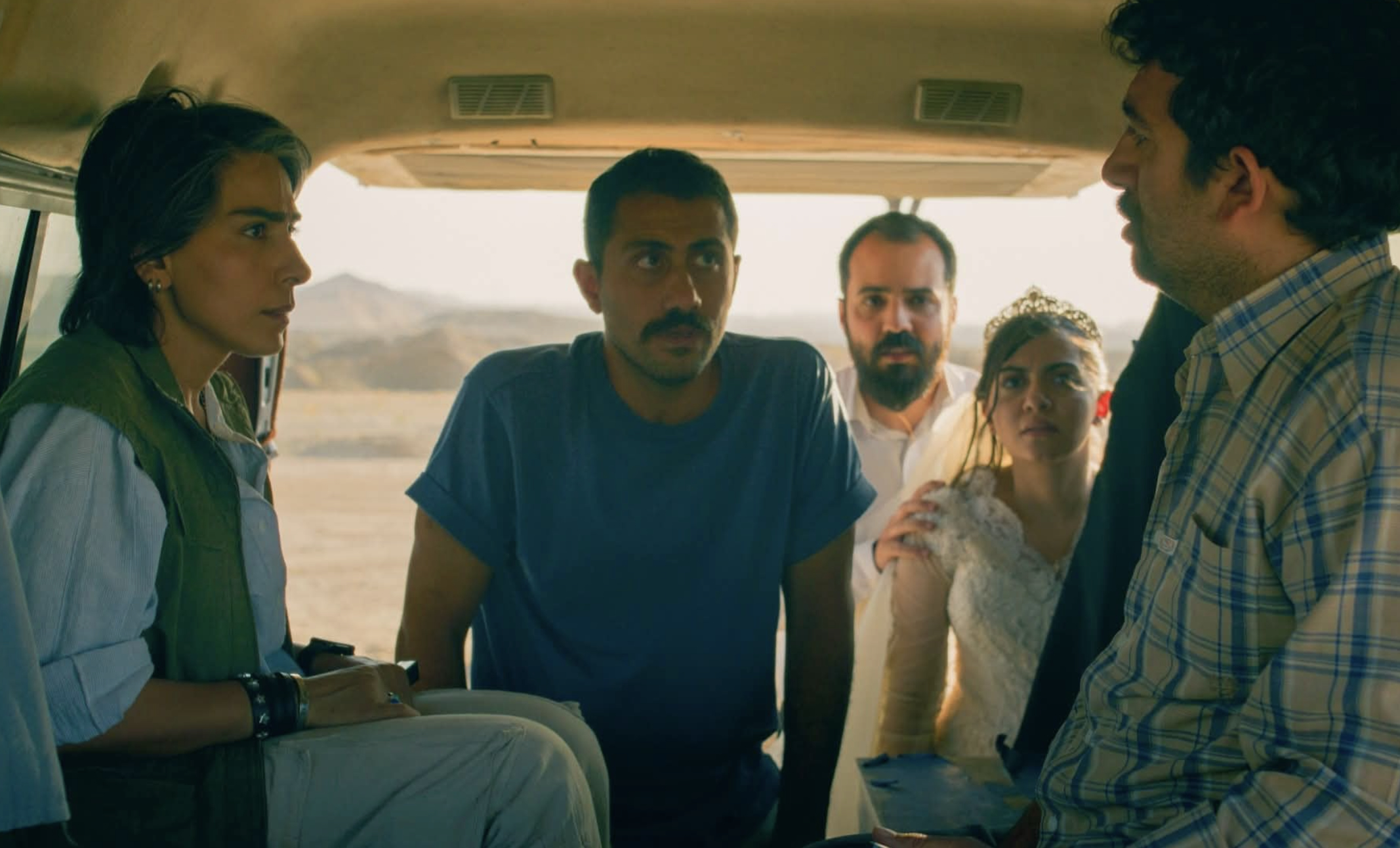
It may sound like I’m giving the entire movie away, but I’m not. This is the set-up of “It Was Just an Accident,” which in the tradition of other Panahi movies keeps expanding in new and surprising fashions. This picture could’ve very easily been a tense two-hander between Vahid and potentially Eghbal, and if Panahi had left it at that this would still probably be one of the best movies of the year.
But characters keep popping up and commandeering the narrative, as Panahi paints an anguished portrait of a resistance left to adjust to whatever normalcy that it can carve out in an authoritarian society. Every gesture is freighted with meaning, such as how a female photographer casually refuses to wear a headscarf, and Panahi’s livewire staging — rich in intimate, seemingly improvisatory imagery — allows you to feel as if you’re figuring things out along with the characters.
Or not, as it were. In the tradition of the best political thrillers, “It Was Just an Accident” is concerned with what we don’t know, with how corruption on a macro social level bleeds into the uncertain micro of home and workplace.
“It Was Just an Accident” is also a rarity: a movie that is actually interested in the moral cost of revenge, rather than making a pretense of concern before offering action fireworks. Revenge is, among other things, inconvenient here. These are middle-aged people with lives that don’t cohere with a streamlined narrative. At times, this movie has as much in common with the bustling human comedies of Jean Renoir as it does with “Death and the Maiden.”
Panahi refuses to forget about Eghbal’s pregnant wife and daughter, for instance, or about the pain of the man who spends nearly the entire film locked in a van. The movie is continually mutating into a thriller and a farce and a character study. Tones bleed together, warmth cohabitating with moments of stark desperation. This vast emotional infrastructure is flabbergasting, even for Panahi.
Few are likely to accuse Lynne Ramsay’s “Die My Love” of covering a vast and varied emotional spectrum. Or maybe they will, who knows — this will be a divisive movie. I found it to be a punishingly single-minded experience. Ramsay is out to work you over, and she’s using mental illness as a pretense for laying the pedal to the metal and keeping her movie pitched at a place of hysteria, displaying her considerable chops as a stylist.
Based on the 2012 novel by Ariana Harwicz, “Die My Love” concerns a couple that moves out to a home in the Montana countryside with a newborn baby. For a married couple with a newborn, Grace (Jennifer Lawrence) and Jackson (Robert Pattinson) seem to lead a rock star lifestyle, having enthusiastic sex on the hardwood floor and drinking Budweiser for breakfast. Somehow, Ramsay manages to make that itinerary look unappealing. We can tell that one or both of them are insane.
Mostly just Grace, it turns out, who is seen crawling around like an alligator through the grassy yard early on, against an enviable woodsy landscape. When Robert gets a job, um, driving somewhere and doing something, Grace is left with the baby and their boozing and screwing taper off. We are seeing the encroaching complacency of a relationship in fast motion, and Grace’s bad girl behavior goes from disturbing to terrifying.
We are to wonder if Grace is going through postpartum depression, and the only way that “Die My Love” makes any kind of sense is as a very dark joke — as an exaggerated horror-movie expression of a woman feeling alone and bored and forgotten and hideous. It often suggests a response to women-with-cabin-fever movies that have been directed by men, such as Roman Polanski’s “Repulsion” and especially Lars von Trier’s “Antichrist.” It also brings to mind Marielle Heller’s “Nightbitch,” with sharper fangs.
Whatever it is, “Die My Love” is not boring.
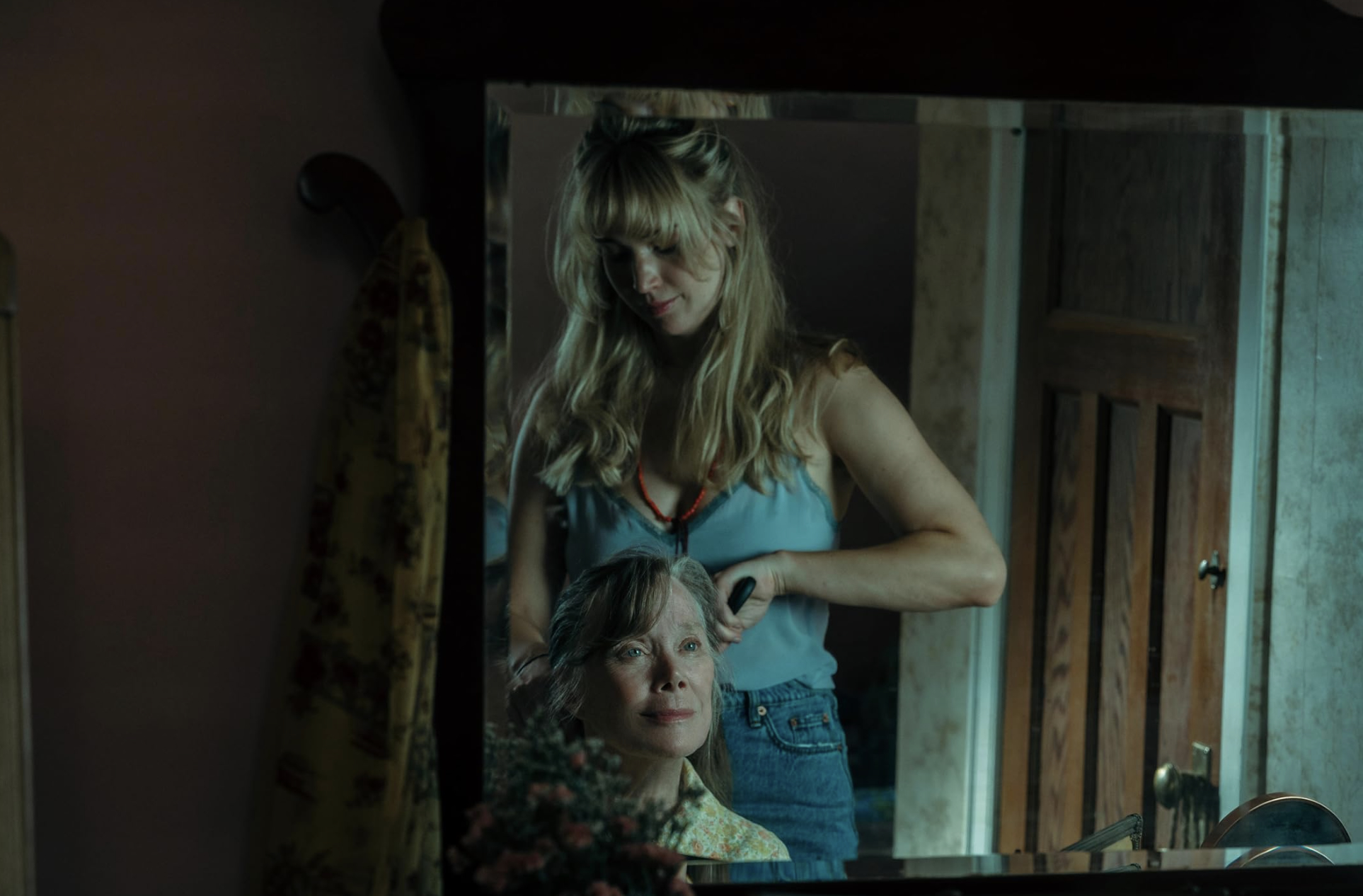
Ramsay, who is attracted to pointedly unappealing material — “We Need to Talk about Kevin” and “You Were Never Really Here” are both hers — is a ferocious stylist with a mordant sense of humor. The woods of this movie hum with menace, and Grace’s rampages are staged with rollicking immediacy and are often driven by astutely selected rock songs. But movies that ask us to live entirely within a character’s delusions are a dicey proposition. You usually need a control group, something against which the lunacy can pop or simply something to break up the monotony of there being no rules. “Die My Love” does not have a control group.
Ramsay does capture something of the adrift-ness of postpartum depression, and certainly of many men’s fear and cluelessness when faced with it — I’m guessing there are women who will feel seen by this movie. And yet “Die My Love” is often too much like horror movies that don’t have any big themes on which to shoulder their indulgences. “Too much” is the point of course; it’s meant to be alienating, as most of Ramsay’s movies are. But sometimes alienating is just a fancier word for annoying.
It’s not enough that Jackson brings home a dog at the worst time for a man to bring home a dog — a detail that’s ruthlessly believable. The dog must be the worst dog in the history of cinema. Then the dog must be killed, and then the dog’s bones must be dug up by another dog. It’s overkill that’s daring you to be lame enough to label it as such. One bit like that might work, but this movie has dozens of them. And despite the frenetic kitchen sink show-womanship on display here, there’s a chalky aftertaste of moralizing, especially evident in the formidable yet pat ending.
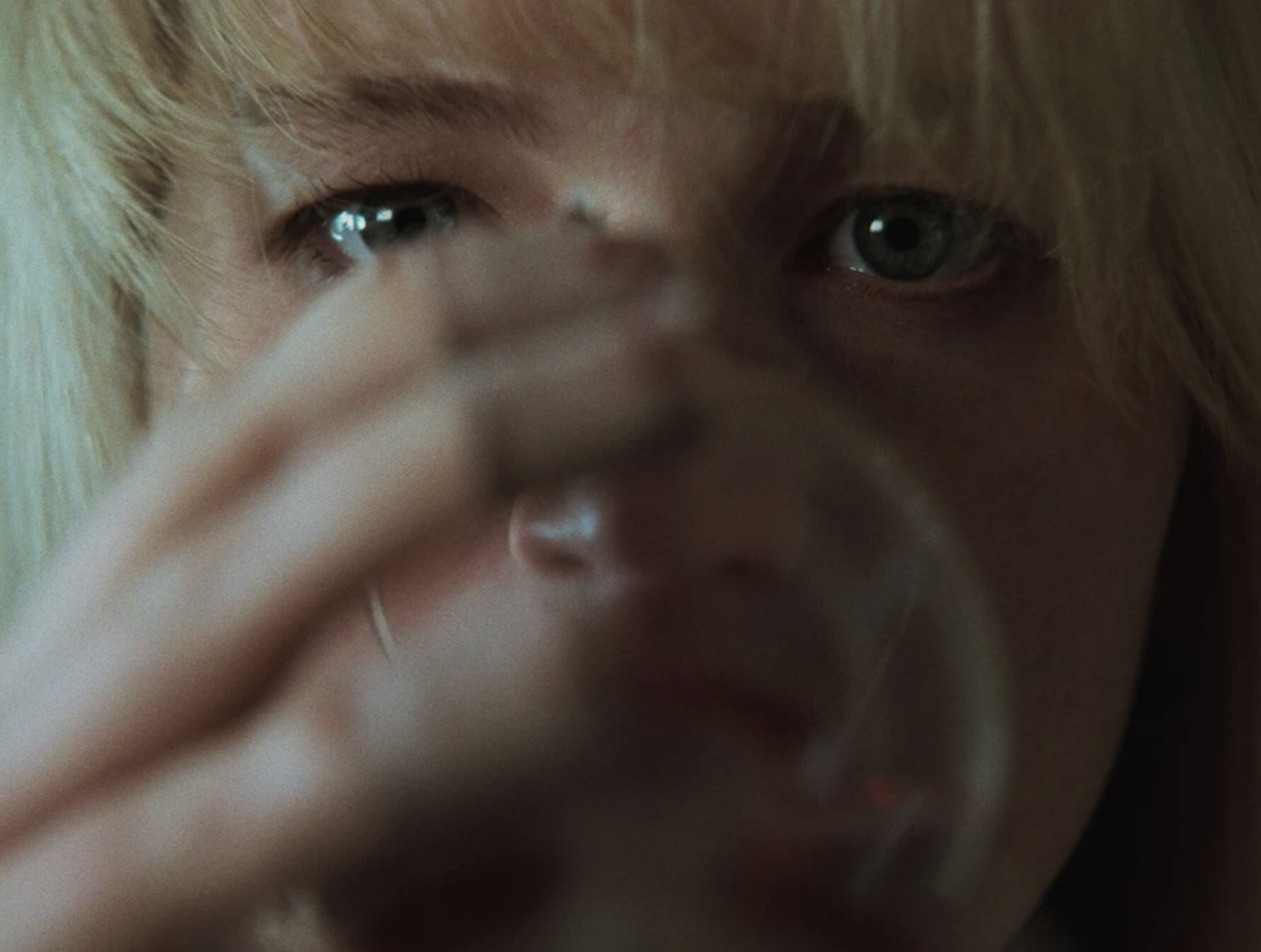
Jennifer Lawrence is most of the show here, and she is superb. It would be easy to dismiss Lawrence’s work as award season saber-rattling, but that would ignore the fine-grained particulars of what she does. The way that Lawrence walks, as Grace, is devastating: in a lumbering, omnidirectional gait that suggests the toil it is for the character to move, and the anger that Grace has at that toil. I don’t know anything about postpartum depression, but I do know depression, and Lawrence inhabits it with frightening accuracy and abandon. Lawrence almost convinces you that this wild and obstinate art project adds up to something.
“It Was Just an Accident” is now playing at Movieland, while “Die My Love” is in theaters everywhere.